
 Buenos Aires Herald
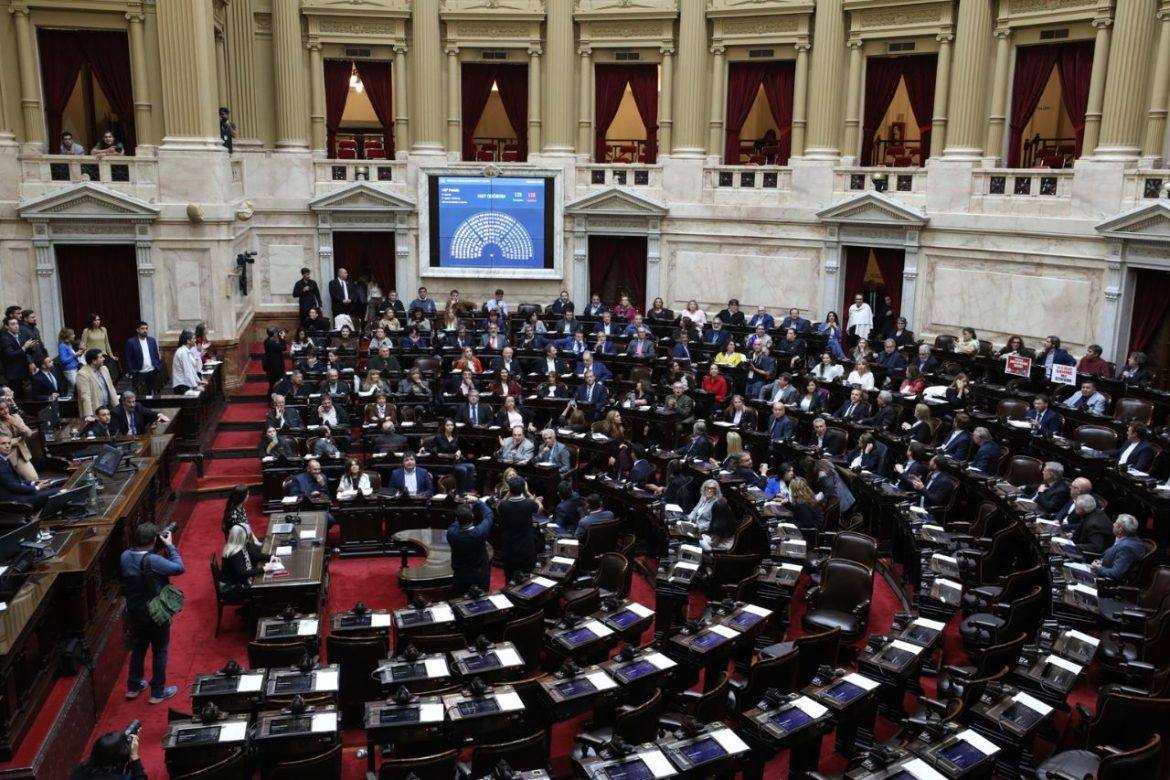
The Executive Branch enacted Law 27,793 this Monday, declaring a National Disability Emergency — which Congress ratified, overruling President Javier Milei’s veto — until December 31, 2026. However, it also suspended its implementation until the Legislative Branch specifies how it will be financed and includes the corresponding allocations in the national budget.
In the decree, the government based their decision to refer back the matter to Congress on Article 5 of Law No. 24,629, according to which any law that authorizes or mandates expenditures must explicitly provide for their financing. Otherwise, their implementation will be suspended until the corresponding items are included in the national budget.
The suspension sparked outrage among opposition members in Congress, who pointed to the fact that on Monday the government also announced they will slash export duties on all grains to zero in order to bring in a stream of dollars to stabilize the peso.
“They brought down the export duties to zero for all grains as a last desperate attempt to halt the dollar rate. They stopped the implementation of the Emergency in Disability law because supposedly there is no money to finance it,” wrote opposition Congressman Itaí Hagman on X, who said the combination of these decisions “shows the government’s true self”.
A candidate for the October midterm elections in the Peronist alliance Fuerza Patria, Hagman added that the decision to delay the implementation of the law is both “immoral” and “completely contradictory and illegal.”
Last Monday, Chief of Staff Guillermo Francos had confirmed the government would enact the law, but said its application would be conditioned by the definition of its financing.
“The Executive Branch will enact it. Then they must issue a regulatory decree to determine how the law is applied, and that has different aspects. We will discuss this with the President. If it were up to me, I would like to analyze it with the relevant minister and with the congressional committees to see how this issue can be addressed because this opens the door to new disability pensions. We should first determine whether the pensions that were granted were properly awarded,” Francos said to Clarín.
In its article 19, the law — which increases pensions and funds for disabled people — empowers the office of the Chief of Staff to “make budgetary extensions and modifications aimed at ensuring the financing of the measures for the protection and promotion of the rights of persons with disabilities and their providers, as provided for in this law.”
Senator Miguel Angel Pichetto said the government’s decision is of “extreme institutional seriousness.” The head of the moderate opposition bloc Encuentro Federal wrote on X that the decree violates the rule of law and fails to comply with the Disability Law that was voted on by Congress. “This has unpredictable consequences,” he added.
“The Constitution is clear. A bill that is passed and enacted must be applied. There is no such thing as ‘returning it to Congress’,” socialist deputy Esteban Paulón wrote on X.
“Javier Milei and Guillermo Franco’s ‘creativity’ is cause for a criminal complaint, a motion of censorship and an impeachment request. Period,” he added.
Constitutionalist Andrés Gil Dominguez described the government’s decree as “absolutely null” and “unconstitutional,” stating that it “objectively” violates the procedure to write and sanction laws, and also affects the rights of people with disability.
According to him the government’s invocation of Law 24,629 would apply “if there was a budget law in force, which is not the case here.” He also argued that under Argentine law, Congress can override a general law with a later, specific one, so even if a budget law is in effect, Congress can repeal Article 5 of Law 24,629 in specific cases to protect constitutional rights.
With information from Ámbito
