
 Buenos Aires Herald
Argentina’s national government will move forward with the dissolution of the National Highway Administration, the elimination of the Road Safety Agency, and the concession of 9,120 kilometers of roads.
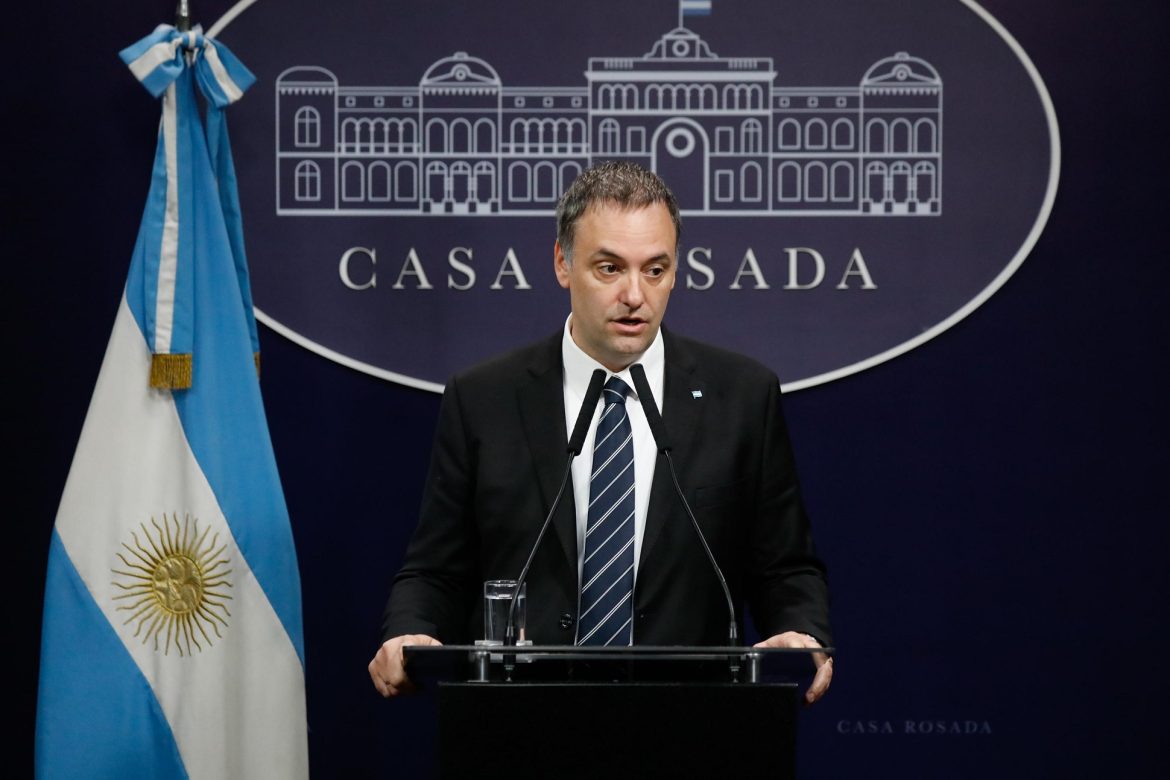
Spokesperson Manuel Adorni announced the changes, which will be implemented by decree, hours before the end of the delegated powers. “Corruption in public works has its death certificate signed,” he said.
At a press conference convened just before the expiration of the superpowers Congress granted President Javier Milei through the Bases Law, the spokesperson announced a series of modifications that will be promoted by decree, including reforms and eliminations of agencies related to the road sector.
The elimination of the National Highway Administration and its counterpart, Road Safety, has been part of the national administration’s plans for some time, but until now, it had not been formalized.
To justify the changes, the spokesperson referred to the “Vialidad” case in which former President Cristina Fernández de Kirchner was convicted. According to Adorni, the court found “fraudulent maneuvers” involving the “awarding of rigged public contracts, the early execution of unjustified multimillion-dollar financial advances, the abandonment of projects without penalty, and unjustified deadline extensions.”
“The roads weren’t built, and the money was kept as it was,” Adorni claimed.
The spokesperson asserted that the agency “was created to simplify corruption,” which is why they decided to abolish it.
“Based on this, President Javier Milei ordered the permanent closure of the National Highway Directorate, as well as the National Commission for Transit and Road Safety, and the National Road Safety Agency.” This represents a reorganization of the sector, he said.
Following the publication of the decree, the structure of the National Commission for Transport Regulation (CNRT) will be modified, and it will be renamed the Agency for the Control of Public Transport Concessions and Services.
“It will be the enforcement authority for regulations and administrative acts related to the oversight of road concessions,” Adorni continued, adding that the bidding process for 9,120 kilometers of roads will begin .
“Corruption in public works has its death certificate signed. The president of the nation just signed it,” stated the spokesperson and Secretary of the National Media, which comes within the framework of delegated powers, a tool Adorni defended. “They said approving them was unconstitutional and that they were giving superpowers to a reactionary government that would only serve to destroy the country,” but, he said, “the reality is that Milei’s government is one of the few that did not request or decree an extension of the delegated powers.”
Originally published on Ámbito
