
 Martina Jaureguy
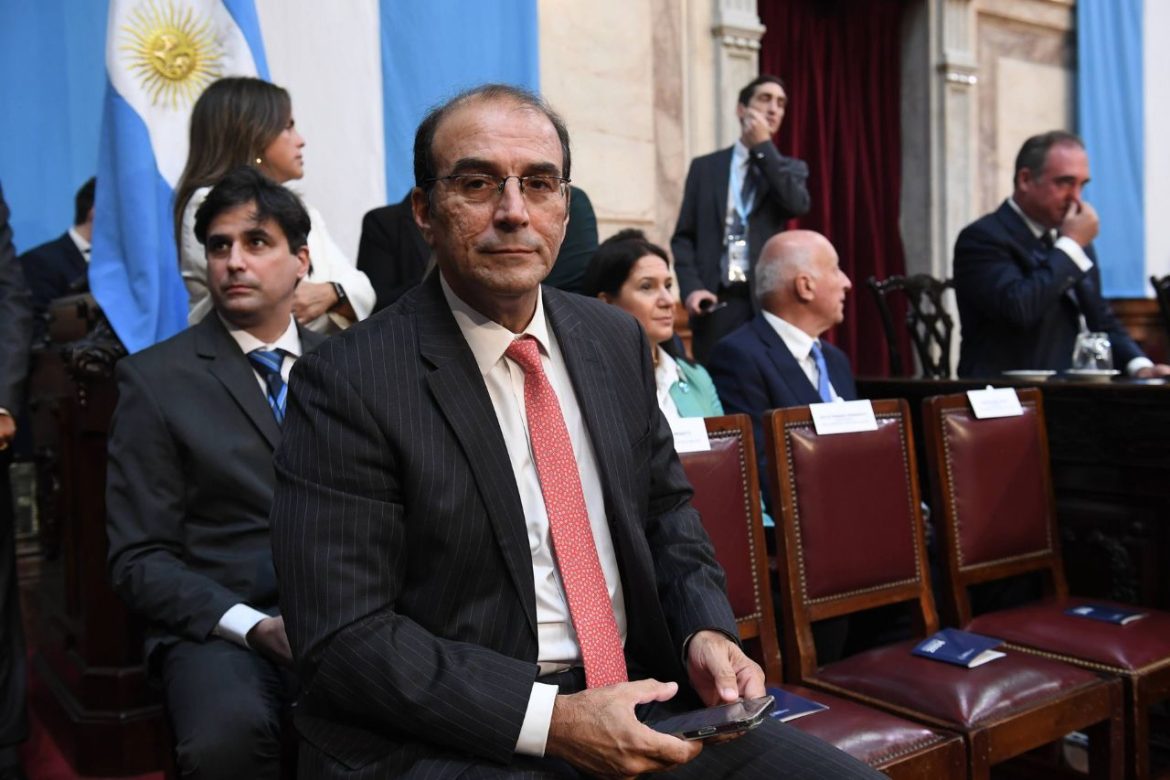
 Supreme Court Justice Manuel García-Mansilla defended his appointment by decree in late February, arguing he can only be removed from his role via impeachment.
“My appointment was not arbitrary nor illegal,” he said Tuesday in a legal filing the Herald has seen. His presentation came in response to a series of complaints demanding that the judiciary declare his naming null. It should be noted that the Justice’s current position stands in stark contrast to his stance in August, when he said that he would never accept the position unless it was confirmed by the Senate.
García-Mansilla was appointed alongside federal judge Ariel Lijo as Supreme Court Justice on February 25 via a decree issued by President Javier Milei. Given the decree was issued during a one-week period in which the Senate — which has to authorize the appointment of Justices — was in recess, the appointments are temporary and only last until the end of November.
García-Mansilla was sworn in by the Supreme Court two days later. Lijo’s situation, on the other hand, is still on stand-by given he has to resign to his role as judge in order for his new position to be confirmed. Milei’s move is seen as unconstitutional by critics on the grounds that, while legal, appointing Justices by decree is meant only for pressing situations.
In a 51-page presentation, García-Mansilla demanded the judiciary reject several stay requests that have been collected into a singular complaint demanding the two Justice appointments be declared null and unconstitutional. The collective stay fell under the purview of federal judge Alejo Ramos Padilla.
García-Mansilla argued that there were no “arbitrary or illegal points” in his appointment to the Supreme Court. He added that the constitution “explicitly” allows naming Justices by decree and said that his appointment “strictly complies with all requirements.”
García-Mansilla also claimed that declaring his appointment null would go against the Supreme Court’s decisions because the judicial body has already sworn him in. Removing him, he said, would therefore “not be effective” and would “attack the constitutional public order.”
According to the presentation, Judge Ramos Padilla is not entitled to make a ruling regarding García-Mansilla’s role as Justice. “A judge cannot remove another judge, and even less so when the only way to remove a Supreme Court Justice is through impeachment.”
The Senate will hold a session next week to address the bids the government had presented in Congress for García-Mansilla and Lijo. While a rejection vote could block Lijo from joining the Supreme Court, it’s unclear what the outcome could be for García-Mansilla, who is already a formal member of the judicial body.
