
 Martina Jaureguy
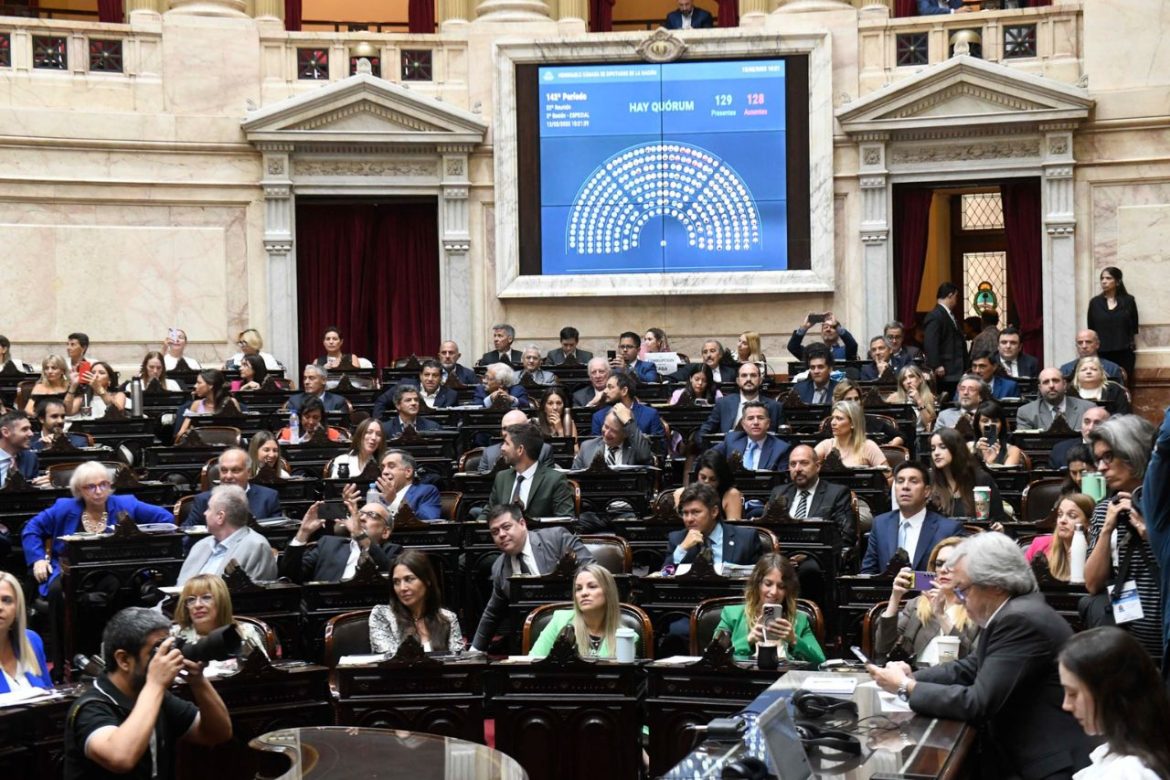
 The Lower House is debating an anti-graft bill known as Ficha Limpia in a session that began at 10:21 a.m. on Wednesday. While ruling party La Libertad Avanza (LLA) and the “friendly opposition” are united in their intention to pass it, the Peronist opposition say it is meant to “ban” ex-President Cristina Kirchner from electoral politics.
The bill aims to prevent people who have a conviction for corruption that has been confirmed by two separate courts from running for office and becoming elected public officials. The offenses included in the draft law are embezzlement, engaging in affairs incompatible with being a public official, and unlawful enrichment, among others.
A bill initially proposed by government ally PRO was set to be debated in November, but failed to reach quorum. Several LLA deputies failed to attend, which spurred rumors that the government had struck a deal with UxP and did not want it to pass. Deputies will now debate a new version spearheaded by LLA.
Given that the bill deals with electoral matters, it needs a special majority of at least 129 votes to pass. PRO’s Silvia Lospennato, the leading voice of the bill’s previous version, believes they will be able to surpass that number.
“We’ve received confirmation from over 130 deputies,” she said.
On Tuesday, Lower House head and LLA member Martín Menem met with most of the opposition blocs, except for Peronist Unión por la Patria (UxP) and left-wing FIT. In the meeting, they agreed to make some changes to the law’s text to guarantee its approval.
The main change is regarding the timing of the conviction. The previous version stated that a candidate would be banned if their conviction had been confirmed by the second court only if it happened in the year before the election. Now, that frame has been extended to the same year.
Unión Cívica Radical (UCR) deputy Karina Banfi, who was present at the meeting with Menem, explained to the Herald that the new text says that a person will not be able to run if their conviction is confirmed by a second court “up to 180 days before election day.” Given that elections will be held on October 26, the deadline would be April 29 in case the bill becomes law.
UxP deputy Vanesa Siley said that, in its attempt to “ban” Kirchner, the bill “runs over” the Constitution. “Democracy is very sensitive. This is unconstitutional and violates the principle of innocence,” she told the Herald, adding that UxP will take this matter to court if the bill is approved.
In November, Argentina’s Federal Cassation Chamber upheld the fraud conviction against Kirchner in the case known as “Vialidad.” Kirchner was first convicted in December 2022 and sentenced to six years in prison and a lifelong ban on holding public office. The court found that she had arranged for 51 public works contracts in Santa Cruz province to go to a company belonging to family friend Lázaro Báez.
Kirchner’s attorneys are expected to appeal the decision this week in order to take it to the Supreme Court.
If the Ficha Limpia bill is approved by both chambers in Congress, Kirchner would be banned from running in the October legislative elections. However, this scenario seems unlikely, as UxP has far greater weight in the Senate than LLA and their allies. Some government allies suggested that LLA may be leading the bill to a dead end, knowing it doesn’t have the necessary backing in the Upper House.
“It’s going to be a tough debate in the Senate,” Lospennato said, pointing out that UxP has 34 senators and only needs support from three other lawmakers to block the bill from passing. Banfi added that they will have to see how “committed UxP is to the fight against corruption.”
UxP Deputy Paula Penacca confirmed to the Herald that the bloc agreed to vote against the bill as a whole in the Lower House, but said the situation in the Senate “is another story.”
“Step by step,” she said ahead of the Wednesday session.
