

 Amy Booth
 Buenos Aires province voted in local elections on Sunday, delivering a landslide victory to Peronism.
The results have been interpreted as a huge win for Peronism after two years in opposition — a period during which it has been beset by infighting.
How does that victory break down? Here are some key numbers to know.
Peronism will have 42% of deputies and 52% of senators
Fuerza Patria (the name Peronism used in these elections) will have 39/92 deputies and 24/46 senators in the provincial legislature.
By comparison, La Libertad Avanza — a name which includes its PRO allies — will have 30 deputies and 16 senators.
The UCR+Somos Buenos Aires will have seven deputies and three senators.
Some smaller parties will also have a couple of seats in both houses.
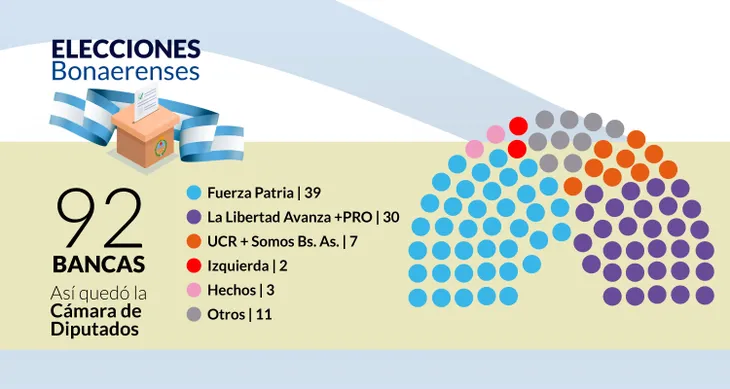
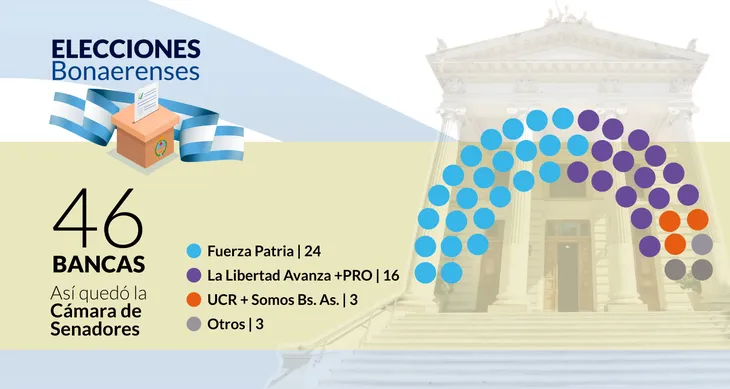
Image source: Ámbito
Peronism came top in 6 of 8 sections
Buenos Aires province is split into eight large electoral sections. Of those, Peronism won in all except two: the fifth and the sixth. These are rural and coastal areas of the province that include cities such as Bahía Blanca and Mar del Plata.
Peronism gained votes in all but 2 of the main districts
Sociologist Daniel Schteingart of the Fundar think tank posted an analysis showing that compared with the 2023 elections, Peronism only lost votes in two of the main electoral districts: Merlo (-1 point) and Tigre (-5 points). It gained the most in Pilar (+17), Malvinas Argentinas (+16%), and Ezeiza (+15%).
La Libertad Avanza performed best in Zona Norte
Milei’s party performed best in Acassuso, in San Isidro, with 75% of the votes. This is a well-to-do suburb in the northern outskirts of Buenos Aires.
Peronism, by contrast, performed best in Isla Maciel, with 88% of votes. This is a low-income district on the banks of the Riachuelo in Avellaneda, just to the south of Buenos Aires City.
While Peronism boasts of its working-class support base, Schteingart found that its support grew the most in middle-class areas.
Voter turnout was 61%
This figure is below the 2017 and 2021 provincial elections, when turnout was over 70%. However, this is likely because this year’s elections were not held on the same day as the national mid-terms. Voter participation was higher than in most other provincial elections this year.
