
 Adrian Genesir
 Marta moved to Pennsylvania from Guatemala at 17. She didn’t speak English at first. She cleaned offices at night and studied during the day, eventually enrolling in community college. She got a student visa, then a work visa. When her sister got married in Guatemala, Marta watched on her phone, on her lawyer’s advice not to leave the country during the status transition. Years of biometric appointments, background checks, paperwork, and thousands of dollars in fees later, Marta finally took the oath to become a citizen of the United States.
Frank, from Sutton, Massachusetts, forgot the words to the Pledge of Allegiance, which he hadn’t recited since grade school. He couldn’t remember the last time he paid attention to a national election. He bartends at a pub, where he doesn’t report most of his tips because “taxes are bullsh*t.” He scoffs at immigrants and insists that if you weren’t born in the U.S. of A., you aren’t a “real American.” His American-ness was stamped at birth.
Sofiya, a Ukrainian refugee, gave birth to Anya while working at a Chicago community center. Anya was born on American soil under the promise of birthright citizenship, a promise extended to generations of those who, like Sofiya, fled war or persecution in search of safety and dignity. Now, Anya proudly waves her small American flag outside the local library and tells her neighbors it’s her favorite place in the world.
The humans I have sketched, all based on real people, form a triptych that raises an important question: what does it mean to be American?

A ‘real American’
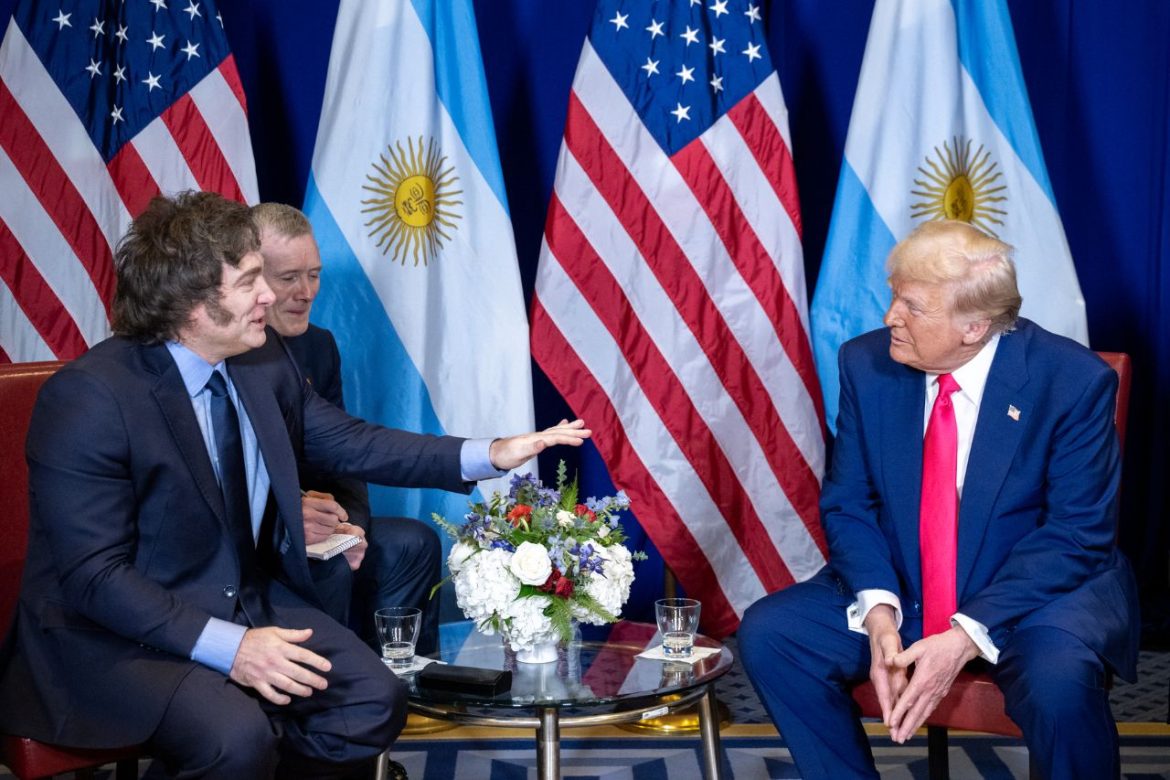
It’s a question the U.S. is confronting in real time — and Milei’s Argentina is following suit. In both countries, leaders are attempting to redefine citizenship: who gets it, how they get it, and what it means.
In the U.S, Donald Trump has revived the idea of ending birthright citizenship. When he launched his political career by falsely claiming that Barack Obama was not born in the U.S., birthplace was his gold standard. Now, in a cruel irony, being born in the U.S. isn’t enough anymore. The goalposts shift according to political expedience.
At the same time, Trump is proposing a new “Gold Card” program to grant green cards — and eventually citizenship — to wealthy investors. In short, he wants to restrict the rights of people like Anya while offering citizenship for sale to people whose only qualification is financial.
In Argentina, something similar is happening. President Javier Milei recently overhauled the country’s immigration framework through a controversial decree. Access to public services for undocumented immigrants has been restricted, deportation procedures have been accelerated, and most notably, the naturalization process was moved from the judicial branch to the executive — consolidating power and creating the potential for politically motivated citizenship.
The change came shortly after the administration realized that most Venezuelan immigrants who legally voted in local elections supported his party; streamlining their nationalization could bring more votes in national elections.
Citizenship for the wealthy
Like Trump, Milei’s rhetoric targets immigrants as scapegoats while simultaneously offering citizenship to the wealthy. Argentina, a country built by immigrants, is adopting exclusionary policies that echo nationalist movements across the globe.
In both countries, the principle that citizenship is earned through dedication, participation, and love for a nation is being replaced by two hollow alternatives: inheritance or wealth.
Many of the U.S. Founding Fathers were not born to American parents on U.S. soil. Thomas Jefferson, one of the architects of the American idea, was born in colonial Virginia to British subjects. Cornelio Saavedra, instrumental in Argentina’s May Revolution and leader of its first independent government, was born in Bolivia. In the original vision for both nations, citizenship was to be defined not by paperwork or birthplace, but by shared ideals and civic commitment.
And yet today, both in the U.S. and Argentina, the definition of citizenship is shrinking. Those who dedicate their lives to their adopted countries are being told they don’t belong. And those with money — regardless of civic knowledge or community investment — are welcomed with open arms.
A safeguard, under threat
The institutions that once protected immigration as a path to inclusion are being dismantled. In Argentina, the judiciary’s role in naturalization served as a safeguard against politicization. Now, citizenship may depend on executive discretion. In the U.S., birthright citizenship was enshrined in the 14th Amendment to ensure no-one could be denied belonging based on race, class, or parentage. That safeguard is also under threat.
What message do these changes send? That Marta, who sacrificed, contributed, and persevered, is less deserving than a millionaire investor? That Anya, who will grow up American in every sense of the word, is now at risk of exclusion? That Frank, who puts in the least and takes out the most, deserves more protection than both?
If love of country, commitment to its values, and willingness to contribute are not the markers of citizenship — what is?
As the U.S. and Argentina redefine their borders — not just geographic but moral and institutional — they must ask themselves: do they want citizens who belong by accident, or by choice? Who are their cohorts — people chosen by fate at random, or teammates committed to the same cause?
