
 Buenos Aires Herald
The Buenos Aires Herald and the Mothers of Plaza de Mayo-Founders Line opened part of their archives to the public in a special event on Saturday in the Mothers’ Casa Nuestros Hijos, located on the historic grounds of the former ESMA complex.
“The history of the Herald and of the Mothers is completely intertwined,” Herald Editor in Chief Estefanía Pozzo said during the presentation. She highlighted the fact that, during the dictatorship years, the Mothers met regularly with the Herald’s then-editor-chief Robert Cox, since the newspaper was one of the few who consistently reported on the crimes committed by the military. Among others, Pozzo mentioned the 1977 kidnapping of the director of La Opinión newspaper, Jacobo Timerman.
Herald culture editor Agustín Mango pointed to the fact that, going back to its origins, the outlet has preserved “150 years of Argentina’s history and journalism.”
“That’s particularly important at a time when those two things are under attack.”
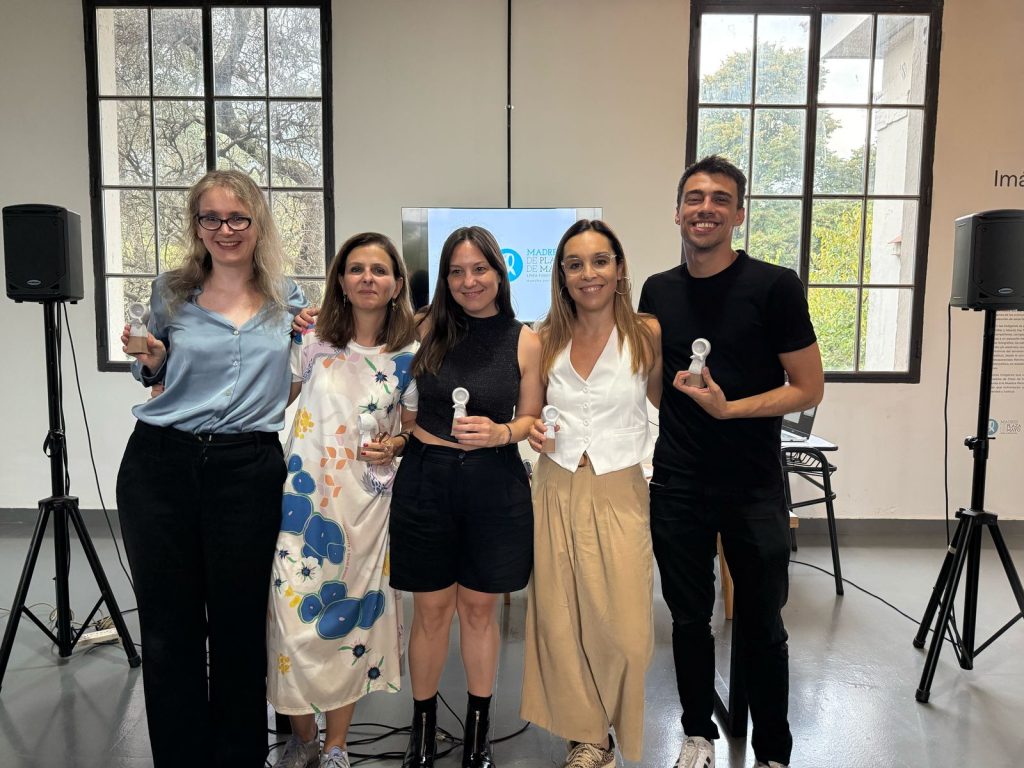
Pablo Guerra, part of the education team at the Madres de Plaza de Mayo Línea Fundadora, said that 80% of the Mothers’ archives in the 1970s were clippings from the Herald. He showed an article titled “Plaza Mums: ‘Stand by us in our sorrow’” which worked as a public presentation of the Mothers.
“The newspaper gave place to the Mothers’ words, [giving them a space where they] could say ‘We are those ‘mad women’ who go to the square on Thursdays,” he added. The Herald and the Mothers leaned into an ironic use of the term the Argentine dictatorship used to slander them — the “Mad Mothers of Plaza de Mayo.”
The event also featured a round table with distinguished journalists exploring the relationship between journalism and human rights advocacy. Buenos Aires Herald Managing Editor Amy Booth hosted the panel alongside Noelia Barral Grigera (IP/Cenital), Juan Amorín (C5N/Futurock), and Victoria Ginzberg (Página/12).
Amy Booth said that, while journalists should still cover current human rights violations — like the shooting of photojournalist Pablo Grillo by the military police in a march this month — crimes committed during the dictatorship “are still being committed.”
“Grandmothers of Plaza de Mayo are finding stolen grandchildren every other month,” she said. “So it’s about remembering that this is not only about memory — it’s about our present.”
Barral Grigera praised the Herald’s efforts to preserve their archive, calling it “important” work. As an example, she countered this experience to the fact that the archive of Télam, the state-owned news agency dissolved by the Milei administration, is nowhere to be found.
“We don’t know where it is.”
She also said she believes there is censorship nowadays, as journalists are at risk of being doxxed. The current administration, she added, says it has cut official advertising to media outlets but uses the advertising of state-owned company YPF to “discipline journalists.”
Amorín said that, through its policies, the current government further confirms the importance of “people with memory.” Ginzberg said although she is not currently worried about “censorship,” she voiced concern over “a press that does not question the government’s version of events,” citing the example set by Herald journalists during the dictatorship.
“The Herald distrusted the official version and gave a voice to the victims,” she added.
Commemorating the anniversary of the coup on March 24, 1976, The Buenos Aires Herald provided access to a selection from its archives, set in a dialogue with the Mothers of Plaza de Mayo’s own archive of Herald clippings.
The gathering was a way to honor and continue the close bond between the Mothers’ and the Herald, the only Argentine newspaper that echoed the desperate search for their disappeared children during the military dictatorship. The event also aimed at illuminating the vital connection between journalism and the struggle for human rights.
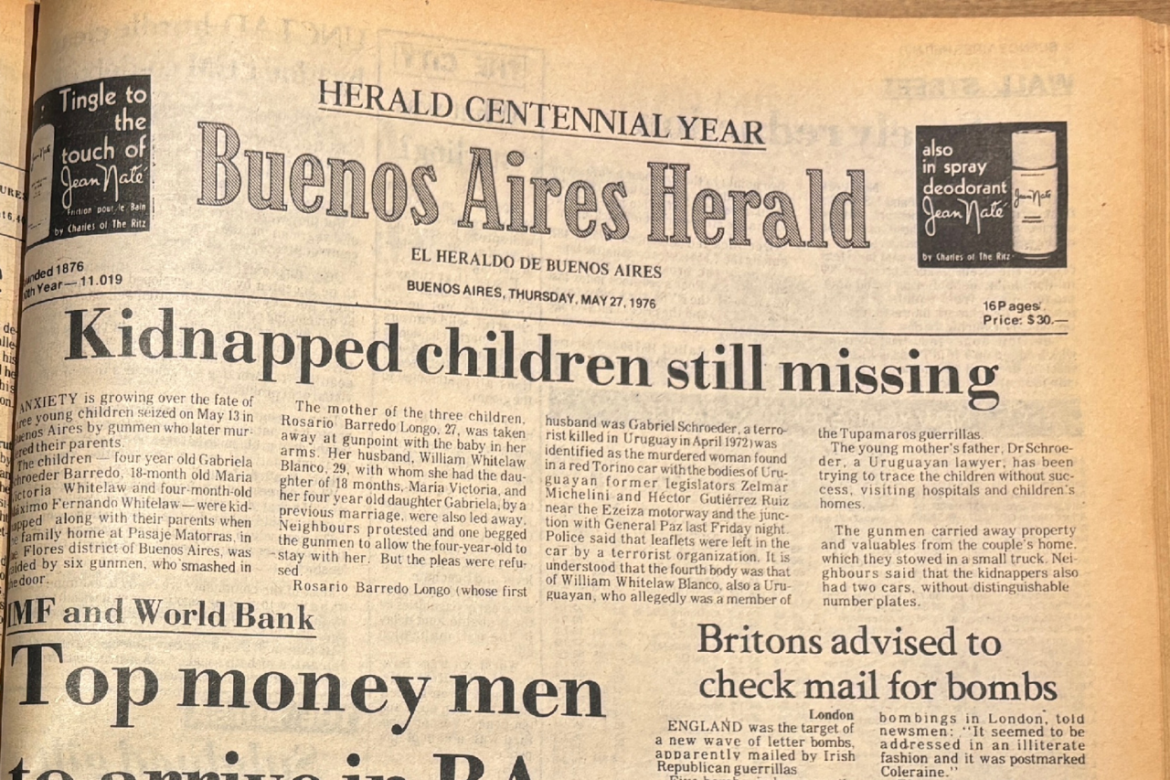
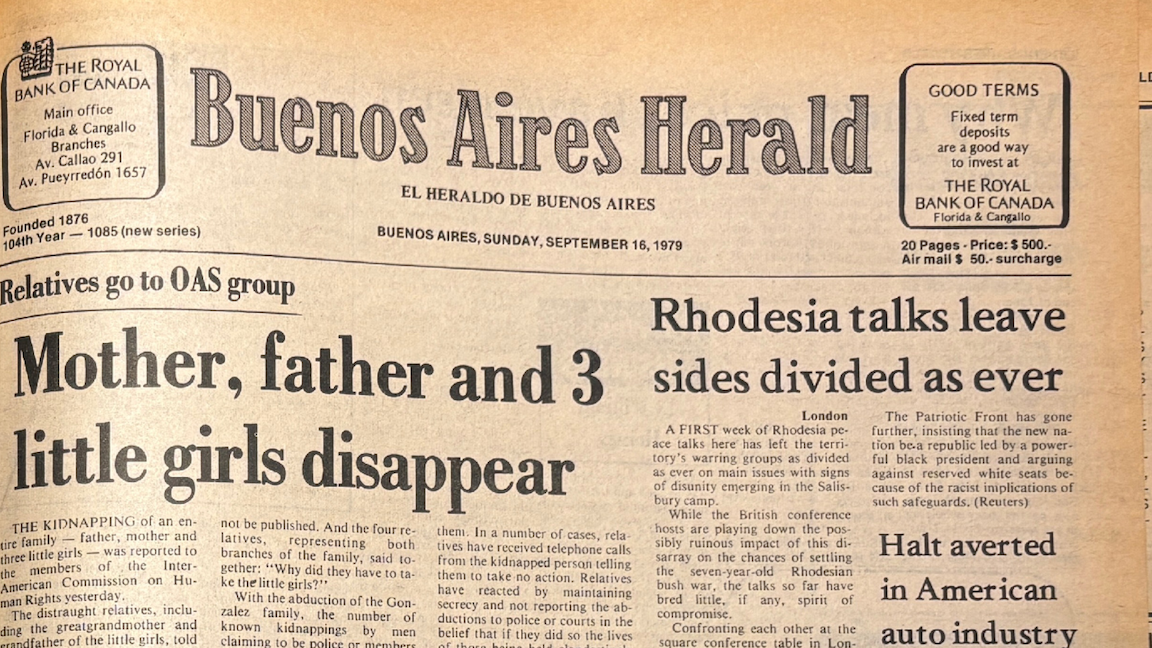
Attendees had the chance to view printed editions of the newspaper that covered the Mothers’ demands, as well as reporting on significant historical events, including the disappearance of writer Haroldo Conti, the unlawful detention of journalist Jacobo Timerman, and the call for justice for the children of Uruguayan activist Carmen Barredo, who was murdered in the context of Operation Condor.
The Madres’ permanent exhibition, which features a rich compilation of information, will now also include part of the Herald’s archives. This collection, showcased at the Casa Nuestros Hijos, also includes personal records shared by the mothers. You can visit the exhibit Monday through Saturday, between 10 a.m. and 4 p.m.
