
 David Correa
 It was a sunny morning in San Fernando del Valle de Catamarca on May 9 when two people knocked on Claudia Villegas’ front door. They were there to deliver a message whose significance only she could fully grasp. After a 49-year search, she was told that her sister Aida’s remains had been identified in Pozo de Vargas (Vargas’ Pit), Argentina’s largest mass grave, located in Tafí Viejo, Tucumán.
This discovery raises the number of identified victims to 121, all of them cast into the 39-meter-deep pit between 1975 and 1978, during Operation Independence and the country’s civic-military dictatorship.
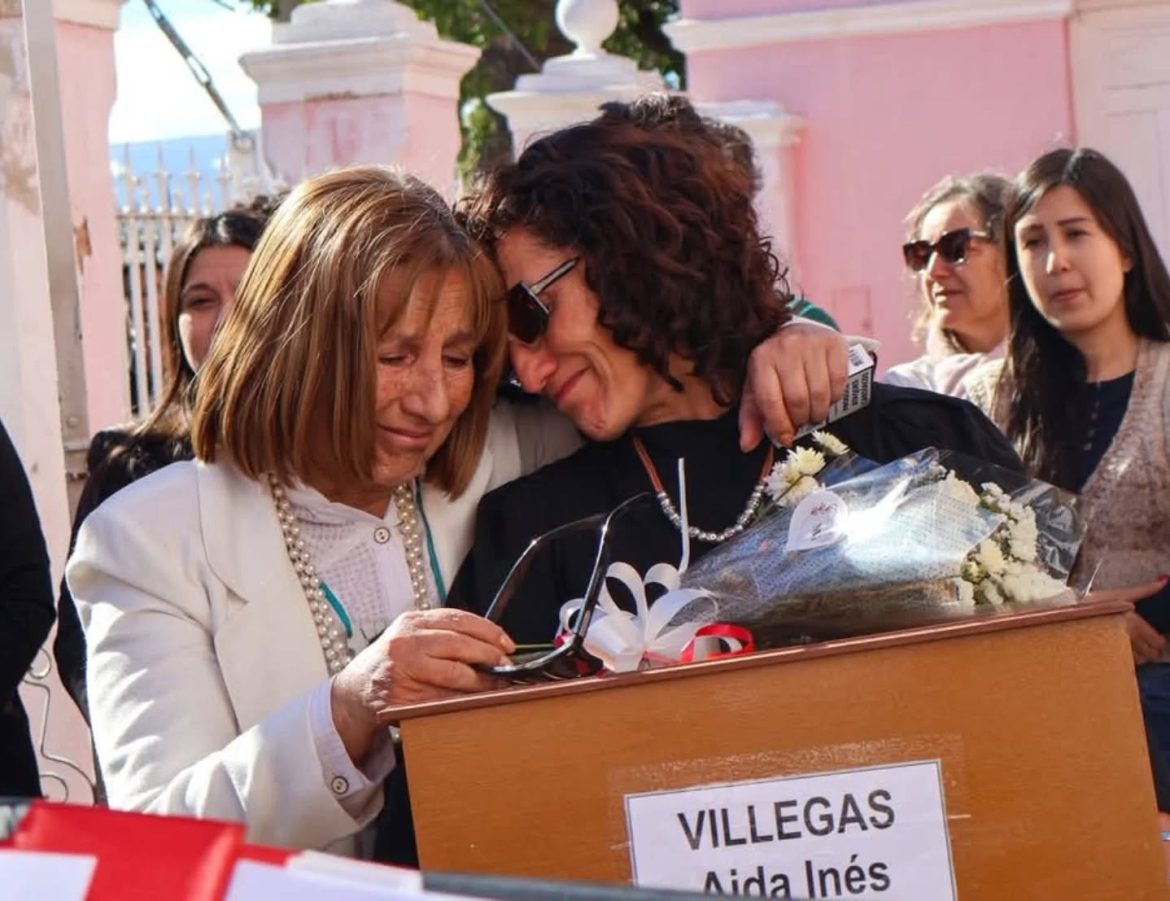
“I will never forget that moment. I was moved; my sister came home,” Claudia told the Herald. The messengers in charge of delivering the news were an expert from the Argentine Team of Forensic Anthropology (EAAF, for its Spanish initials) and a relative of a desaparecido, an EAAF member confirmed.
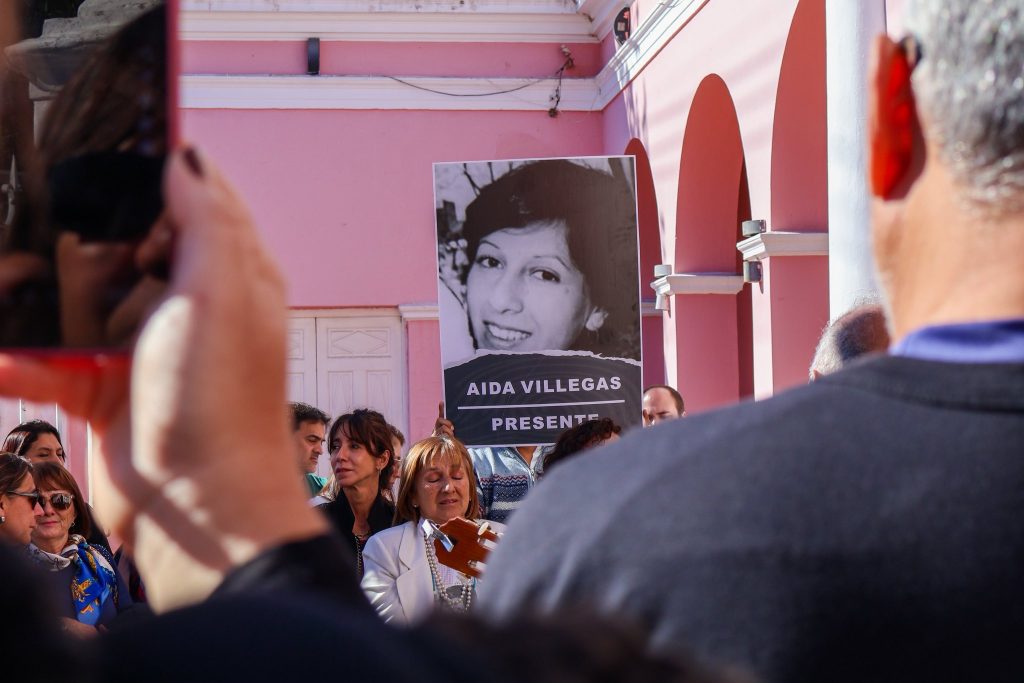
Aida was 22 when a military task force (known as a grupo de tareas) made up of military and police members, all in street clothes, barged into the Villegas home in San Miguel de Tucumán and took her. Before the tragedy, however, the family lived in Catamarca before moving to Tucumán in search of better opportunities.
A good student who loved reading
A graduate from the Escuela Normal de Catamarca, Aida stood out due to her good grades and tireless reading habit. Her sister Claudia described her as “very smart and caring.”
Their mother died from an illness before Aida finished school. Shortly after, their father also died “of grief.” It was their maternal grandmother who decided that the family move to Tucumán’s provincial capital so that the sisters and their younger brother Jorge could attend university at the National University of Tucumán (UNT).
They sold everything and moved to a place on Catamarca Street, close to the city’s downtown area.
Aida chose psychology and began her studies in 1972. A dictatorship led by General Agustín Lanusse ruled Argentina at the time, while Juan Doming Perón was preparing to return from exile. The country was immersed in extreme turmoil, with massive protests conducted by political activists, students, and unions.
Aida first joined an activist group at university and later joined Peronist guerilla group Montoneros. She started out in the lowest rank, doing activities in lower-class neighborhoods and informal settlements. Her brother Jorge, who was studying architecture, would also join the group shortly after.
Following the return of democracy in 1973, their activism intensified as they continued with their studies. By the time military campaign Operation Independence was launched in Tucumán in February 1975 and began slaughtering Montoneros members, the two siblings were already on the radar of those in charge of conducting the terror campaign.
Aida’s kidnapping
The military task force arrived at the Villegas home in four cars in the scorching hours of the siesta on November 2, 1976. Aida had just graduated as a psychologist and was resting. The men in street clothes barged in yelling and ordered everyone to go up to the terrace except her. Claudia remembers hearing her “terrified screams from above until they left and everything became quiet.”
“We went in to her room; she was gone. We saw a pillow covered in blood and the bed lamps’ bare wires. It was then that we realized she had been tortured on her own bed,” Claudia said.
Aida, known as “Sofía” to her militant comrades, was held in two clandestine detention centers, the Jefatura de Policía (Police Headquarters) and the Nueva Baviera sugar mill, according to testimonies offered in dictatorship trials. The people responsible for her crime were convicted in the case known as Megacausa Arenales II, a trial in Tucumán carried out between 2012 and 2013 that tried 41 defendants for crimes against humanity committed against 212 victims.
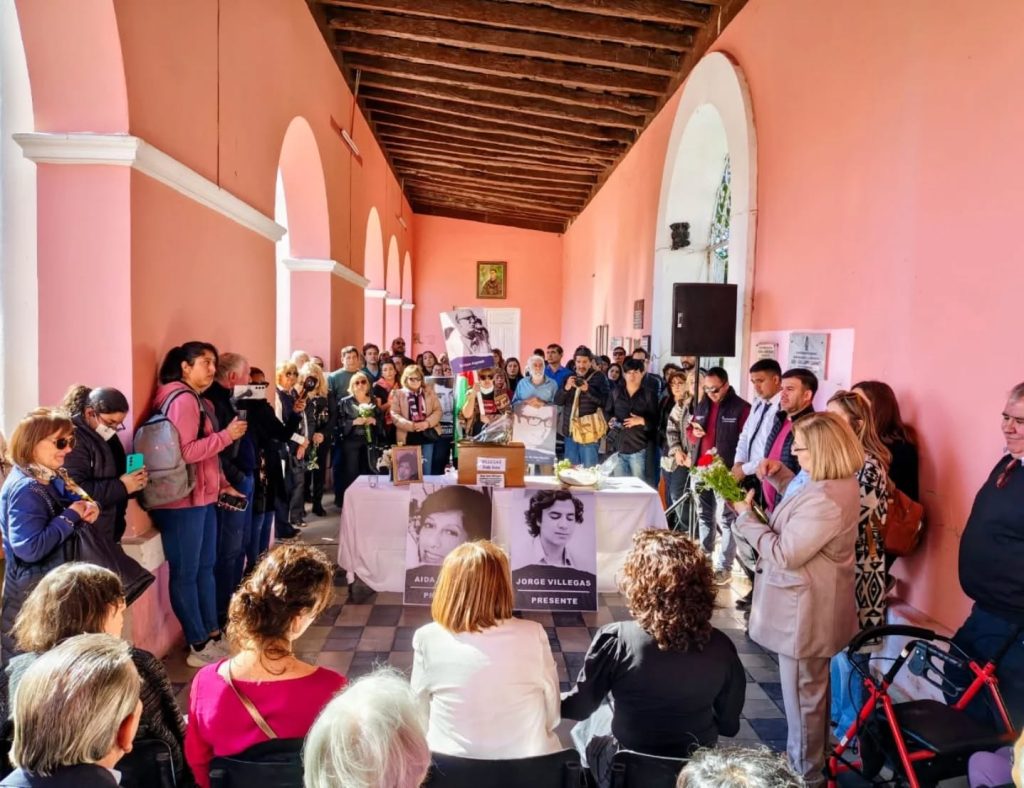
Despite the identification of Aida’s remains, closure is still not complete for the Villegas family. Jorge, the youngest sibling, was kidnapped on June 8, 1977. Known in university as Perchera (coat stand), several testimonies in trial placed him at the Jefatura de Policía detention center. He remains missing to this day, a painful limbo still hovering over the family.
The name Aida comes from an Arabic word meaning “the one who returns” or “the one who is welcome.” On the sunny morning of May 23, her remains were finally delivered to her loved ones in Catamarca, the place where she spent her childhood, to be finally put to rest.
She was received by a collective chant that never went off pitch, singing the lines of the La Temprana (The Early One) zamba by León Benarós and Carlos Guastavino, a song she loved and danced to:
You were the early one / first child, dawning flower / soft beautiful rose / the most pretty Tucumana…
Cover photo: Claudia Villegas with the remains of her sister Aida (image courtesy of the Villegas family)
