
 Facundo Iglesia
Human Rights Secretariat workers denounced that the government terminated the contracts of 400 staff members in December, jeopardizing the operation of several dictatorship memorial sites. The secretariat ended 2023 with over 1,000 workers but cuts continued throughout the year: the workforce is currently just under 800.
This means that the recent layoffs have slashed the Secretariat staff by 50%. The justice ministry, the official body running the secretariat, ordered 2,500 layoffs across all dependencies.
Paula Eugenia Donadio, a representative of state-workers union ATE, told the Herald that the layoffs endanger the functioning of dictatorship memorial sites run by the secretariat. The memorials are repurposed former clandestine detention centers that operated during the 1976-1983 military dictatorship. According to human rights organizations, these centers were instrumental in the forcible disappearance of over 30,000 people.
The memorial sites in danger of closing are Automotores Orletti, Virrey Cevallos, El Olimpo, and Club Atlético (Buenos Aires City), Faro de la Memoria (Mar del Plata), and El Vesubio (Buenos Aires province).
“If there are no workers to organize visits, or just open and close their doors, they are at risk of shutting down, as are all areas of the Human Rights Secretariat,” Donadío added.
Donadío said that other functions of the Human Rights Secretariat are also at risk. Among other things, they assist victims of past and current human rights violations, give human rights training, run the National Memory Archive, are in charge of safeguarding documentation, and are in charge of the Haroldo Conti Cultural Center.
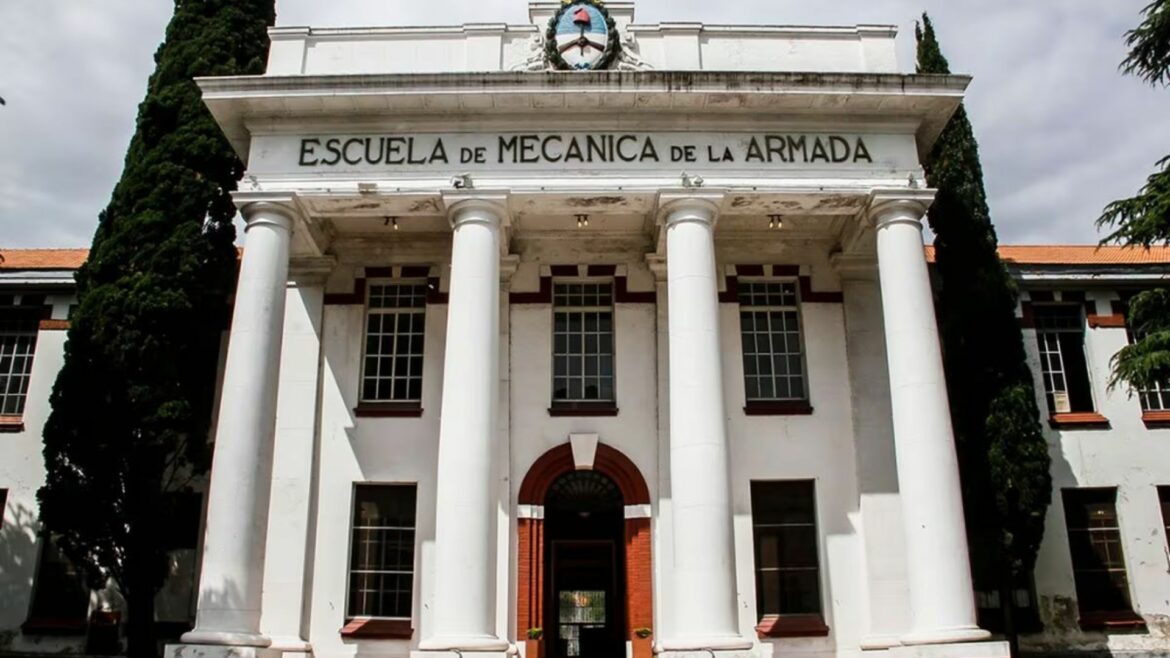
The workers are organizing a symbolic hug on Friday, 5 p.m., to the building of the Human Rights Secretariat building, which functions at the ESMA, a dictatorship memorial site itself. Their goal is to “denounce and repudiate the dismantling of the policies of memory, truth and justice, and human rights policies” they claim Justice Minister Mariano Cúneo Libarona and Human Rights Secretary Alberto Baños have been carrying out.
“Argentines are aware that this a step backward to places where we do not want to return, we believe that the Secretariat of Human Rights is part of the democratic construction of the country and that is also what we want to defend,” Donadío said.
Ever since he was on the campaign trail, President Javier Milei has sought to undermine Argentina’s memory policies, which aim to commemorate and seek justice for victims of the country’s last dictatorship. He has called human rights violations committed during the dictatorship the result of “a war” and has questioned the number of 30,000 desaparecidos.
Those comments quickly became state policy. Human rights organizations have warned that the government fired experts, spread denialist rhetoric, and flouted international commitments.
On November 14, the Inter-American Commission on Human Rights granted three hearings on the situation in Argentina, including one on memory, truth, and justice policies.
In the hearing, Baños was dismissive towards Abuelas de Plaza de Mayo head Estela de Carlotto. He also claimed that the civilian team working on the Armed Forces’ archives dismantled them, calling the team a “group of vigilantes.” Baños said that the spirit of this administration is to guarantee “complete memory” — a phrase also used by denialist groups that support the so-called “two-demon theory,” a rhetorical device that equates the violence of the Armed Forces and left-wing armed groups.
