
 David Correa
 More than 300 sentences, 1,200 convictions, and 200 acquittals. These are some of the numbers that summarize Argentina’s search for justice over the last 20 years for crimes committed during the military dictatorship (1976-1983).
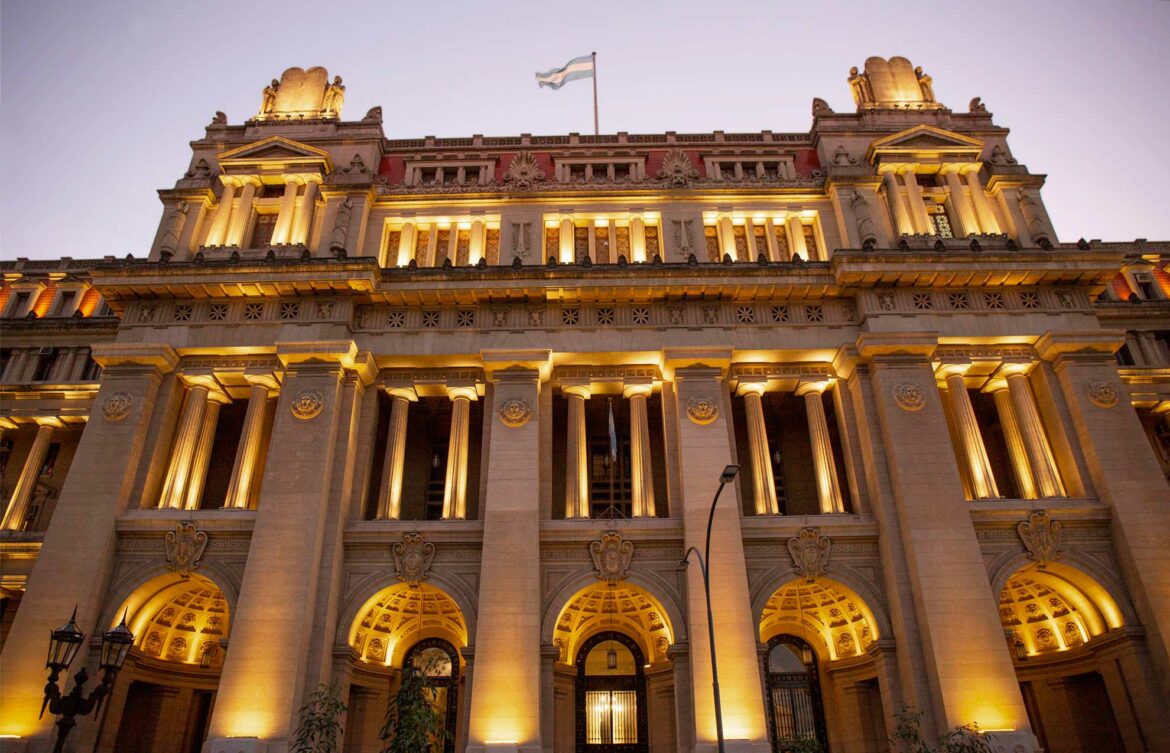
The turning point was a Supreme Court decision known as the Simón ruling passed on July 14, 2005. Up until then, the Full Stop (23,492) and Due Obedience (23,521) laws didn’t allow the courts to try these crimes. The two laws were passed in 1986 and 1987 during former President Raúl Alfonsín’s administration after a series of military uprisings challenged the trials for crimes against humanity that had started in 1984.
With the Simón ruling, the Supreme Court ruled that the two laws that for nearly 20 years had halted trials against hundreds of civilians and military members accused of committing crimes against humanity during the last dictatorship were unconstitutional.
The dictatorship crime trials in numbers
The historic 1985 Trial of the Juntas, which tried and convicted the commanders of the first of three military juntas that acted during the dictatorship for crimes against humanity, was the largest criminal case brought against those in charge of conducting the state-terrorism apparatus that brutalized the country between 1976 and 1983.
In the twenty years since the historic Simón ruling, judicial proceedings targeting dictatorship crimes have resulted in 1,201 convictions and 209 people acquitted, according to a Prosecution Office for Crimes Against Humanity report published in June 2025.
“I tend to be cautious when making these assessments, but there’s no doubt that the outcome was very positive, in light of the results of the trials and the convictions,” Federal Prosecutor Félix Crous told the Herald. For a large portion of the over 30 years he spent in the judiciary, Crous led investigations into crimes against humanity and was one of the key officials in breaking down the “wall of impunity.”
According to the Prosecution Office, 343 sentences have been handed down in the last two decades, and 14 trials are currently underway. An additional 66 cases have been referred to trial and are awaiting public hearings, while another 258 cases are still in the initial investigation phase.
The same report shows that courts have already questioned 393 charged defendants and filed accusations against another 496 individuals — meaning people who the Public Prosecutor’s Office requested be investigated but have not yet been formally interrogated.
Of the total number of those convicted, 612 are imprisoned, with 498 of them under house arrest. The remaining 114 are being held in various prisons, with 74 of them being held in the Penitentiary Unit No. 34 inside the Campo de Mayo military garrison.
Various human rights organizations have spoken out against transferring convicted individuals to Campo de Mayo, arguing that detention conditions there are lax and the amenities are way above average for sites that hold people convicted of kidnapping, torturing, or murdering others during the dictatorship.
There are also individuals who, despite having been convicted, are not serving their sentences. According to the prosecution office, there are 33 convicted individuals who are fugitives from justice.
The report also details that 157 people were dismissed from the trials due to lack of evidence against them, and another 118 were acquitted. Approximately 1,698 defendants have died since the judicial proceedings resumed in 2005.
Emilio Crenzel, who has a PhD in social sciences and has written extensively on the struggle for memory regarding political desaparecidos during the last military dictatorship, told the Herald that, following the Nuremberg trials, there were very few countries that did what Argentina did. One of the singularities, he explained, was that the judicial proceedings also included accused civilians, such as doctors, nurses, and priests, among others.
“The trials were held in ordinary and local courts; no special tribunals were established, and just as there were convictions, there were also numerous acquittals. That is why Argentina’s memory, truth, and justice process is a beacon in the world,” he asserted.
What the Simón ruling was
Argentina’s Supreme Court used principles of international law to rule that the Full Stop and Due Obedience laws were unconstitutional in a case known as “Simón” or “Poblete.” The case centered on the kidnapping and torture of the couple formed by José Poblete and Gertrudis Hlaczik, as well as the concealment of their daughter, Claudia Victoria, in 1978.
The people responsible for the crimes were identified during the proceedings as former federal police officers Julio Héctor Simón, aka “El Turco Julián,” and Juan Antonio Del Cerro, aka “Colores.” Del Cerro died in prison age 58 while awaiting trial in 2006
Simón received a 25-year prison sentence for those crimes on August 4, 2006. He was the first person convicted of crimes against humanity following the reopening of proceedings prompted by the Supreme Court’s ruling. He was later tried and sentenced in other proceedings.
In 2007, he got 23 years in prison for his role in the so-called “Counteroffensive I” case. In 2010, he received a life sentence for crimes committed at the El Atlético, Banco, and El Olimpo clandestine detention centers. Simón died at age 82 in March 2025 in Unit No. 34 of Campo de Mayo.
