
 Buenos Aires Herald
The Buenos Aires Herald has worked with the Mothers of Plaza de Mayo, Founding Line, to translate the mothers’ biographies into English and record them, creating a dynamic new audio guide that illuminates the women’s remarkable life stories for international visitors to their space in the ex-ESMA memorial site.
The biographies of the mothers can be read and listened to here. The Herald’s journalists recorded several biographies each, creating a blend of voices and accents that reflects the publication’s linguistic diversity.
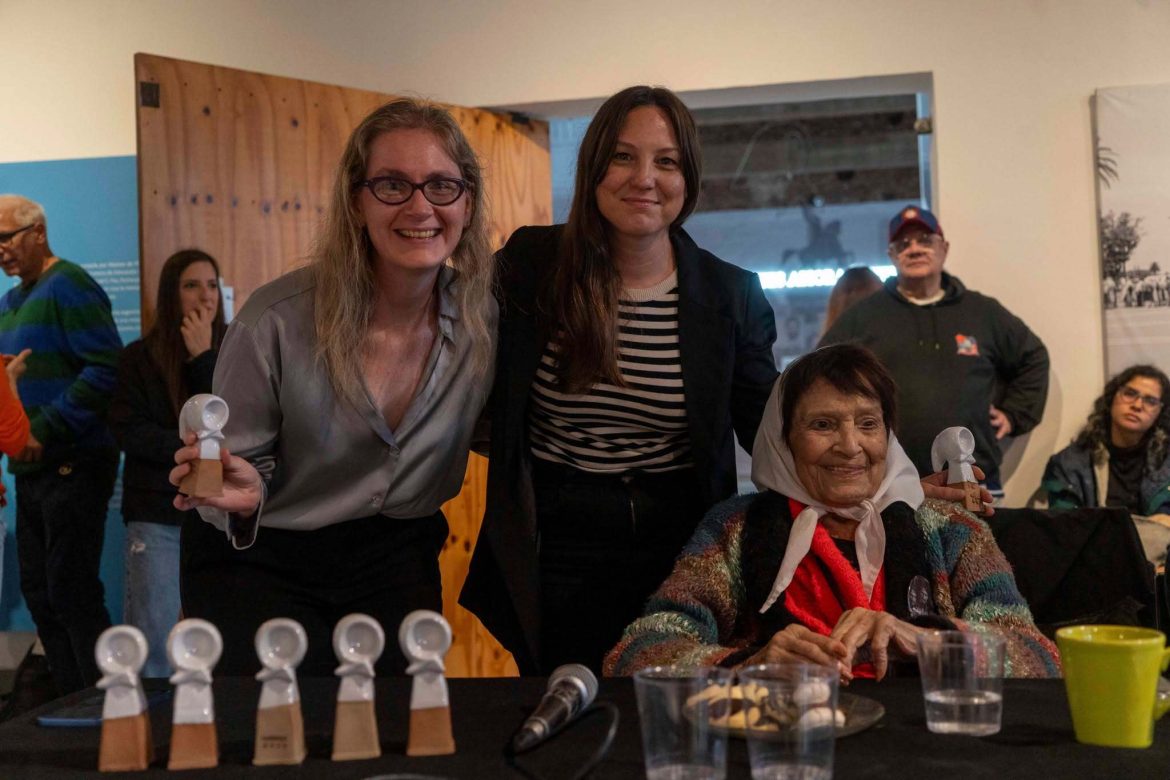
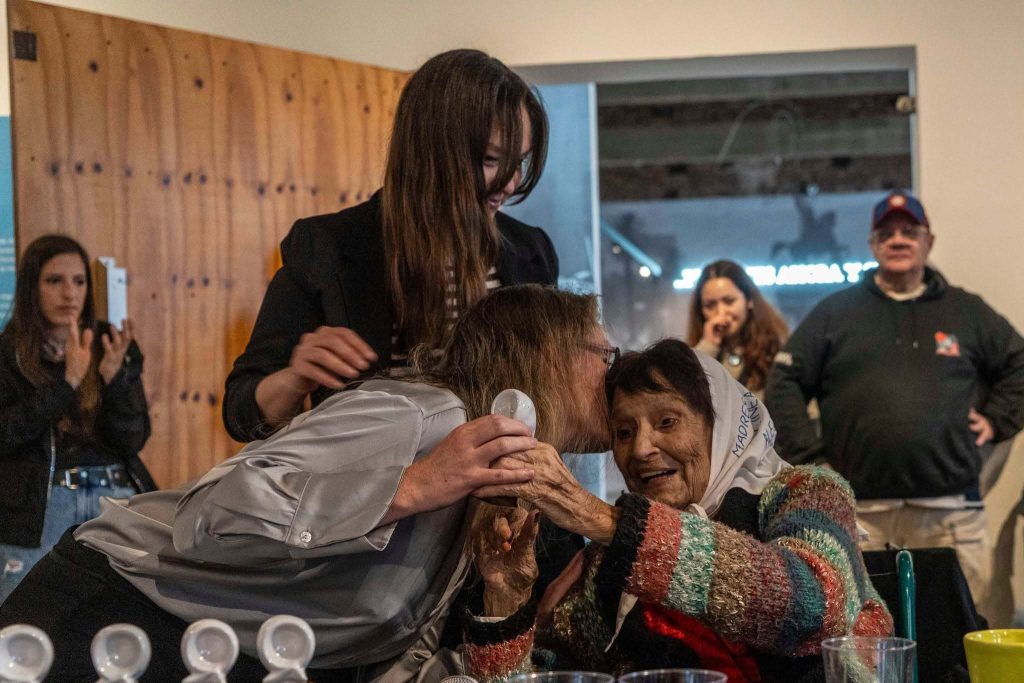
The Mothers of Plaza de Mayo gave thanks and recognition to the Herald team — especially to managing editor Juan Décima, who coordinated the project — on Saturday, August 30, at a gathering marking International Day of the Detained-Disappeared.
During the event at the House of our Children, Life and Hope, Taty Almeida, president of the Mothers of Plaza de Mayo, recalled how Robert Cox, the Herald’s editor during the dictatorship, listened to the mothers and reported on their fight for their disappeared children’s safe return, ultimately being forced into exile because of the threats he was facing from the dictatorship.
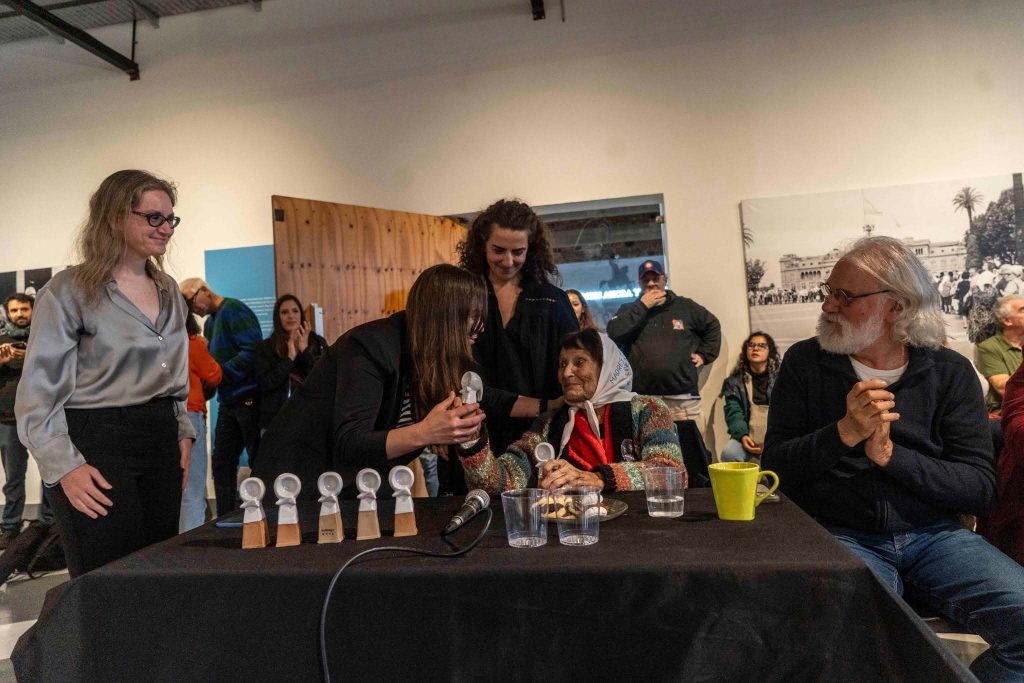
“This gathering isn’t to celebrate, because there’s nothing to celebrate — but it is to remember the detained and disappeared,” Almeida told the audience. “Today more than ever, we remember those who are no longer with us, but who are still here. And why are they still here? Thanks to you and so many others, who carry the torch we’ve passed you.”
Almeida presented the Herald’s editor-in-chief Estefanía Pozzo and deputy director Amy Booth with statuettes of a figure wearing the white headscarf that symbolizes the Mothers of Plaza de Mayo and the fight to defend human rights.
Previously, the mothers’ biographies were only available in Spanish. The English-language version, which visitors to the mothers’ space can listen to by scanning a QR code, will allow new international audiences to learn about the mothers’ lives, the atrocities of the 1976-1983 dictatorship, and the fight for memory, truth and justice.
The ESMA museum and memory space is a UNESCO World Heritage Site in Buenos Aires, situated in the compound that was formerly the Navy School of Mechanics. During the last dictatorship, it was used as the largest clandestine detention and torture center in the country. Nearly 5,000 people were held there, most of whom were later murdered.
Members of the general public can visit the site to learn about the dictatorship, the detained and disappeared, and Argentina’s fight for human rights.
Cover photo: Guido Piotrkowski
