
 Martina Jaureguy
 For a group of human rights secretariat workers, 2025 began with them learning they’d lost their jobs — from police guarding their office door.
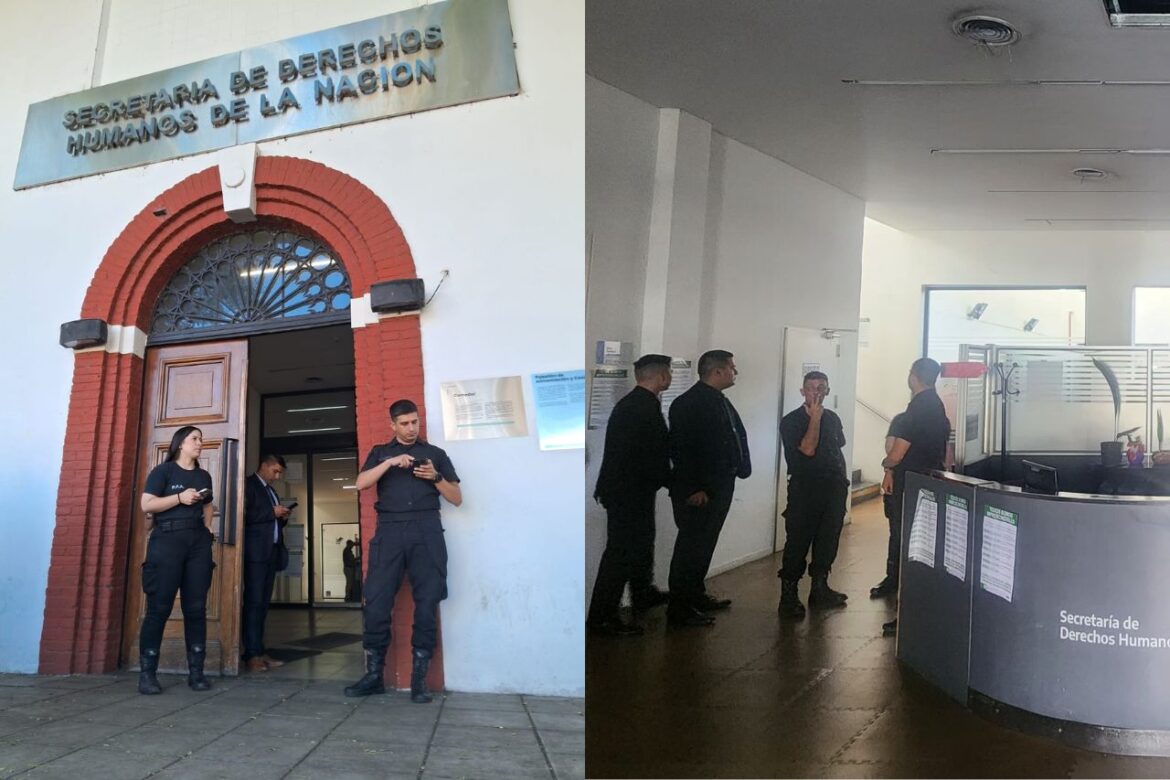
When they tried to enter their workplace on Thursday, four officers standing outside had a list of workers who’d been laid off. Only those whose names weren’t on the roster were allowed inside.
“There are people who got to the door and found out they were on that list, and therefore, that they were fired,” said human rights secretariat worker Paula Donadío, a representative for the State Workers’ Association union (ATE, by its Spanish initials).
Those firings are part of the 400 layoffs that ATE estimates were carried out at the secretariat in December. The secretariat is part of Argentina’s Justice Ministry, which decided the layoffs. Around 50% of the secretariat’s staff lost their jobs that month alone. Workers have yet to determine the exact number of redundancies: at the time of writing, many workers had still not been formally informed whether their employment would continue or not.
Workers from the National Memory Archive were unable to enter the building on Thursday morning, although doors were opened around two hours later. The lockout was due to a problem with the facility’s biometric identification system, one worker at the archive told the Herald, requesting anonymity because of the sensitive context. A source at the Justice Ministry said the delay was due to a problem with the key to the building.
The ministry source told the Herald that the layoffs were happening because many workers performed overlapping tasks, and that the workers had been informed “weeks ago.”
“There were areas where we could make many cuts, always keeping a necessary number of employees working,” he said. He added that they were part of a voluntary redundancy plan that has been in place for months. He added that he did not believe that workers had only learned of their dismissal when they were forbidden from entering their offices.
Organizations including the Inter-American Commission on Human Rights have called on Argentina to guarantee the necessary resources for its identity and memory policies.
You may also be interested in: IACHR calls on Argentina to guarantee identity policy resources
Stationing police at a former torture center
The Human Rights Secretariat is headquartered in the former Navy School of Mechanics (ESMA) compound, where the last military dictatorship’s deadliest clandestine detention center used to operate — imbuing the hefty police presence with disturbing echoes of the past.
“Since [Human Rights Secretary Alberto] Baños was appointed, the police presence here, especially outside the secretariat’s building, has tripled,” Donadío said. “There’s no justification for it.” A video sent by Donadío showed several other police officers, as well as a Federal Police van and bus outside the compound.
The Justice Ministry source claimed the police were present because of “violent” threats from the union.
HIJOS, a human rights group formed of children of the dictatorship’s victims, also condemned the police presence. “They are using police where a clandestine detention center operated, and where there is now a memory site,” they wrote on X.
On Tuesday, the Justice Ministry announced that the Haroldo Conti cultural center, which depends on the secretariat, would remain closed from Thursday onwards due to “internal restructuring.” Workers were instructed not to show up at work via a WhatsApp message signed by Baños.
The Haroldo Conti cultural center and the National Memory Archive buildings are also located within the ex-ESMA compound. Other human rights organizations and NGOs that also function there were not reporting difficulties on Thursday morning.
An uncertain situation
Many human rights secretariat workers are in a state of limbo. In Argentina, it’s common for state employees to be hired on temporary contracts, often via a third party. These are renewed periodically, but can be terminated at the government’s discretion.
In December, some of the secretariat’s workers agreed to enter a voluntary redundancy plan on the promise that they would be hired again via a different contract, but they are unsure whether that promise will be honored, according to Donadío.
“Some people who received that promise got here today and were told they can’t enter the building,” she said, noting that the ministry had yet to formally respond.
“I think this has to do with the fact they want to dismantle the secretariat,” Donadío said. “A secretariat with this workload can’t function without its workers.”
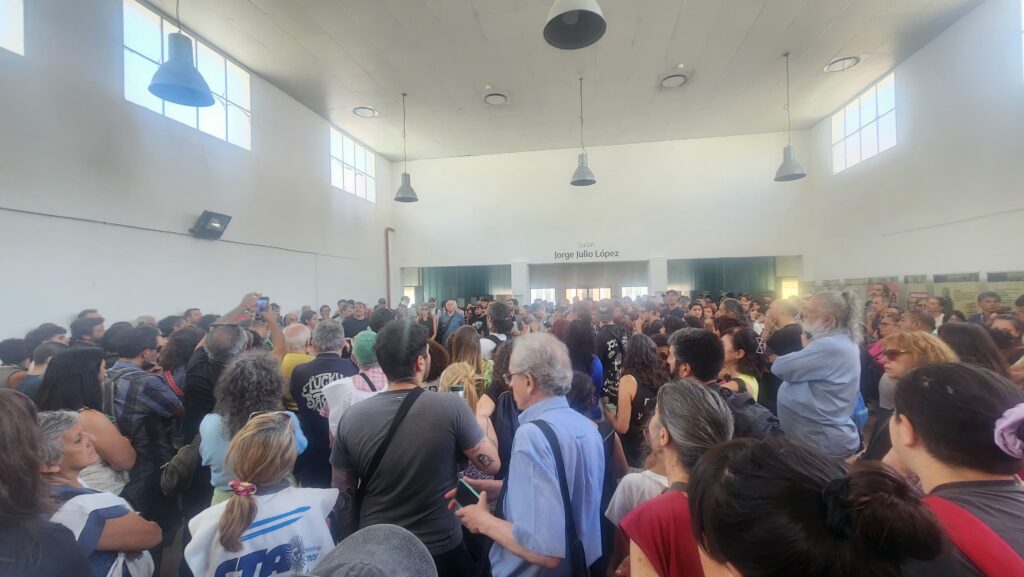
The secretariat’s workers held an assembly on Thursday morning to analyze the layoffs and the temporary closure of the cultural center. Even those who were fired were allowed to enter the building for the assembly. They decided to hold a mass on Friday at 11 a.m. for the fired workers and a festival on Saturday at 6 p.m. outside the Haroldo Conti cultural center to protest the decisions.
You may also be interested in: Grandmothers of Plaza de Mayo warn of ‘dangers’ to Argentina’s memory process
