
 Facundo Iglesia
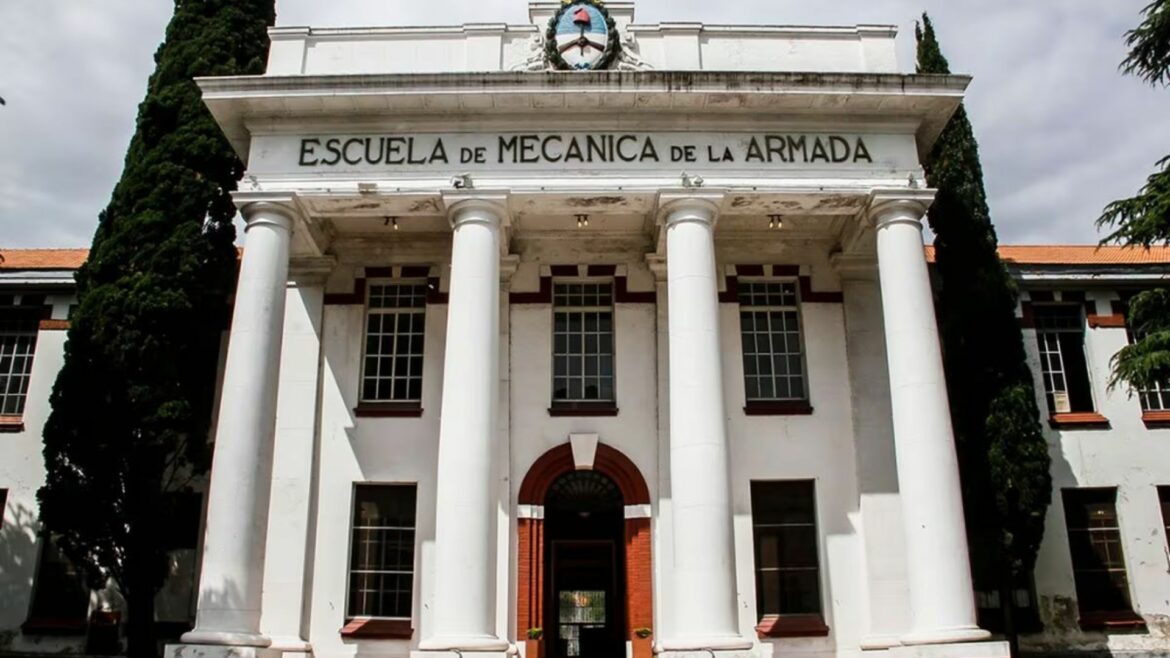
Argentina’s Justice Ministry announced on Wednesday that it will repurpose a part of the ESMA complex in Buenos Aires as an office for federal prosecutors.
A clandestine detention center during the 1976-1983 dictatorship, the complex now houses museums and the branches of several human rights organizations, many of whom the government did not consult regarding their decision.
The ESMA memorial museum, the complex’s main building, was designated as a UNESCO World Heritage Site in 2023.
The Milei administration intends to use a 5,000 square-meter building in the 17-hectare complex as the prosecutors’ office. The Justice Ministry said the decision was made as Buenos Aires City’s federal justice will change to an accusatory system, which gives more power to prosecutors, on August 11.
A spokesperson for the Justice Ministry confirmed to the Herald that this will be the Raúl Alfonsín building, named after the country’s first democratically elected president after the end of the dictatorship.
“It had that name, but we don’t use it — We delivered it without a name,” the spokesperson said.
“This property, previously used for ideological programs and political party activities, will be used to strengthen the judicial infrastructure and contribute directly to the fight against insecurity,” a communiqué by the Justice Ministry said.
People who work at the ESMA contest that version of events. The building was built in 2019 by the Mauricio Macri administration and was intended to harbor the then-Justice and Human Rights Ministry. However, it was never used.
Javier Milei has been at odds with the country’s human rights movement even before taking office. He has said the dictatorship was a “war” where “excesses” were committed and that the true number of disappeared people is far lower than 30,000. Milei’s “chainsaw” measures took special aim at human rights policies.
Earlier this month, the government downgraded the Human Rights Secretariat to an undersecretariat, meaning that 30% of its employees will be fired. In the past year, the Justice Ministry laid off half of the workers the secretariat originally had.
“Our decision is in line with President Javier Milei’s mandate to eliminate unnecessary expenses, reduce the size of the state, and redirect existing resources to what really matters: a swift and efficient Justice at the service of the Argentine people,” the ministry’s communiqué added. “We reaffirm our commitment to provide judges and prosecutors with all the necessary tools to put criminals behind bars.”
