
 Facundo Iglesia
The shares of Argentine companies on Wall Street and sovereign bonds surged the day after Donald Trump was re-elected president of the United States. Despite ideological affinity with President Javier Milei, analysts are cautious when gauging the potential economic benefits of the Republican businessman returning to the White House for Argentina.
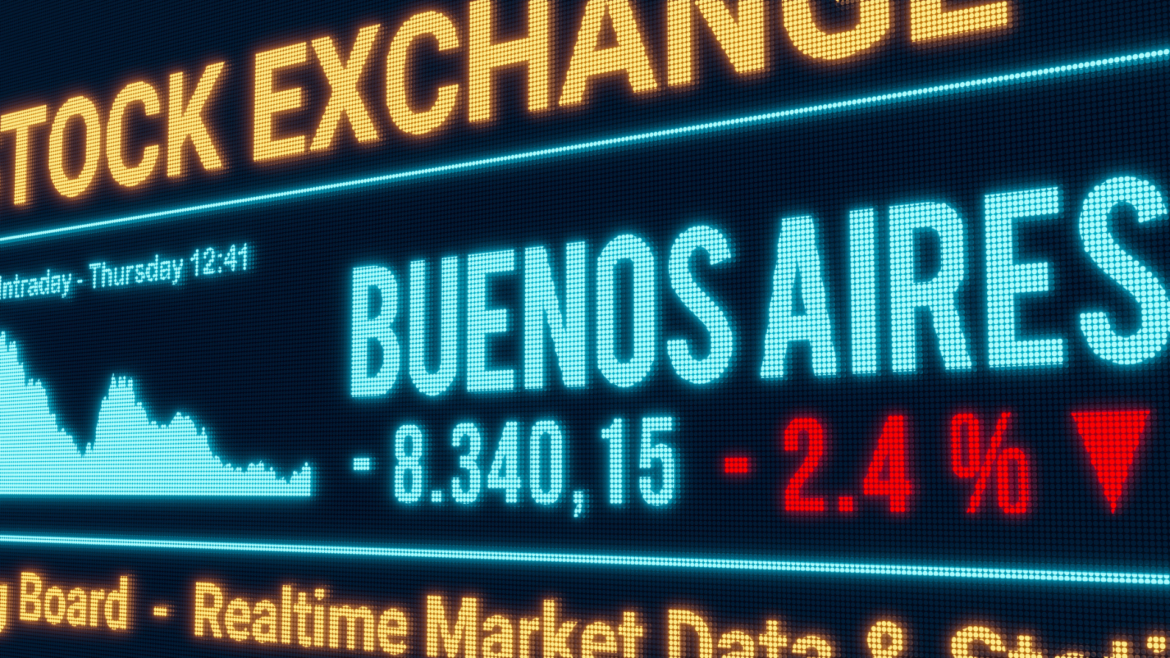
Traded through American Depositary Receipts (ADRs), Argentine companies operating in the United States saw increases of more than 10%. At press time, at the top of the chart, telecommunications company Telecom grew by 10.6%, followed by the Grupo Superveille and Macro banks, whose shares increased by 9%. Bonds registered increases in the foreign market of up to 2.1% for the Global 2038 and Global 2041.
However, not everybody is convinced that the bonanza for Argentina will continue.
Trade and investment
Todd Tucker, the Roosevelt Institute’s director of Industrial Policy & Trade, told the Herald that, despite the similarities in style, Trump and Milei do not see eye to eye in economic policy, and their differences could impact potential growth in trade between both countries. “It’s important to note that Trump is not a libertarian like Milei. He likes to use tariffs, and is open to using subsidies and market interventions like the Defense Production Act,” Tucker said.
“If Milei can make peace with those types of tools, there is an opportunity for negotiation — if Trump follows through with the promise of universal baseline tariffs of 10% or more, these negotiations could come quite soon into his term.”
However, he added that there has been widespread agreement across the political spectrum that the missing piece in industrial policy has been international coordination, especially around supply chains. He added that there is a desire to use tools like the Development Finance Corporation and Export-Import Bank “to promote interlinked US and international supply chains” and to “open these tools up to make it easier to invest in middle-income countries like Argentina.”
“So you’ll see an appetite for more public, as well as private, U.S. investment in destinations like Argentina,” he concluded.
Fresh funds
Milei is betting that the U.S. Department of Treasury, under a Republican administration, would help sway the International Monetary Fund (IMF) to release fresh funds to help Argentina deal with its international reserve scarcity crisis and lift its foreign currency controls.
However, in August, Mauricio Claver-Carone, the executive director for the U.S. at the IMF in 2018, dismissed that possibility. Claver-Carone played a key role in unlocking the US$57 billion loan to Mauricio Macri’s government in 2018 during Trump’s first presidency.
“Milei is not Macri. Macri had a relationship of more than 30 years with Trump. Trump was a partner of Franco, Mauricio’s father. There was trust,” he said.
According to a statement by Javier Timerman, Adcap Grupo Financiero broker’s managing partner, the Trump-Milei relationship could unblock “some kind of disbursement.” However, he added that the US under Trump “will contribute less to multilateralism and surely the multilateral organizations from which Argentina needs funding will be defunded.”
Similarly, Tucker said that Trump’s administration will “generally have an allergy to multilateral institutions.”
“So a lot will depend on who Trump hires to be put into the key positions, and whether they can make the case that the IMF is a tool for achieving Trump’s geo-economic goals,” he told the Herald.
You may interested in: Milei is all in for Trump. Is that a sound bet?
Bonds, dollars and pesos
U.S. Treasury bonds fell sharply, and their yields surged on Wednesday. In his Bloomberg newsletter, British financial journalist John Authers said this was due to the bond market forecasting that a Trump presidency could raise deficits and inflation. “A hugely ironic outcome given that his success appears to have been based in large part on the belief that he can fix the inflation problem,” he added.
The rise in interest payments for U.S. Treasury bonds could be detrimental to emerging markets such as Argentina, analysts agree.
“Donald Trump’s policies are policies that do not suit Argentina because they focus on protectionism, on lowering taxes and worsening the fiscal deficit,” Timerman. This could lead to higher interest rates “because the Federal Reserve will become much more restrictive regarding the possibility of the economy overheating and inflation returning,” Timerman added.
The U.S. dollar’s “epic rally” on the day after the elections could also be a “big problem” for emerging markets. In fact, currencies like the Mexican peso fell after Trump’s victory, while the Argentine peso remained stable since the country’s Central Bank is devaluing it at a 2% monthly rate.
“In a scenario of high rates and protectionism, we will have a rise of the dollar in the world, a drop in commodities as a result of the rise of the U.S. dollar, and this will affect Argentina,” Timerman said, adding that Trump plans to defund programs in Europe, thus weakening the Euro and making the Argentine currency less competitive.
