
 Facundo Iglesia
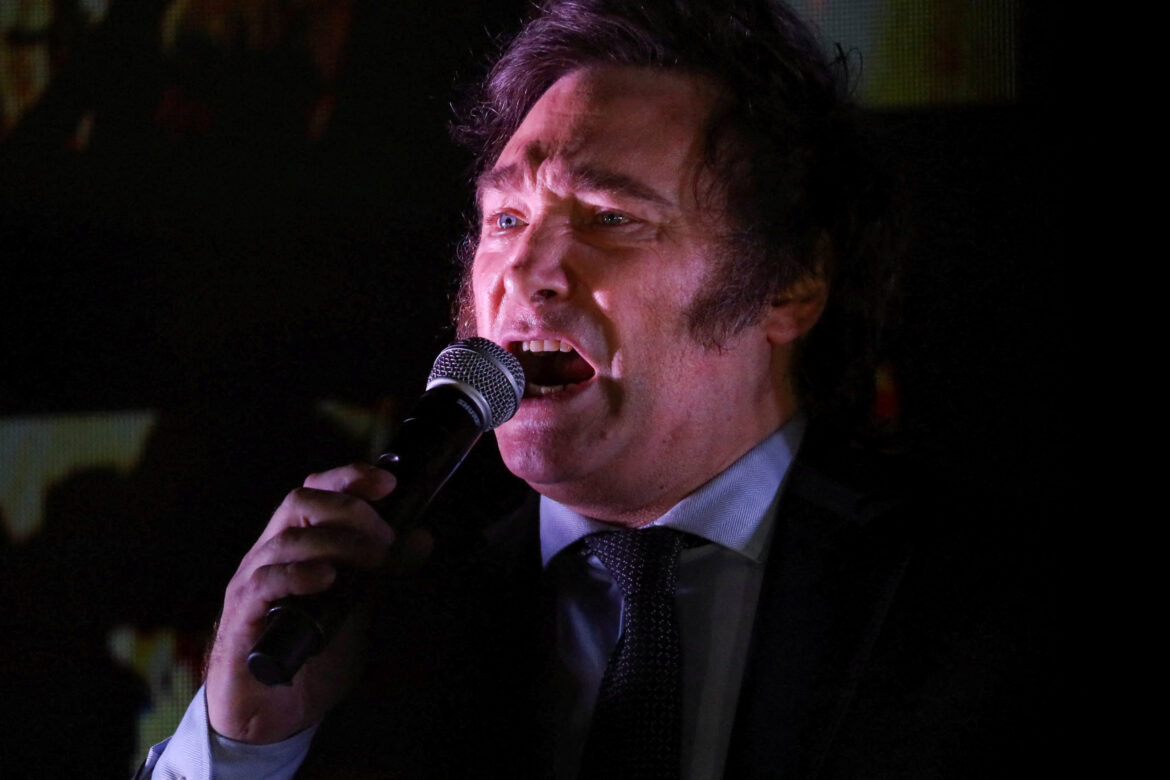
Argentine President Javier Milei accused an International Monetary Fund member of being influenced by the São Paulo Forum, a conference of left-wing political parties and organizations from the Americas.
During a Monday interview with the Mitre radio station, Milei said the central bank’s puts — a financial instrument that gives its holder the right to sell an asset back to its seller at a specified price on a specified date — is the main reason why the government hasn’t lifted the exchange restrictions known as the cepo. He claimed that they comprise “four points of the GDP.”
“But this is not only the responsibility of the previous government and the previous Central Bank, but also of some IMF technical staff who endorsed this or turned a blind eye,” he said. “Let’s say, some staff member of the International Monetary Fund who may have links with the São Paulo Forum.”
Milei did not name him, although he gave enough hints (“Chilean and a former minister”) to point to Rodrigo Valdés, the Fund’s Director for the Western Hemisphere.
Valdés, who oversees Argentina’s case in the Fund, was the Finance Minister under Chilean President Michelle Bachelet. He has a doctorate in economics from the Massachusetts Institute of Technology (MIT), is close to Milei’s advisor Federico Sturzenegger, and is not a member of the São Paulo Forum — a conference created in 1990 by the Brazilian Workers’ Party, which is often the target of the president’s criticism.
“The São Paulo forum is an agenda to create the Soviet Union in Latin America,” Milei said in 2023.
Devaluation and blue dollar surge
During the interview, Milei was asked about the IMF’s eighth review, which some analysts interpreted as insisting that the country should devalue its currency by 30%. “That is false,” he said multiple times. “In fact, Minister [Luis] Caputo himself explained that, when the report is read correctly, it does not point that out.”
Last week, Caputo said that the 2% monthly crawling peg (the peso devaluation rate) would not be changed, although the Fund’s report said the government would devaluate the currency quicker. “While the fixed rate of crawl has helped to anchor inflation following the large step devaluation, the authorities will adjust foreign exchange policy over time to move more flexibly,” the staff report said.
On Monday, Milei said that he would not devalue. “The Argentine problem is not monetary, it is a problem of competitiveness and that cannot be solved by devaluating”, added Milei. He described analysts who contend the peso suffers from an exchange rate lag as “imbeciles.”
While the official dollar closed at AR$948.5 on Tuesday, the informal “blue” exchange rate reached its highest recorded level (AR$ 1365) after two weeks of consistent increase. Analysts place part of the responsibility on the agricultural sector for not selling their U.S. dollars to the government as they expect a devaluation. The lack of liquidation impacts the Central Bank’s international reserves and increases tensions in the foreign exchange market. For example, the Cereal Exporting Centre and the Argentine Chamber of the Oil Industry reported bringing in US$2.61 billion for grain exports in May — a 37% decrease in dollars sold to the Central Bank compared to May 2023, when the country was undergoing a historic drought.
Financial analyst Gustavo Ber told the Herald the blue dollar’s increase could be influenced by more pesos in the market due to June payouts and lower interest rates encouraging the dollarization of portfolios. However, he said that financial assets have reflected investors remaining cautious about the government’s ability to lift the cepo, manage its relationship with the IMF, replenish international reserves, kickstart economic activity, and set a new monetary and exchange rate scheme in motion.
“If there is more clarity regarding this road map, I believe that the blue dollar — as usual, accompanying the ‘financial dollars’ — should become calmer, even though the political and economic signals will continue to be monitored,” he concluded.
