
 Buenos Aires Herald
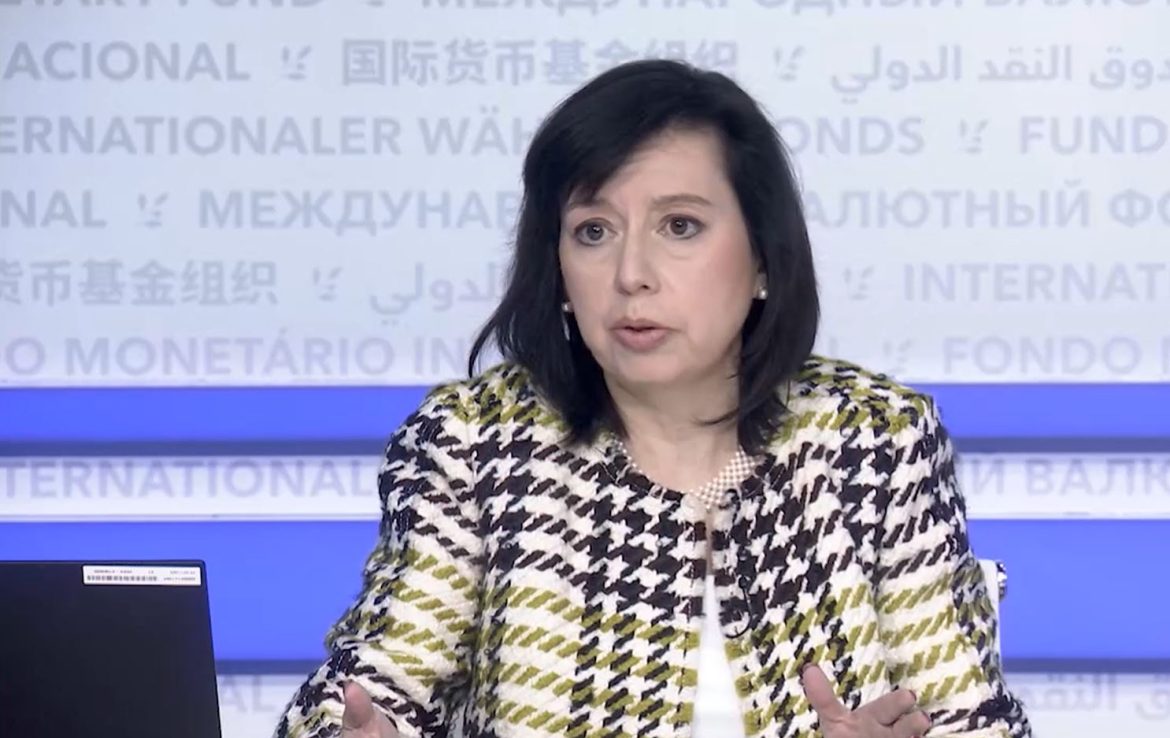
International Monetary Fund (IMF) spokeswoman Julie Kozack said that negotiations between Argentina and the lender on a new agreement have progressed but declined to give any further details at her press conference on Thursday. The Fund confirmed in December that Argentina had formally requested a new deal, although conditions for a new disbursement remain unknown.
“Constructive and frequent discussions continue, and we will provide further details on next steps when we have them,” Kozack said. She added that, despite journalists’ interest, the Fund would like to ensure there is “space for the staff and the authorities” to continue conversations given that there has been “good progress” so far.
The country signed an Extended Fund Facility (EFF) agreement with the IMF in 2022, when Alberto Fernández’s administration renegotiated the US$44-billion debt former President Mauricio Macri acquired in 2018. The 2022 deal came with an economic program the country had to comply with to get disbursements from the Fund every three months, which were used to pay Argentina’s previous debt with the IMF.
Now, the Milei administration wants a new deal that includes fresh funds to strengthen the country’s ailing international reserves.
Kozack reiterated that the Fund recognizes Argentina’s “tremendous progress” in reducing inflation, stabilizing the economy, and rekindling growth, as well as a nascent reduction of poverty.
She also offered some hints of what might be at play with the new deal.
“The new program will aim to build on the gains that have been achieved so far, while also addressing the remaining challenges that the country faces,” said Kozack. She added that the Fund’s staff and Argentine authorities have a “shared recognition” regarding the need to maintain a consistent set of fiscal, monetary, and foreign exchange policies, while furthering growth-enhancing reforms, in order for the program to succeed.
The IMF, as well as several market analysts, have been warning about Argentina’s exchange rate lag, meaning the over-appreciation of the country’s currency. The Fund even recommended the country implement “greater exchange rate flexibility” — a larger devaluation than the monthly 1% the administration is carrying out.
One the day before Kozack’s conference, however, Economy Minister Luis Caputo rejected the idea that these plans would be carried out.
“The agreement with the Fund will not lead to a devaluation”, the minister said in an interview with the La Nación + TV channel. Answering a question regarding why goods and services in Argentina are more expensive than in most developed countries, Caputo acknowledged that “some prices are ‘ahead’ [of what they should be] but this does not mean that the dollar [exchange rate] is lagging.”
President Javier Milei had already spoken about some of the implications of a new deal with the Fund. On Tuesday, he said the country’s over-encompassing foreign currency controls could be removed “faster” if his government reaches a new agreement with the IMF.
Caputo, however, said the elimination of these controls would not be immediate.
“[A new deal with the Fund] does not imply that exchange restrictions will be lifted the day after an agreement is reached,” he said.
Last week, an IMF technical mission was in Buenos Aires and met with representatives of Argentina’s Economy Ministry and Central Bank, which Kozack confirmed were aimed at “advance discussions on a new program.”
