
 Estefanía Pozzo
U.S. Treasury Secretary Scott Bessent has announced that the United States bought pesos in the Argentine market today as part of the negotiations under way in Washington to assist President Javier Milei’s government. Finance specialists said this kind of direct intervention in the local forex market by the U.S. was “unheard of.”
“Today we directly purchased Argentine pesos,” Bessent said.
In a lengthy post on X, the U.S. official stated: “Argentina faces a moment of acute illiquidity. The international community — including [the International Monetary Fund (IMF)] — is unified behind Argentina and its prudent fiscal strategy, but only the United States can act swiftly.”
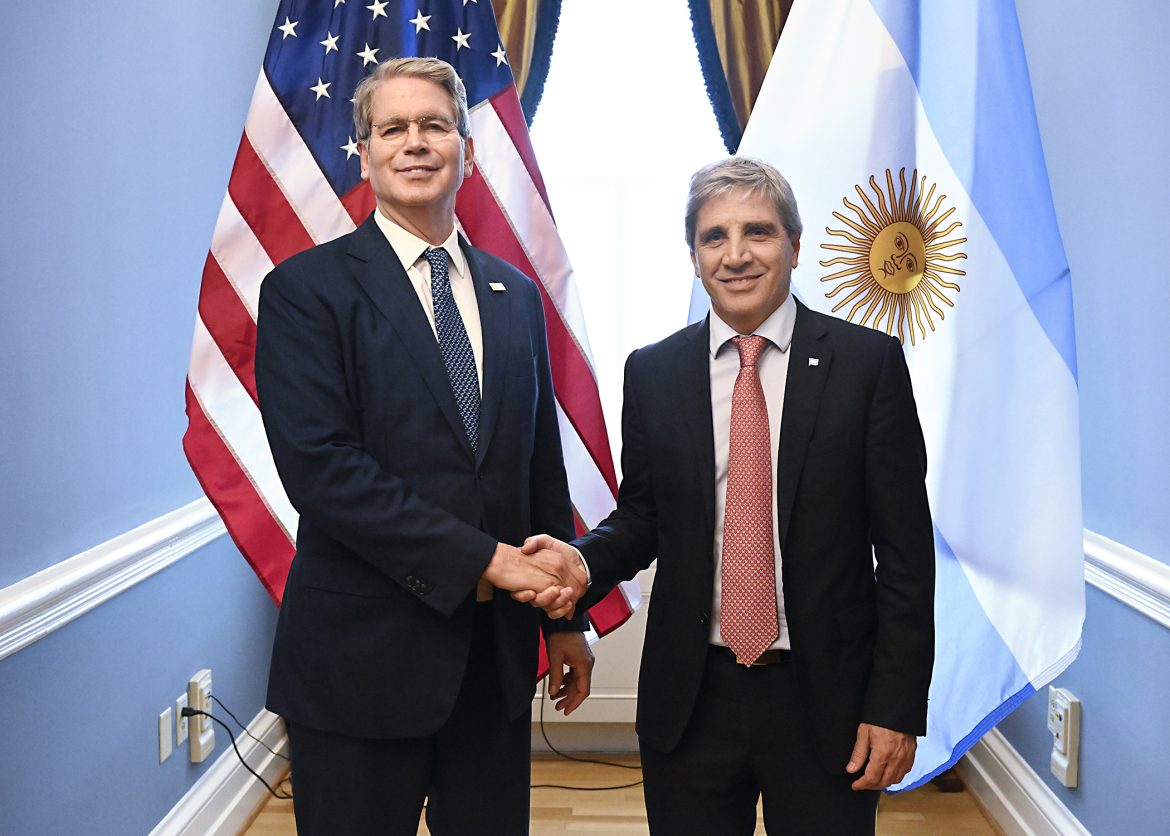
The announcement was made after a week of negotiations in Washington between officials from Argentina’s economic team, led by Economy Minister Luis Caputo, and their US counterparts.
The dollar exchange rate is a measure of economic fortune closely watched by Argentine society. The peso weakening against the dollar is read as a sign of troubled waters, and can drive cycles of inflation. The U.S. Treasury’s decision to intervene in the exchange market and prop up the peso was therefore interpreted as a direct action affecting Argentine affairs.
Bessent also said that they “have finalized a $20 billion currency swap framework with Argentina’s central bank.”
“The U.S. Treasury is prepared, immediately, to take whatever exceptional measures are warranted to provide stability to markets.”
In recent weeks, after markets raised doubts over the sustainability of Argentina’s economic plan, the government has been depleting its scarce international reserves to contain a run on the peso. In late September, Milei met in New York with U.S. President Donald Trump, his main international ally. After that short meeting, the U.S. Treasury announced it would grant a full-on bailout for Argentina.
On Thursday, Milei thanked Bessent for his “strong support for Argentina” and Trump for his “vision and powerful leadership” in a post on X.
“Together, as the closest of allies, we will make a hemisphere of economic freedom and prosperity,” he wrote in a rare English post. “We will work hard every day to provide opportunity (sic) for our people,” he added.
Economy Minister Luis Caputo also thanked Bessent for his “unwavering support.”
“I eagerly anticipate our meeting next week, where I am confident our teams will continue to collaborate with the same spirit of determination and partnership to advance our mutual objectives,” he added.
Rumors of intervention
Between 2:00 p.m. and 3:00 p.m., the wholesale market exchange rate for the dollar fell from AR$1,460 to AR$1,420, sparking rumors of a possible intervention by the U.S. Treasury through a local bank.
Sources from Banco Santander confirmed to the Buenos Aires Herald that a message had been sent to their clients indicating that the bank “executed transactions on behalf of the U.S. Treasury for the purpose of foreign exchange intervention.”
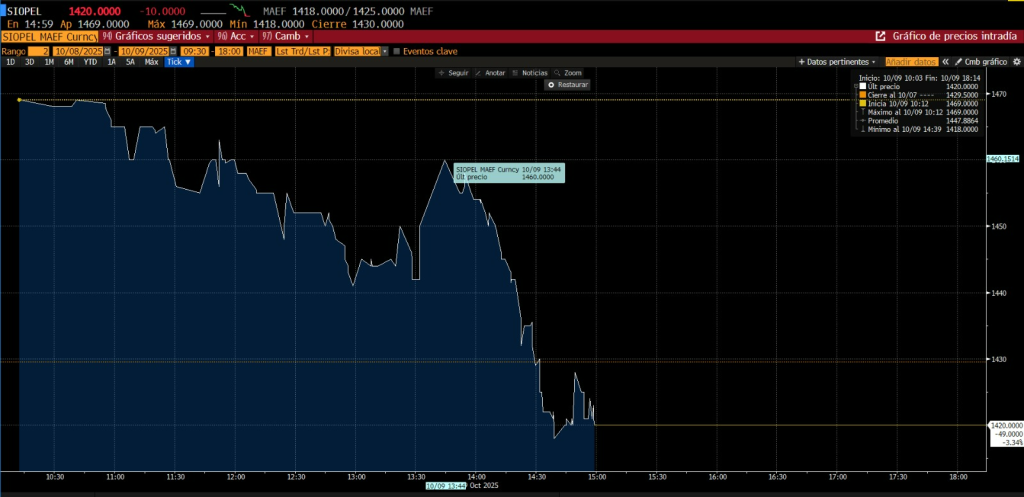
The transaction involved transferring dollars to Banco Santander’s account in the United States. From there, the funds were sent to the branch in Argentina, where they were sold on the local market in exchange for pesos, a source with knowledge of the matter told the Herald.
IMF assistance
U.S. aid to Argentina also includes special assistance from the International Monetary Fund.
The head of the organization, Kristalina Georgieva, told Reuters yesterday that the IMF is working closely with the U.S., the World Bank, and the Inter-American Development Bank in hammering out an aid package for Argentina.
According to Georgieva, the assistance could come as a loan that made use of the US’s Special Drawing Rights (SDRs, the IMF’s “currency”), like Qatar did in 2023 when Sergio Massa was economy minister.
At the time, the Argentine government had negotiated a “bridge” loan with Qatar to use Qatari SDRs to pay a maturity with the IMF.
‘Really unheard of’
Gustavo Quintana, an analyst and broker for PR Corredores, said that Bessent’s remarks line up with what happened in the exchange market on Thursday. “There was significant supply in the market, which depressed prices, bringing them below yesterday’s closing levels,” Quintana told the Herald.
According to the broker, the US Treasury’s intervention was carried out through other financial institutions, as it is not authorized to trade directly in the Argentine market. “The Treasury is not authorized to do so directly. However, it trades like any other entity, selling to banks, which then sell in the market,” he explained.
Quintana said that the U.S. Treasury is expected to “sell dollars and buy Argentine assets with pesos.” One of the banks expected to participate in the transactions confirmed this to the Herald. “The exchange rate tension could surely ease, with the unwinding of dollar positions.”
“It is really unheard of,” Quintana added.
Additional reporting by Facundo Iglesia
