
 Facundo Iglesia
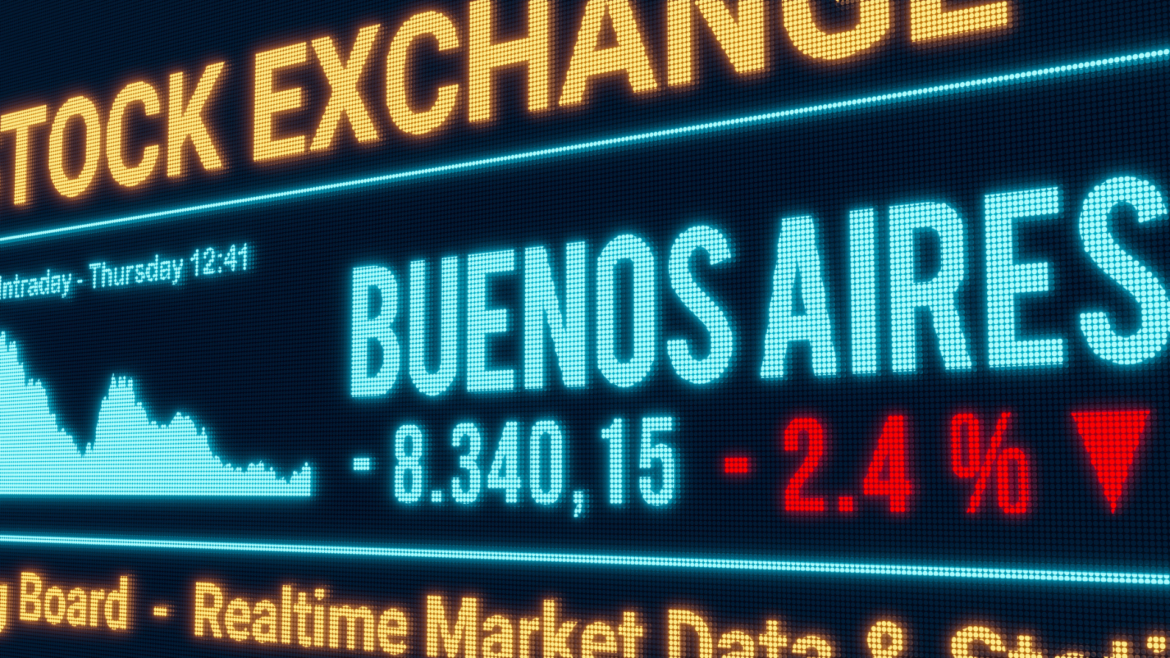
Argentine markets fluctuated this week on the heels of an explosive bribery scandal roiling the Milei administration and a recently announced monetary policy deemed by many to be risky. The EMBI or country risk index, which measures the likelihood of a debt default, ticked up to 829 basis points on Tuesday — its highest value since April, when the government partially lifted the currency restrictions known as the “cepo.”
Last week, audio leaked of former national disability agency director, Diego Spagnoulo, accusing Milei’s sister and Presidency Secretary Karina Milei, along with other public officials, of accepting kickbacks from drug companies in exchange for state contracts.
Argentine bonds and shares plummeted on Monday only to rebound on Tuesday, with stocks traded on Wall Street through American Depositary Receipts (ADRs) making significant gains. These include Transportadora de Gas del Sur (+3.6%), Central Puerto (+2.9%), Pampa Energía (+2.3%) and YPF (+2.1%).
Meanwhile, the exchange rate fell 0.4% to AR$1356.5 on Thursday after having increased four business days in a row
“Electoral uncertainty has increased caution among traders for some time,” independent financial analyst Gustavo Ber told the Herald.
“Even so, the recent political noise has only accentuated the weakness of dollar bonds in recent trading sessions amid uncertainty about the results—and possible implications—of the Buenos Aires province and October national elections.”
Last week, the U.S.-based financial corporation JP Morgan Chase published a report in which it cut its growth forecast for the Argentine economy for 2025 from 5.3% to 4.7%. This reflects the economic slowdown in the second quarter of this year, along with interest rate volatility, and the uncertainty surrounding the November midterms.
Meanwhile, the government is taking an unconventional approach ahead of the elections. Instead of encouraging economic activity, as national governments often do, Milei’s economic cabinet has sought to slow down the economy in an effort to lower the U.S. dollar exchange rate and inflation.
On Tuesday, the Central Bank increased its reserve minimums, or the percentage of deposits that financial institutions and funds are required to keep frozen, to 53.5%. The financial institution had already increased that number to 50% two weeks ago.
Economist Christian Buteler told the Herald that Monday’s panic was also about the economic situation more broadly.
“Many presidencies can go through periods of more or less credible suspicion of corruption,” he said. “But Argentina’s economy stopped growing a couple of months ago.”
Buteler added that the government’s high interest rates make it “practically impossible” for activity to recover.
“Even inflation has stopped decelerating and is accelerating every month,” he continued. “Today we are seeing some rebound in bonds, but if these other variables don’t change, [Milei’s economic program] will be difficult to sustain.”
