
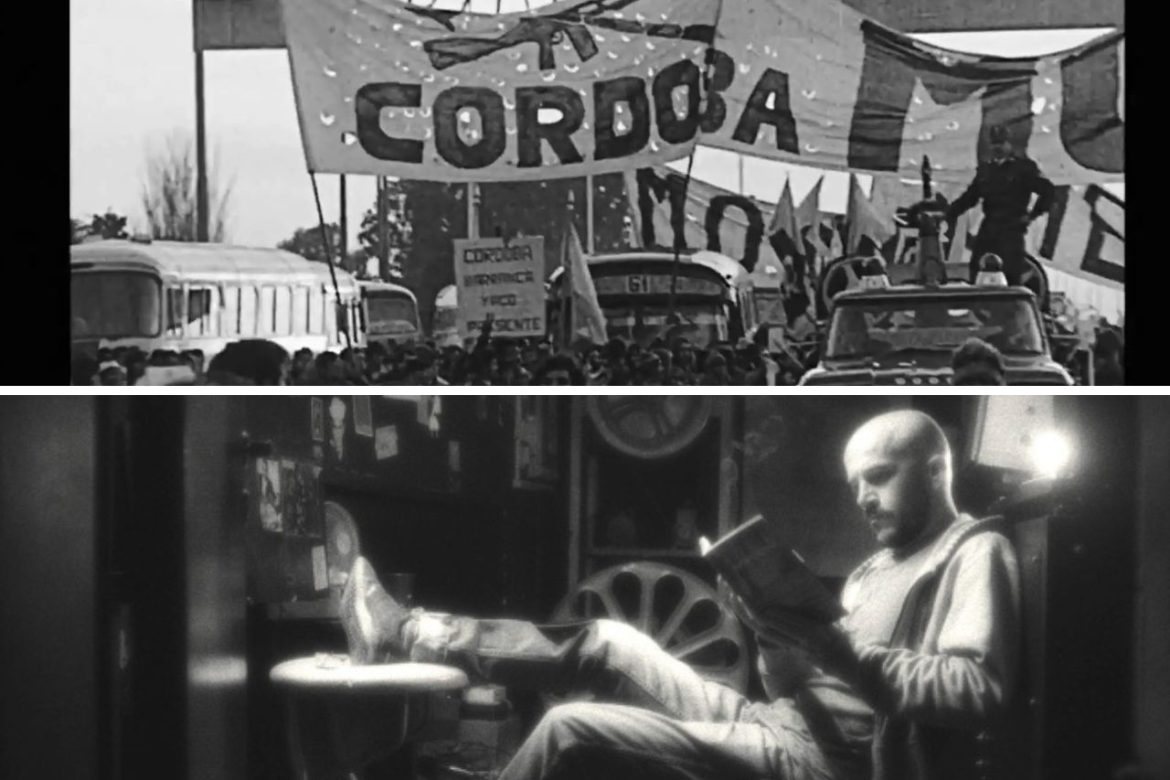
 Agustín Mango
Separated by half a century, two films from Córdoba province now screening at MALBA examine how cinema becomes a refuge — and a weapon — in times of political and economic upheaval.
Through a movie theater and recovered film reels, The Night is Fading Away and All You Need to Make a Movie Is a Gun both explore issues of solidarity, resistance and survival across different times. One rescues the memory of a turmoiled past; the other captures a precarious present.
Shot in a beautiful and sophisticated black and white, Ramiro Sonzini and Ezequiel Salinas’ The Night is Fading Away follows Pelu, a struggling thirtysomething projectionist at a municipal film club in Córdoba’s capital city. Played by real-life projectionist Octavio Bertone, Pelu’s quiet life is troubled when budget cuts in state funds force the owner to fire one of the two existing projectionists, and Pelu draws the short stick.
Offered a position as the building’s night watchman, he spends the nights roaming inside the cinema, finding refuge among its projectors, empty screening rooms and reels of film. When his roommate loses his job and is unable to pay his half of the rent, the theater also becomes Pelu’s secret home.
In the veil of night, Pelu forms an unlikely community with homeless parking attendants seeking refuge from the weather, as well as a friend who uses the projection booth to film content for her OnlyFans channel. The economic hardship binding them together also threatens to shut down the cinema, putting their fragile sanctuary at risk.
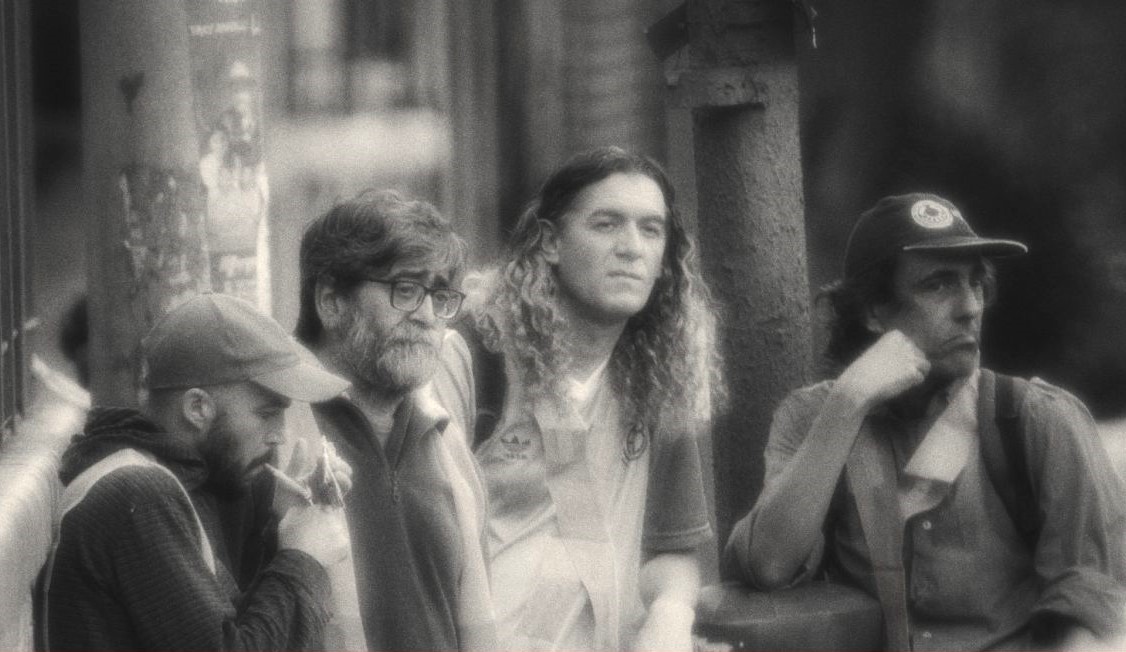
Sonzini and Salinas’ film is also a tribute to movie theaters as spaces of both magic and resistance, much as Malayan filmmaker Tsai Ming-liang bid a nostalgic, ghostly farewell to old cinemas in Goodbye, Dragon Inn (2003). It also echoes Argentine writer/director Edgardo Cozarinsky’s reflections in Palacios plebeyos (Commoners’ Palaces), where he describes how grand movie theaters, built like opulent palaces, transformed cinema into a mass form of entertainment for the working classes.
An ode to cinephilia and a poignant portrait of solidarity in times of crisis, The Night is Fading Away echoes a similar feeling to late 1990s landmark films such as Bruno Stagnaro and Israel Adrián Caetano’s Pizza, Beer, Cigarettes or Pablo Trapero’s Crane World. The films, which ushered in the New Argentine Cinema depicted the social and economic malaise (unemployment, abandonment and poverty-driven crime) that would lead to the 2001 meltdown.
Throughout the years, Argentina’s rich history of political cinema has delivered iconic films that became expressions of specific social zeitgeists. The list is long: the late stages of the military dictatorship in Adolfo Aristarain’s The Lion’s Share, the emerging democracy in Luis Puenzo’s Oscar-winner The Official Story, or Alberto Lecchi’s Perdido por perdido tale of winners and losers at the height of 1990s neoliberalism. With its unsurrendering beauty and determination, The Night Is Fading Away will likely one day join that lineage as a film-loving response to a current sense of overall defeat.
A cinematic Cordobazo
In 2019, dozens of film canisters long believed to have been destroyed during Argentina’s last military dictatorship were found at the National University of Córdoba. In Para hacer una película solo hace falta un arma (All You Need to Make a Movie Is a Gun), director Santiago Sein turns that extraordinary find into an investigation of a forgotten chapter in Argentine film history.
Drawing on recovered student films by the first graduates of the Córdoba University’s Film School in the 1960s and 1970s, the three-part hybrid documentary matches archival research with interviews to reconstruct the vibrant creative community that flourished at the university during a period of intense political, social and cultural upheaval.
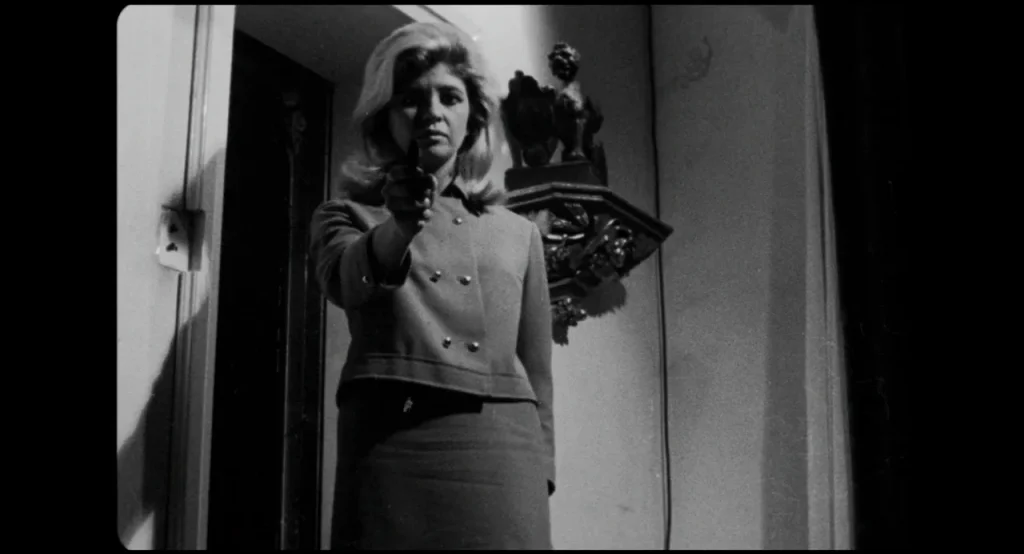
The footage was made by a handful of young artists, including two French men, who at one point turned from fiction filmmaking into revolutionary activism, in the midst of intense political times that included the social uprising known as Cordobazo in 1969, the arrival of exiled leader Juan Domingo Perón in 1973, and the murdering dictatorship that followed two years after his passing.
Sain masterfully handles the recovered fictional footage to become both a document of artistic expression and the illustration of a gripping story about the friendships and artistic experimentation of a generation of young filmmakers. The story also gives room to a terrifying chapter about a fellow student with a secret agenda.
Through solid storytelling that navigates history, literature and memory, the film also manages to bear witness to the brutal repression that cut many of those lives and careers short.
Premiered at the 2026 Buenos Aires Film Festival — the reason why it wasn’t selected for any of the official competitions remains a mystery — the film transcends the mere portrayal of a nevertheless essential archive rescue mission and becomes a meditation on memory, resistance and the enduring power of cinema.
