
 Buenos Aires Herald
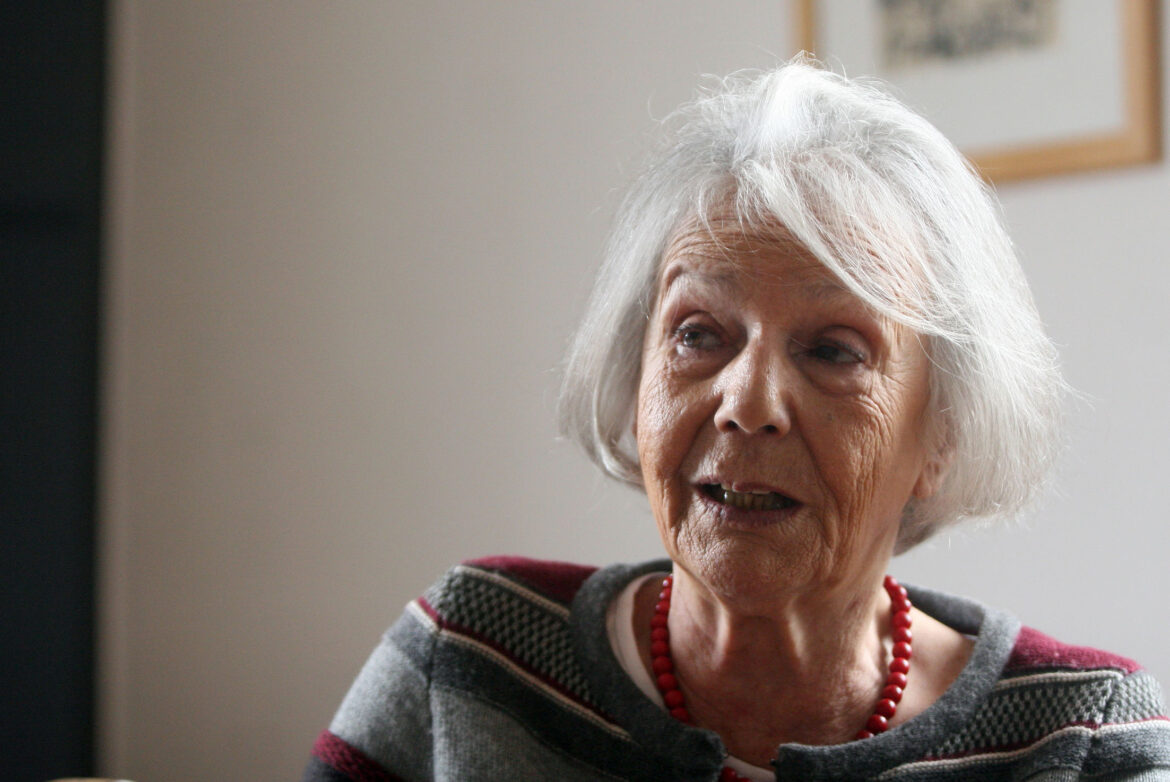
Argentine essayist, writer, and journalist Beatriz Sarlo passed away on Tuesday at the age of 82. A key figure in the country’s cultural and political thought, she had been hospitalized for the past three weeks after suffering a stroke.
Born in 1942, Sarlo majored in literature at the University of Buenos Aires (UBA), later chairing the philosophy and literature faculty’s renowned Argentine literature program for several decades. In 1978, she co-founded the cultural magazine Punto de Vista, together with authors including Ricardo Piglia and Carlos Altamirano, which became a linchpin of intellectual resistance against the military dictatorship.
“She was a fundamental voice in the broadest political, social, and cultural debates over the last decades of Argentine thought,” the UBA wrote in a social media post commemorating her life.
An analyst with Marxist influences, Sarlo had a brief stint at the CGT de los Argentinos trade union federation before leaving to become an activist in the Revolutionary Communist Party. After the return of democracy in 1983, she joined progressive factions of different political movements, including Peronism, socialism, and the UCR party.
A top-tier intellectual, Sarlo’s work revolved around postmodernism, literature and politics, with landmark books like Una modernidad periférica, Escenas de la vida posmoderna, Borges, un escritor en las orillas, Siete ensayos sobre Walter Benjamin and La batalla de las ideas, among others.
Her work was awarded Argentina’s National Fund for the Arts’ Lifetime Achievement Award, as well as the Guggenheim Fellowship. In 2013, she received the Gold Fountain Pen from the Argentine Academy of Journalism and joined the British Academy that same year.
As a sharp urban chronicler, Sarlo was also a regular in Buenos Aires’ cultural scene, regularly attending the city’s international festivals of independent cinema, theater, and literature. In 1997, when abortion was still illegal in Argentina, Sarlo appeared in Tres Puntos magazine as one of several prominent women who publicly admitted to having had terminations. She later said that she had ended multiple pregnancies.
Sarlo was one of the few eminent scholars who didn’t shy away from the media and public visibility. In 1997, she famously walked out of a live debate with author David Viñas after he questioned her role as an intellectual because of her political consultancy for the Alianza, the coalition that brought President Fernando de la Rúa to power. In 2011, during Cristina Kirchner’s presidency, she held a fierce dispute about media bias with a group of pro-government journalists in an episode of Public Television’s show 678.
Despite her fervent opposition to Kirchnerism, she also became a merciless critic of Mauricio Macri’s government.
Siglo XXI, one of her publishing houses, described her on social media as “a woman who’s always pushing forwards, willing to take risks and wary of praise, self-congratulation and nostalgia.”
“What she used to say about her admired [Argentine historian] Tulio Halperin Donghi can also be said of her: she ‘escaped’ easy, automatic labels and areas where she would enjoy assured recognition,” they added. “Modern, groundbreaking, adventurous, she leaves a complex and powerful trail behind her.”
Sarlo’s long-term partner, filmmaker and author Rafael Filippelli, passed away in March 2023.
Her wake will be held on Tuesday at the Center for Documentation and Research on Left-wing Culture (CeDinCI), on Rodríguez Peña 356, from 7 p.m. to midnight. The funeral cortege will leave from CeDinCI at 9 a.m. on Wednesday morning.
Cover photo: Diego Kovacic
