
 Buenos Aires Herald
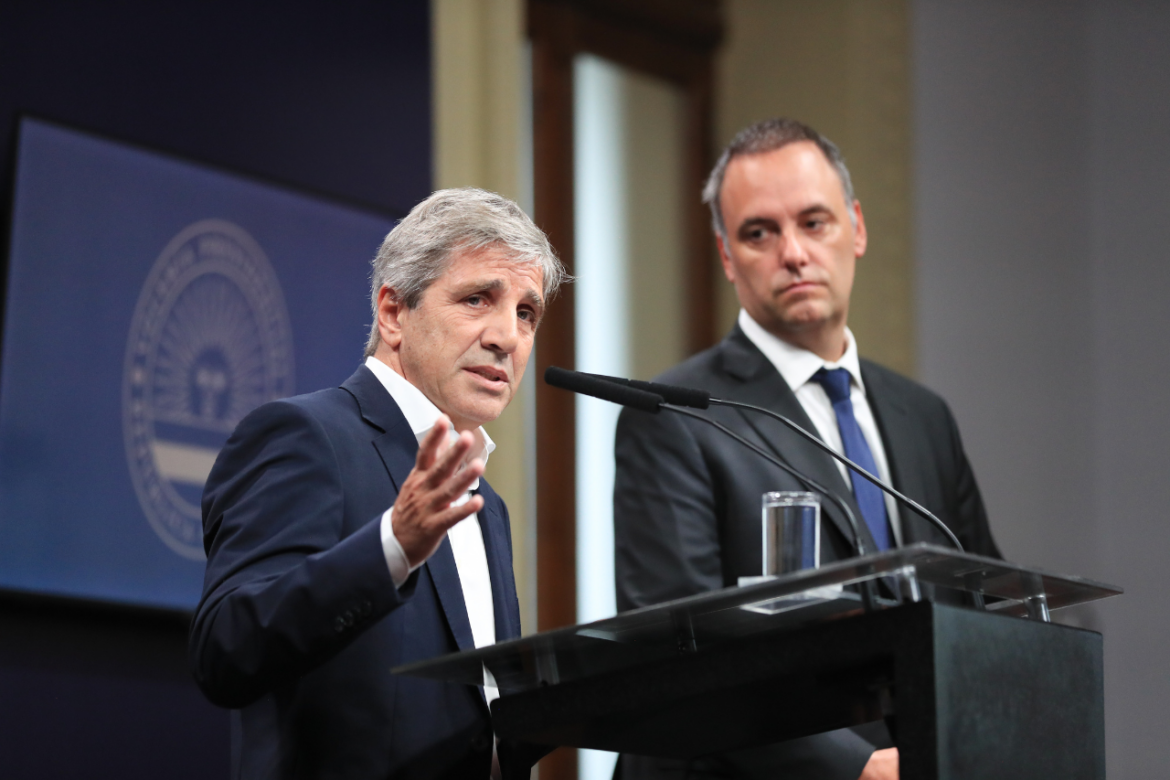
The Argentine government will lower export duties for agricultural products starting on Monday, January 27, until the end of June. Economy Minister Luis Caputo gave details in a joint press conference with Presidential Spokesman Manuel Adorni on Thursday, alongside Production and Agriculture Secretaries Pablo Lavigne and Sergio Iraeta.
“We can’t make the change permanent because we don’t have the resources,” Caputo said.
The plan will reduce export duty rates on soybeans from 33% to 26%, soybean derivatives from 31% to 24.5%, wheat from 12% to 9.5%, barley from 12% to 9.5%, sorghum from 12% to 9.5%, corn from 12% to 9.5%, and sunflower from 7% to 5.5%.
Meanwhile, export duties for regional products are set to be permanently eliminated: including sugar, cotton, wine, tobacco, forestry, rice, and other products. In 2023, during Alberto Fernández’s administration, then-Economy Minister Sergio Massa announced the same measure, but Caputo said regional products’ exports were still paying “residual” export duties.
“We want to give a signal to the farmers, who support the country so much, to explain that we are aware of their situation,” Caputo said during the conference. “These measures are here to attest to the president’s promises.”
The minister added that Milei’s administration “has essentially come to lower taxes” but that the administration would need a “US$8 billion surplus” to eliminate export duties permanently. Thursday’s decision, he said, came from an ongoing drought and a drop in the price of commodities.
“As a result of the inherited disaster and our very bad credit history, the reality is that Argentina needs a fiscal surplus to lower taxes,” Caputo said, adding that complaints about high taxes should be aimed at “provincial and municipal governments” instead of at the national administration.
Eliminating export duties has traditionally been one of the main demands of the rural sector, which celebrated the measure. Miguel Simioni, President of Rosario’s Stock Exchange, said in a statement that the decision “goes in the right direction.”
“The reduction of export duties will allow producers to improve their competitiveness, which is essential to continue generating added value, employment, and foreign currency for the Argentine economy,” Simioni said in a statement.
To access the lowered duties, exporters have to sell their dollars to the Central Bank 15 days after filling out an “affidavit of sale abroad.” With net international reserves close to negative US$9 billion, analyst Christian Buteler asked on X if the measure was meant to speed up U.S. dollar sales. “In the end, is the measure is to help the sector or to accelerate liquidations?” he wrote.
You may also be intereseted in: IMF-Argentina talks: technical staff land in Buenos Aires
