
 Christopher Martin
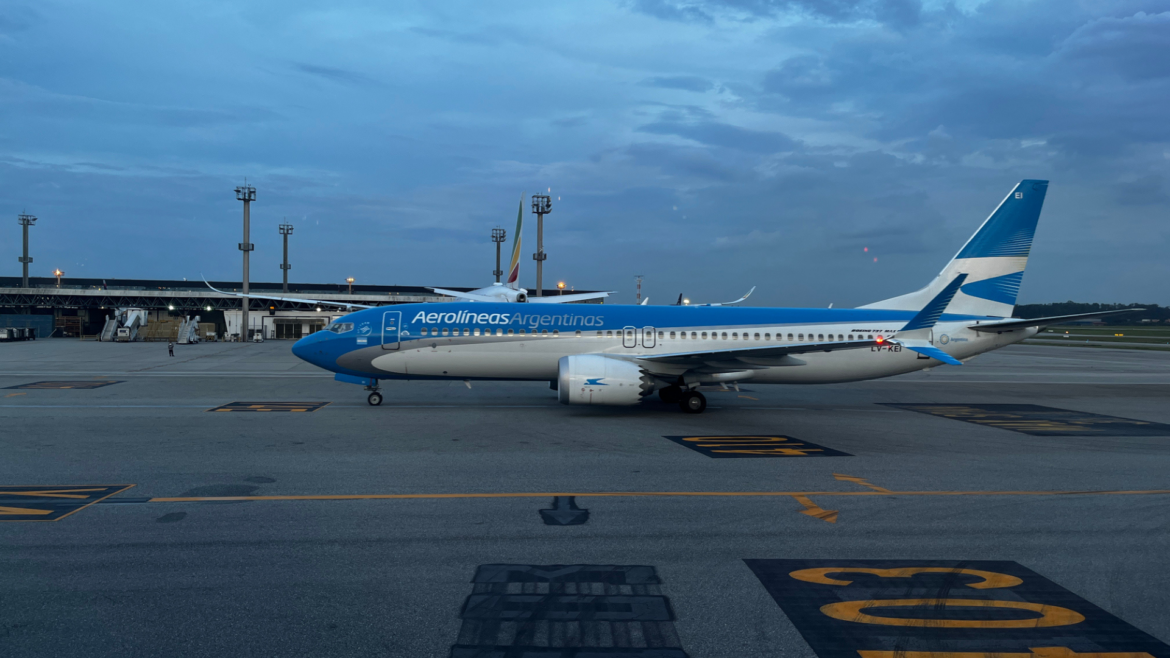
 For the first time since its renationalization in 2008, Aerolíneas Argentinas has announced it will not require funding from the national government throughout 2025.
It marks a milestone for the country’s flag carrier, which has accumulated US$8 billion in government subsidies over the past 16 years to cover its annual operating loss of around US$400 million.
After taking office in 2023, the Javier Milei administration has moved towards privatizing Argentina’s largest airline, and the company has since changed course to comply with its new landing spot in a competitive global industry.
The airline cut around 15% of its staff, including 85 senior managers, reducing its overall workforce by 1,600 people, the company said in a statement.
Presidential spokesperson Manuel Adorni said during a press conference on Wednesday that balancing the books at Aerolíneas Argentinas, as well as state water utility AySA, was “a necessary step towards their inevitable privatization.”
A spokesperson from the airline told the Herald, “Aerolíneas Argentinas’ fleet decisions will be founded on its operational and market needs, and its financial capacity, not on money transferred by the government.”
Since 2008, the company’s debt has been settled by the National Treasury after being nationalized during the early years of the Cristina Kirchner presidency. This process had followed years of financial mismanagement during the previous period as a private company under its former owners Iberia, concluding with two years spent in bankruptcy from 2001 to 2003.
“Aerolíneas already competes with other airlines in the domestic and international markets,” the spokesperson said. “In 2024, the company achieved an operating surplus under competitive conditions, in a context of high deregulation and openness in air trade policy. This demonstrates that in this context, the company is not only viable but also has enormous potential.”
President Javier Milei vowed to privatize the flag carrier as soon as he took office, putting it on the list of companies subject to privatization in the original version of the Ley Bases. However, the clause was later removed, and it was not included in the version approved by Congress last June.
In early October, Milei issued an executive order proclaiming the company was subject to privatization. That executive order is subject to congressional approval: if it passes both houses, the Executive Branch would be allowed to sell the company.
The debate about Aerolíneas Argentinas is part of a general government push to privatize the aeronautical industry. A new “open skies” policy has allowed more foreign airlines to enter the Argentine market by removing a legal requirement that at least half of flights within Argentina had to be operated by Aerolíneas Argentinas.
Meanwhile, new regulations that passed in July open the door for more low-cost carriers, with four new international airlines being authorized to start operating in Argentina.
Buenos Aires Province Governor Axel Kicillof said in October that the last time Aerolíneas Argentinas was in private hands, it stopped serving many destinations, leaving people in remote areas cut off from the rest of the country.
For the Aerolíneas Argentinas to now fly solo without government assistance, it remains to be seen if they will be soaring to more or less destinations in the future.
“The definition of new — or reduced — domestic or international routes will depend on the commercial potential identified by the company,” the airline’s spokesperson said.
