
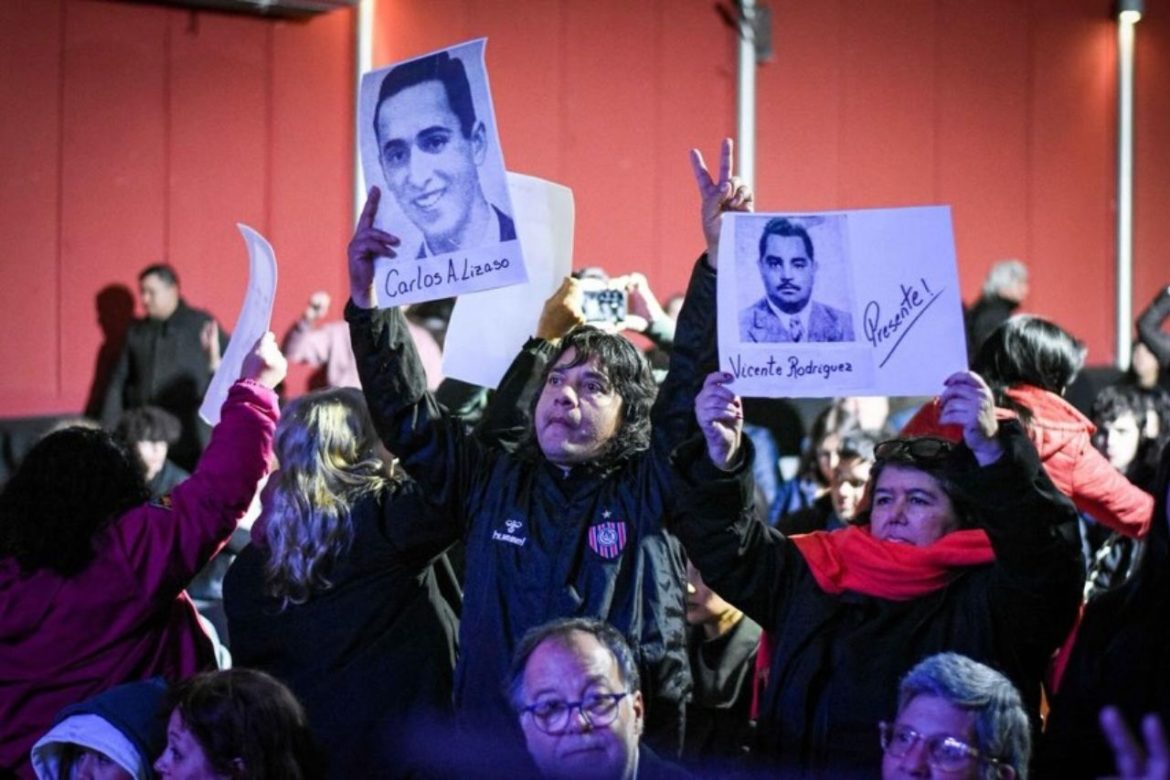
 Martina Jaureguy
 A San Martín court declared that the execution of 12 men committed in José León Suárez in 1956 and depicted in journalist Rodolfo Walsh’s non-fiction novel Operación Masacre was a crime against humanity at the hands of the Argentine state.
The ruling by Judge Alicia Vence was read on Monday during a “truth trial” carried out 70 years after the massacre. While the process does not carry criminal convictions, it serves as a way to bring symbolic justice and reparation to the victims and their families.
Of the 12 men who were shot by a police squad in the early hours of June 10, 1956, five died on the spot. Out of the seven survivors, only one lives to this day — 94-year-old Juan Carlos Livraga, who exiled to the United States shortly after the tragic event and was not present at the hearings due to poor health.
Crimes against humanity
Judge Vence ruled that the Argentine state was responsible for planning, carrying out and covering up not only the five killings and attempted murder of the remaining seven victims, but also an illegal search of the two homes where most of the victims were gathering at on the night of June 9, aggravated false imprisonment, and abuse of authority.
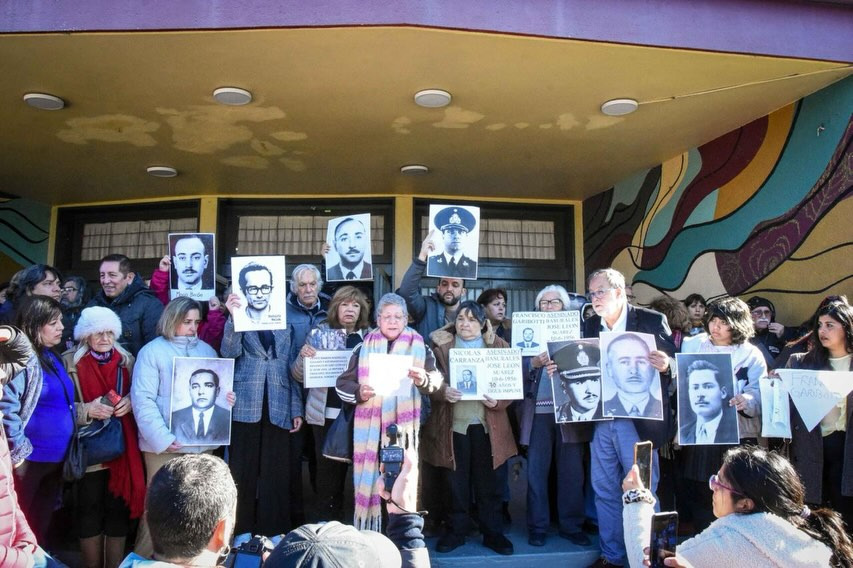
Relatives holding photos of the victims and journalist Rodolfo Walsh. Source: Buenos Aires province government
Although those behind the shooting are dead, Vence declared the responsibility of dictators Pedro Eugenio Aramburu and Isaac Rojas — two of the leaders of the 1955-1958 military dictatorship — as well as intelligence chief Juan C. Quaranta; head of the Buenos Aires Province Police Desiderio Fernández Suárez, who was in charge of the operation; and San Martín regional police chief Rodolfo Rodríguez Moreno, who led the killing squad.
If the trial had been carried out while they were alive, they should have been sentenced to life in prison, Vence said, as the audience cheered in the court room.
“The crimes that were investigated in this process can be considered crimes against humanity,” she stated, adding that the sentence itself was a form of reparation for the victims.
You may also be interested in: Court opens ‘truth trial’ into Operation Massacre, 70 years later
Symbolic reparation
The judge also ordered a series of measures to grant symbolic justice and keep alive the memory of the events. This includes “restoring the good name and honor” of the 12 victims, adding their names to the registry of victims of institutional violence, and publishing the sentence in government websites and official gazettes.
In addition, the events proven to have happened in the trial will be included in school curricula across the country and the province, while commemorative plaques and a memory site will be installed where the crimes took place, particularly the José León Suárez landfill where the victims were executed.
The trial consisted of four hearings held between last week and Monday, which included testimonies of relatives of the victims and historians, as well as the presentation of historic documents as evidence, and a written declaration from Livraga. These elements allowed the court to verify that the events described in the book were real and that several crimes were committed.
“These crimes should have been tried many years earlier. It has been 70 years, it is abhorrent,” plaintiff lawyer Alberto Palacios told PAREStv local news channel after the final hearing.
No national government officials agreed to take part in the trial as witnesses, and the prosecutor assigned at the start of the process, Paul Starc, refused to participate as he believed a trial to be “unnecessary,” a court source told the Herald.
The case
The events took place between the night of June 9 and the early hours of June 10, 1956, when a group of men were arrested during a house search in Florida, a neighborhood in Vicente López, under accusation of taking part in a Peronist uprising against the military de facto government.
The 12 men were first taken to a police station and later to a landfill in José León Suárez, where they were shot despite the martial law having been declared an hour after they were initially arrested, and therefore inapplicable to them.
Five died at the spot: Carlos Lizaso, Nicolás Carranza, Francisco Garibotti, Vicente Rodríguez and Mario Brión. The others — Juan Carlos Livraga, Julio Troxler, Reinaldo Benavidez, Rogelio Díaz, Horacio Di Chiano, Norberto Gavino and Miguel Ángel Giunta — survived thanks to either escaping or pretending to be dead.
Renowned journalist Rodolfo Walsh would learn about the events months later and start an investigation that led to the publication of his most famous work, Operación Masacre.
While survivor Livraga — who was left severely injured — filed a criminal complaint shortly after the shooting, the judiciary ordered the case be taken by a military tribunal and was never addressed again, until now.
