
 Buenos Aires Herald
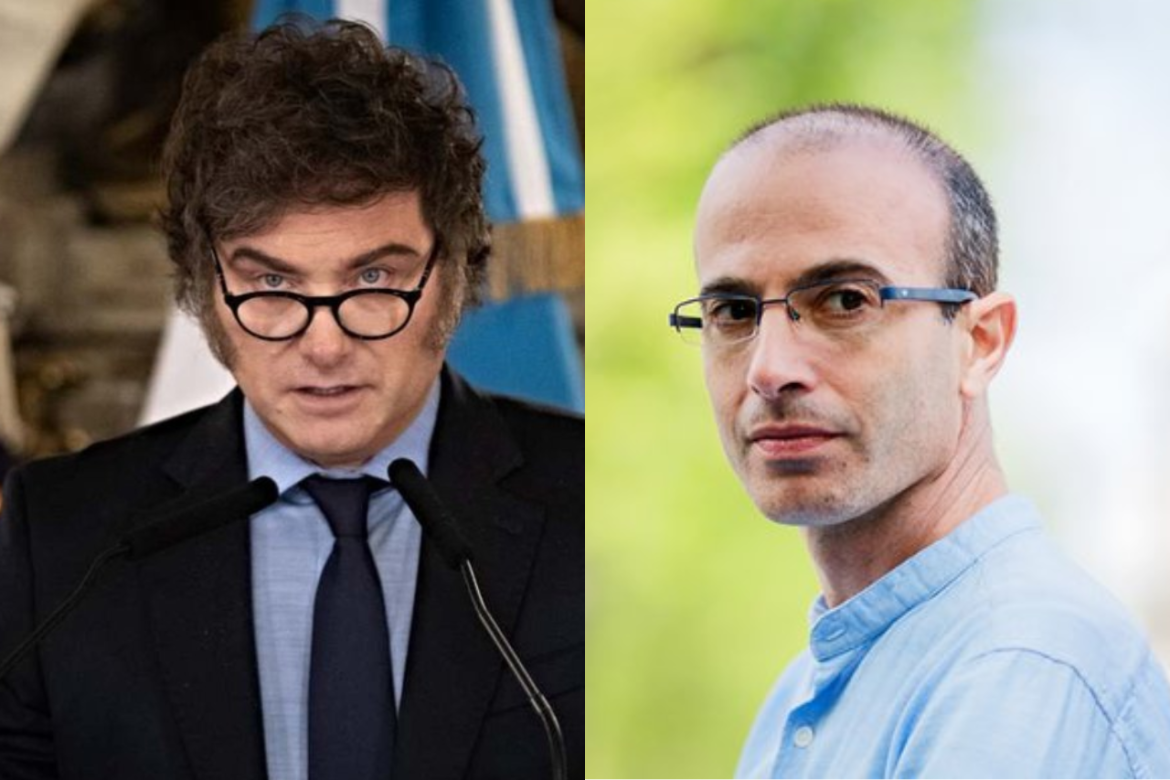
President Javier Milei has defended his proposal to grant legal recognition to companies managed by artificial intelligence (AI) after Israeli historian and philosopher Yuval Noah Harari warned that such entities could pose unprecedented challenges for accountability and regulation.
In a lengthy response published on Thursday on social media, the Argentine president rejected those concerns, arguing that creating a legal framework for what he calls “non-human corporations” would make them easier — not harder — to regulate.
“Giving legal personhood to AI agents does not mean launching the Judgment Day of Terminator,” Milei wrote, dismissing fears that autonomous systems could escape human oversight.
Financial Times op-eds
The debate began earlier this month when Milei used an opinion article in the British outlet Financial Times to defend a proposal aimed at adapting Argentina’s corporate laws to a future in which AI systems can manage companies with little or no direct human intervention.
The initiative would create a legal framework for businesses operated by AI agents, allowing them to function as recognized legal entities with limited liability, just like ordinary companies.
The proposal is part of a broader effort by Milei’s administration to position Argentina as a hub for technological innovation and AI investment.
Supporters argue that as AI systems become increasingly capable of making decisions, signing contracts, and managing economic activity, governments will eventually need legal mechanisms to define their rights, responsibilities, and liabilities.
Milei’s article prompted a response from Harari in the same newspaper.
While sharply disagreeing with the proposal, the Israeli historian struck a respectful tone, saying the libertarian leader’s “determination to improve Argentina’s economic fortunes is commendable.”
However, the author of Sapiens argued that granting legal personhood to AI-controlled entities could create a historically unprecedented situation.
Corporations already possess legal rights despite not being human beings, he noted, but AI-driven organizations could operate with a degree of autonomy unlike anything seen before.
One of his central concerns was accountability. Human executives can be punished with jail terms for crimes and misconduct; artificial intelligence systems cannot.
According to Harari, this creates a dangerous asymmetry: an AI system might take risks, exploit legal loopholes, or pursue harmful strategies without being deterred by the prospect of imprisonment.
He warned that countries granting legal recognition to AI-run entities could eventually face organizations with significant economic and political influence but no human decision-maker directly responsible for their actions.
Following the publication of Harari’s article, Milei thanked the historian for engaging with the proposal and announced that he would respond in greater detail in order to “calm” Harari’s fears about its potential consequences.
Milei’s response
In a statement published by the Office of the Presidency on Thursday, Milei wrote that it was a “pleasure and an honor” to have Harari comment on his project. Despite the cordial tone, he called the Israeli’s concern “unexpected.”
Milei said his surprise stemmed from the fact that Harari had praised limited liability in his book Sapiens, quoting the author as calling it one of “humanity’s most ingenious inventions.”
The president acknowledged that AI systems cannot be sent to prison but argued that Harari was focusing on the wrong mechanism of accountability.
“The possibility of imprisonment is not the only way to deter unlawful conduct,” he wrote, arguing that legal systems routinely punish corporations through financial sanctions, loss of assets, and dissolution, even though corporations themselves cannot be jailed.
In his view, the same principle could apply to AI-run companies.
“If an AI agent values its own survival, continuity, or resources,” Milei argued, “the possibility of bankruptcy, confiscation of assets, or forced liquidation could serve as powerful deterrents.”
He suggested that these economic penalties could be as effective as criminal sanctions in shaping behavior.
Milei also questioned Harari’s broader concern that AI systems might become experts at exploiting weaknesses in legal systems.
Human beings, he noted, already spend considerable effort finding loopholes and regulatory gaps. “The existence of people who exploit loopholes does not lead us to abolish corporations,” he argued.
For Milei, the key issue is not whether AI systems could abuse the law, but whether governments have a framework to deal with them when they do.
Granting legal personhood, he argued, would place AI-run entities inside the legal system rather than outside it.
Without legal recognition, he suggested, autonomous AI organizations could emerge in practice while remaining difficult to regulate. With legal personhood, authorities would have clear powers to monitor them, impose penalties, seize assets, or dissolve them if necessary.
I, Robot
The president also challenged what he described as an assumption that AI systems would necessarily behave more recklessly than humans.
In one of the most striking passages of his response, Milei invoked science-fiction writer Isaac Asimov and his novel I, Robot to challenge the notion that artificial intelligence would automatically act without restraint.
In Asimov’s stories, robots are designed to avoid harmful behavior and are guided by rules that make them highly predictable.
Drawing on that example, Milei argued that sufficiently sophisticated AI systems could become highly risk-averse because they would be capable of calculating the consequences of their actions with great precision.
An AI-managed company facing the possibility of bankruptcy, asset seizures, or forced dissolution, he suggested, would have reasons to avoid behavior that could threaten its survival.
That possibility, he argued, may make some AI agents more predictable than human decision-makers, who are often influenced by emotions, biases, or short-term incentives.
So far, no country has implemented a comprehensive legal framework for fully autonomous AI-managed corporations. If Argentina proceeds with the proposal, it could become one of the first places in the world to test whether a company without human managers can also be a company fully subject to the law.
