

 Buenos Aires Herald
Buenos Aires has always been a draw for architecture buffs. The city not only boasts fantastic buildings but also a wide variety of styles, ensuring that there’s something for everyone. Fans of the neoclassical might marvel at the façades along Avenida de Mayo and the Teatro Colón or enjoy a stroll around the sector known as The Island in Recoleta and take in its Parisian feel. Modernism enthusiasts, on the other hand, will flock to the Banco Hipotecario or the Edificio Kavanagh.
As most buildings are currently in use, visitors are limited as to how much they can actually see. But if you happen to be in the city this weekend, you’re in luck, as the 2025 Open House Buenos Aires will be taking place. Part of a worldwide network present in over 50 cities, Open House is an initiative that once a year allows free entrance to multiple buildings that have restricted public access, as well as walking and biking tours to explore the city.
This year’s list includes more than 130 buildings that can be visited on Saturday and Sunday in two different shifts, from 10 a.m. to 2 p.m. and from 3 p.m. to 7 p.m. And while some of the more famous venues require a sign-up to enter (allowed slots have already filled up), there are plenty of fabulous places beyond tourist maps and guidebooks where you can just show up, go inside, and smooze around for free. Just remember to take some form of ID, which is mandatory to enter.
Without further ado, here are five buildings to visit over the weekend (and a bonus sixth place that’s a Herald favorite):
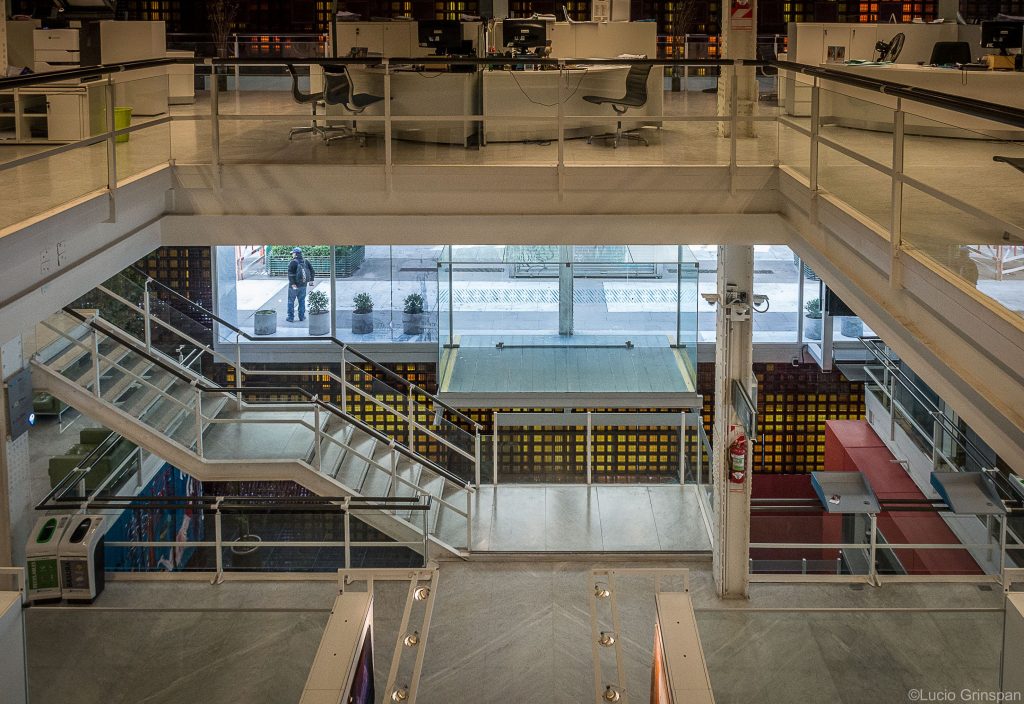
1- Banco Ciudad Casa Matriz – Florida 302
Located in a structure originally built in 1907, the Banco Ciudad headquarters revolutionized corporate architecture with the remodeling it went through in the 1960s. Commanded by legendary architecture firm M|SG|S|S|V|, the project embodied mid-century modernism with its glass façade, open floor plans, and exposed structure. The decision to emphasize light and visual connection to the street was a nod to transparency and a move away from traditional banking architecture, which is much more monumental and imposing.
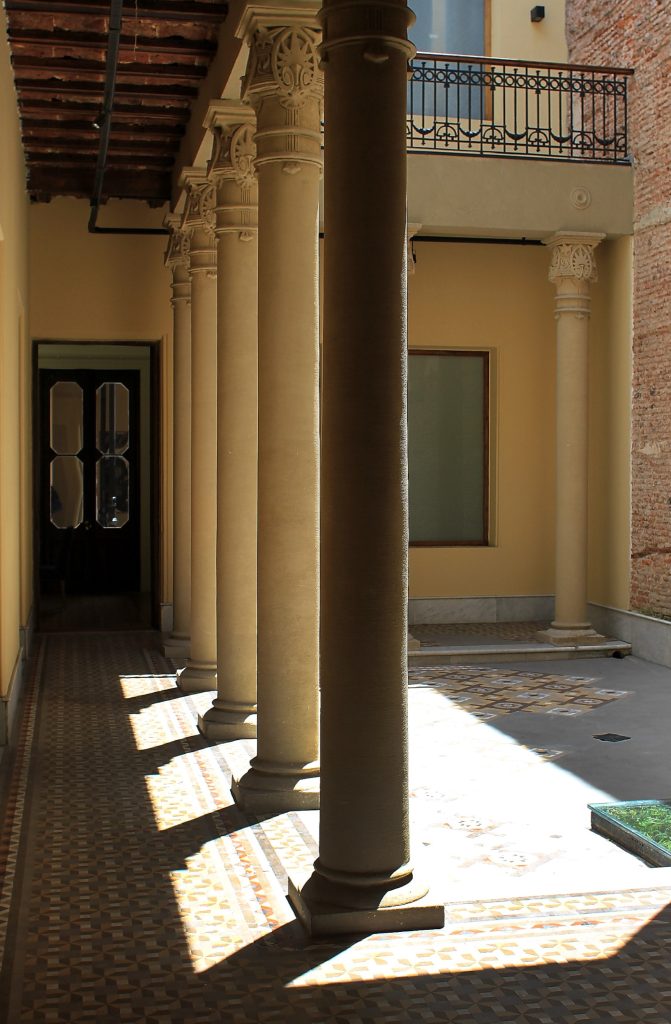
2 – Casa Bolívar – Bolívar 663
Casa Bolívar, also known as Casa de los Dragones (House of Dragons), was originally built in 1887 as a casa chorizo. These structures, translated literally as “sausage house,” are traditional residences from the late 19th and early 20th centuries made up of rooms set up in a linear sequence. By the mid-20th century, Casa Bolívar had suffered major structural and decorative alterations. A 2011 renovation, however, recovered its heritage value by restoring its original layout and using the same materials employed in the original project.
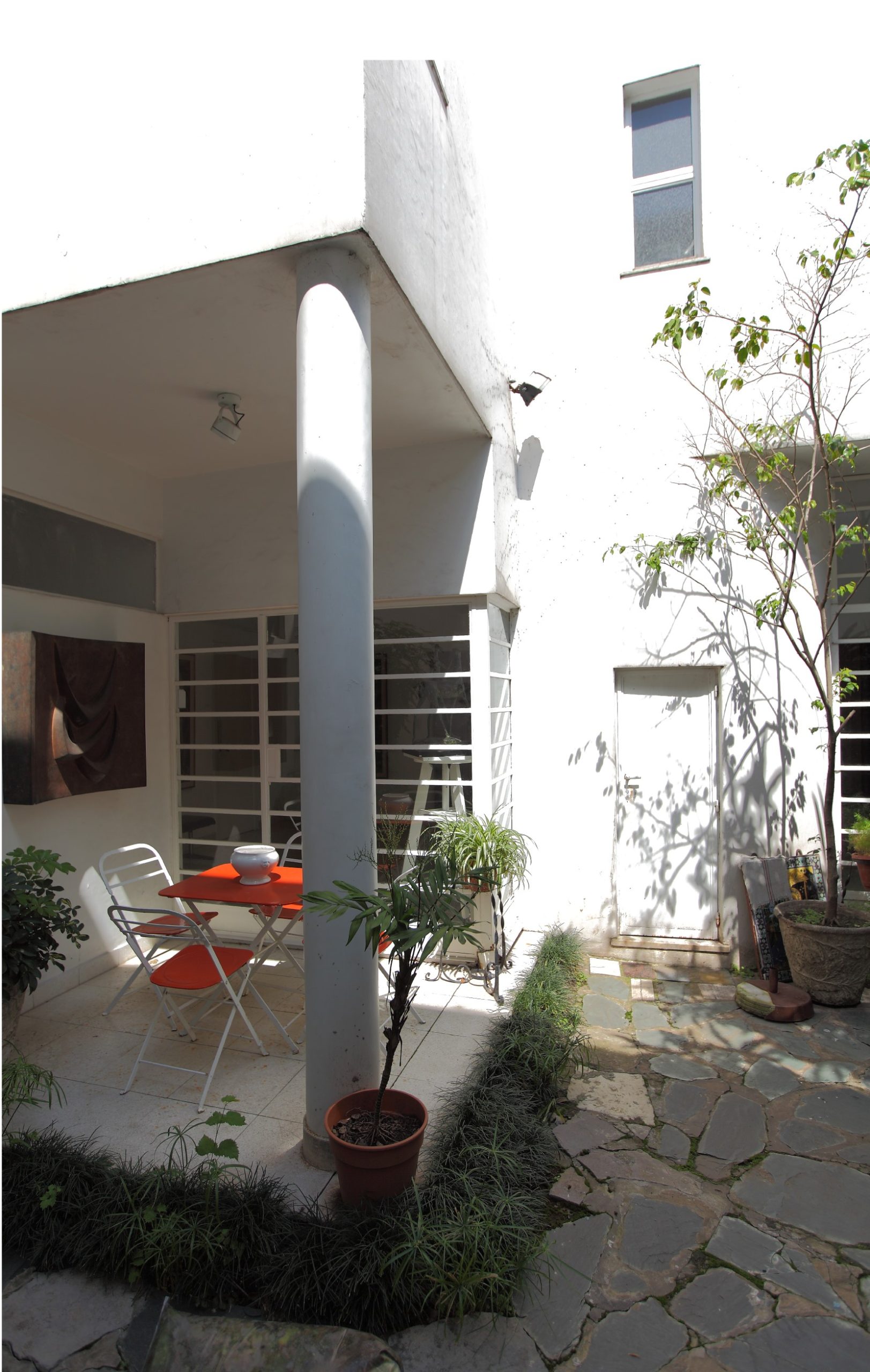
3 – Casa-Taller Forner-Bigatti – Bethlem 443
This home/studio is a prime example of modernism. Built in 1937 by artists Raquel Forner and Alfredo Bigatti as a space to live and work, the building’s white volumes, asymmetrical façades, and lack of ornament are distinctive markings of the modernist style that was gaining ground in Europe and the Americas. The living space is connected to two artist studios via a double-height void and large glass windows, all designed for optimal natural light and functional clarity.
4 – Teatro Avenida – Av. de Mayo 1222
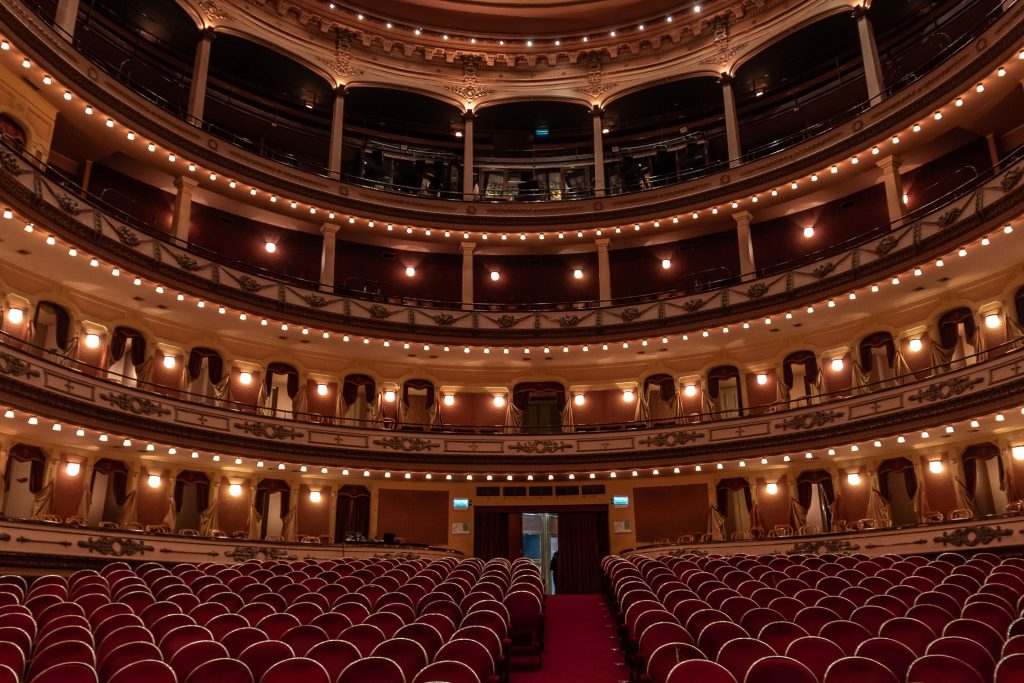
Built in 1908 and remodeled in 1994, the Teatro Avenida was the traditional venue for Spanish theater in the mid-20th century. Currently, it hosts opera, ballet, and flamenco performances. It features a horseshoe-shaped auditorium with elaborate Empire-style decor: gilded medallions, sculpted garlands, and soft, delicate tones. Its façade spans more than half a block, combining a mansard roof with a marquee, chimneys, lucarnes, and elegant entrances that lead into a vast, ornate lobby.
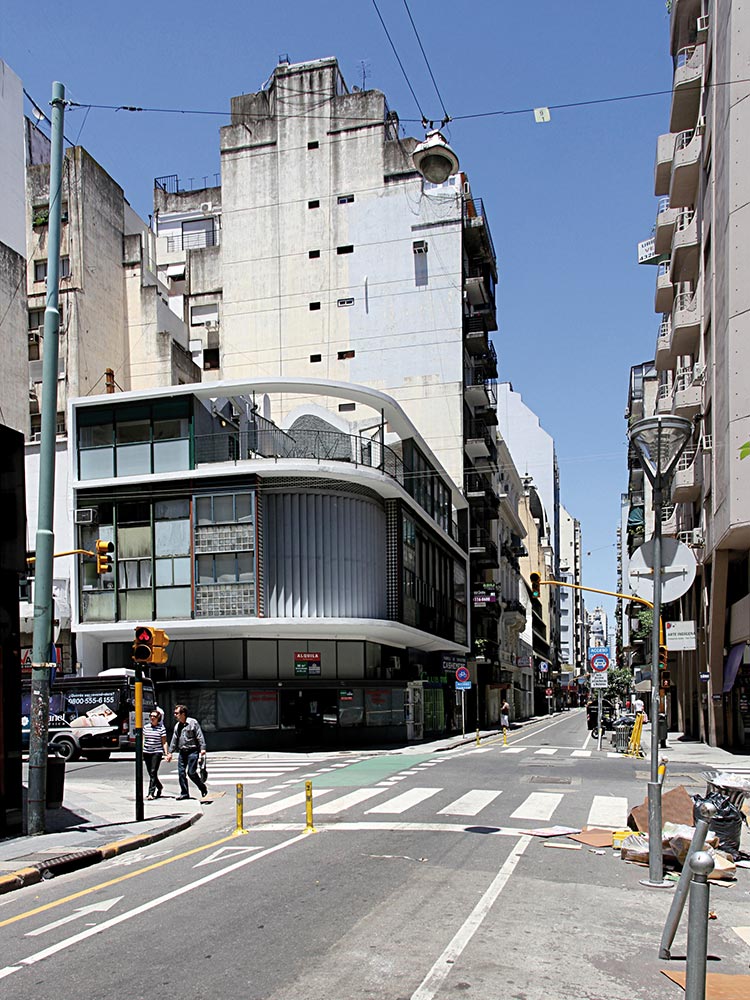
5 – Estudio para Artistas y Locales Comerciales – Suipacha 895
Located on a busy corner in the porteño neighborhood of Retiro, this delightful 1938 building designed by Antonio Bonet and Vera Barros y López Chas is bound to catch your eye. Conceived as a space to showcase modernist architecture, it has curved street-facing retail shops on the ground floor (one of them is the recently opened Acuario Bar, also well worth a visit) and double-height studios and mezzanines above, plus rooftop terraces. The design features concrete domed vaults and large windows for natural light.
Our bonus recommendation is the Sexto Panteón, located at the center of the Chacarita cemetery. The colossal 300×300 meter complex features a ground-level park and a series of concrete structures scattered across it. They irradiate an irresistible aura, luring people to approach them to see what they are. As visitors walk up to them, they discover an underground complex housing coffins, urns, and ossuaries below the surface.
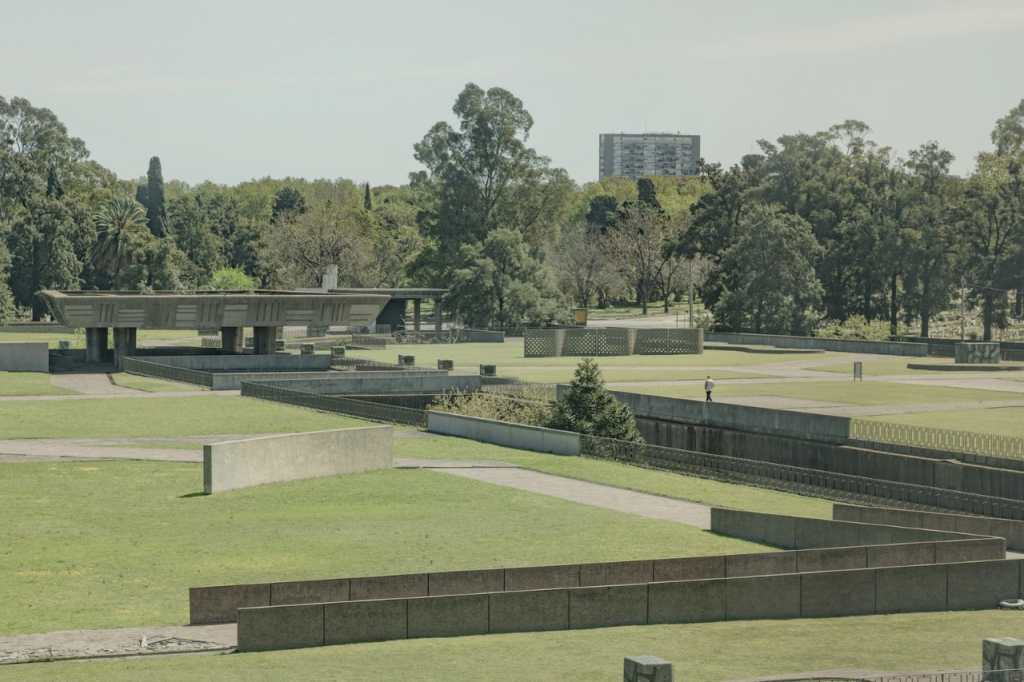
The pantheon is considered an architectural masterpiece and perhaps one of Buenos Aires’ best-kept secrets. But as we reported earlier this year, a multi-year investigation featuring a book and a documentary is now looking to pluck it and the architect who designed it, a woman named Itala Fulvia Villa, from obscurity. You might want to hurry up and check it out, ‘cause crowds are coming.