


 David Correa
 Argentina’s efforts in bringing justice to the victims of the 1976-1983 civil-military dictatorship are considered pioneering worldwide. Since the Trial of the Juntas in 1985, more than a thousand people have been convicted for their role in state terrorism, from military personnel and judges to medical doctors and clergy members.
The reparative initiative has fallen short in one particular area: crimes committed by economic actors. Since the return of democracy, there have been only two cases in which company executives have been convicted for collaborating with the repression. The prosecution of crimes for economic gain, on the other hand, has never been able to gain traction.
A recent federal court ruling in Córdoba, however, could pave a new path.
On July 1, the province’s Federal Oral Court 1 (TOF, for its Spanish initials) issued a historic ruling declaring that a corporate takeover made during the dictatorship was void. The three judges described the seizure as “usurpation” and declared it a “crime against humanity.”
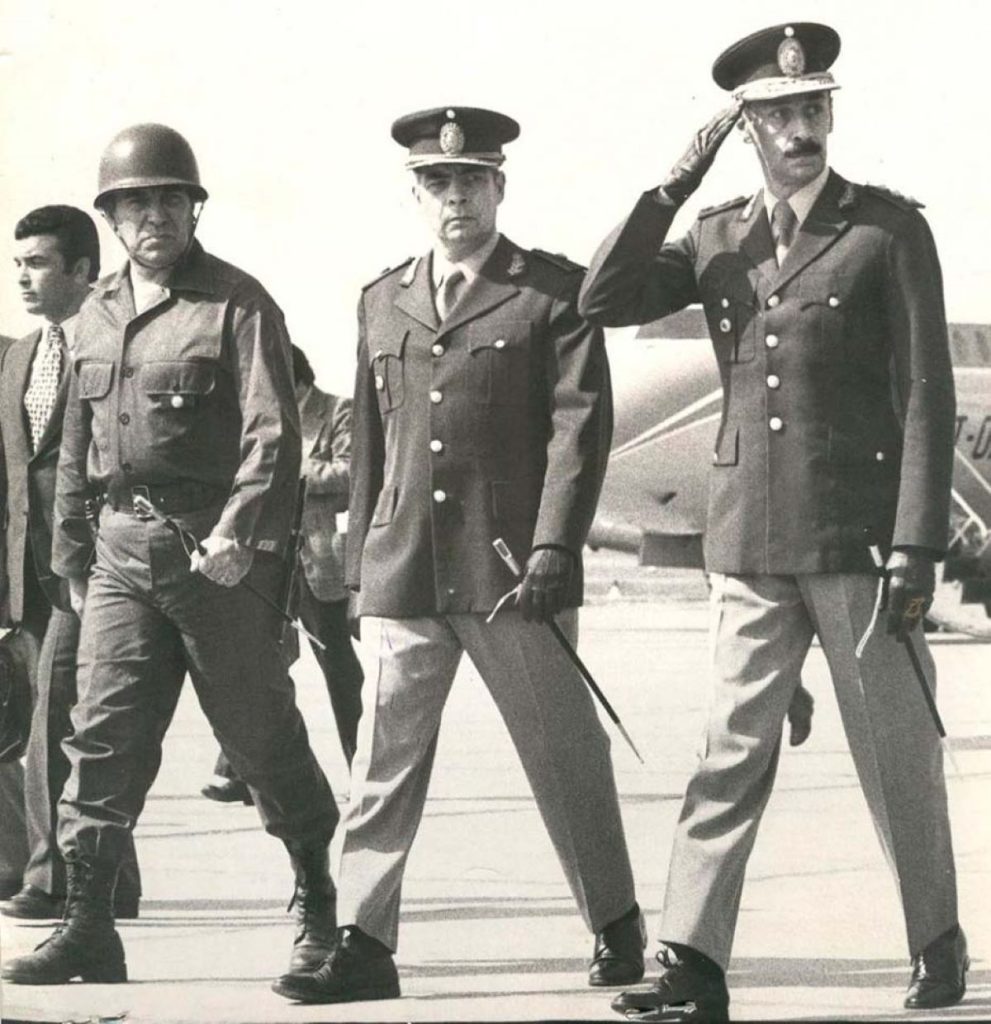
Mackentor, a major construction firm in the 1960s and 1970s, had around 400 employees when the takeover took place. The firm was seized by the courts in May 1977 after its executives were accused of financing armed guerrilla group Montoneros. The company was transferred to a competitor, a construction company called Supercemento, and several of its executives were kidnapped. Four of them remain missing.
According to plaintiff attorney Juan Carlos Vega, the ruling is a turning point in the Argentine judiciary, as it is the first time that it has been proven that “economic groups benefited from state terrorism.” He added that his hope is that the punishment for Supercemento, a company that still exists, will not be merely symbolic.
“I want Supercemento to pay.”
Mackentor’s illegal takeover
In the 1970s, Mackentor President Natalio Kejner belonged to a group of businesspeople who advocated for a “national corporate sector.” As executives interested in promoting country-based manufacturing, they were at odds with the dictatorship’s economic program of de-industrialization and trade deregulation.
The most important figure of this group was José Gelbard, who served as economy minister for President Juan Perón in 1973. According to historian Mario Rapoport, Gelbard’s goal was to reestablish the “social alliance that gave birth to Peronism in the 1940s,” essentially an economic plan that would benefit small and medium-sized businesses as well as unions, represented by labor federation CGT.
In 1977, Mackentor was awarded an US$8 million contract to build an aqueduct between Villa María and San Francisco in Córdoba. The process was interrupted when former General Luciano Benjamín Menéndez, the highest-ranking military officer in the region during the dictatorship, accused company directors of financing Montoneros.
Menéndez ordered the military intervention of the company and deployed an operation in four provinces. In total, 27 people were kidnapped, including firm employees, shareholders, and lawyers. Several were held captive in the clandestine detention centers La Perla and Campo de la Ribera until 1981. Four of them are still missing. Kejner managed to flee at the last minute and went into exile in Venezuela.
The plant was occupied by the military, and the Central Bank froze Mackentor’s funds and part of its shares. The aqueduct commission was transferred directly to its competitor, Supercemento. At the time, one of the company’s board members was the late Franco Macri, father of former President Mauricio Macri.
The state returned to Kejner what was left of Makentor when he came back to Argentina in 1984. It was never proven that he had any links to Montoneros.
A gnarly legal path
Kejner, who started legal proceedings against the state shortly after returning from exile, died in 2014. Two years later, the Córdoba federal court (TOF) rejected a request made by Juan Carlos Vega, the attorney representing Mackentor and Kejner’s family, to nullify the company’s takeover and looting. They also threw out Vega’s demand that the former owners receive economic compensation.
The case would remain stalled until the Federal Penal Cassation Chamber issued a crucial ruling in 2024. In its decision, the cassation chamber relieved the TOF judges that rejected the initial Mackentor suit and determined that the case should be analyzed again on its merits by new judges.
The basis for its decision, the court argued, was the fact that the 2016 ruling failed to take into account a series of legal precedents for the case, including international treaties on human rights, Article 36 of the Argentine Constitution (which states that all unconstitutional acts committed during non-democratic governments are void), as well as Supreme Court doctrine on state responsibility regarding crimes against humanity.
The ruling paved the way for Vega and his team to appeal. The TOF, with a new set of judges, annulled their 2016 decision, throwing out Mackentor’s claims. Last July, the court issued a new ruling determining the takeover was a crime against humanity and that all acts committed after the seizure were void.
According to Vega, the decision opens the door to a legal scenario the Argentine judiciary has never experienced before.
“What happens with Mackentor’s bankruptcy now? Will those who benefitted from their collapse have to return their profits? What happens to the judges who convalidated the bankruptcy in the first place, knowing it was a crime against humanity?” he asked.
The attorney went on to say that a void act has “the same meaning in all legal systems in the world.” And given the fact that the act cannot be undone, “compensating the victims is mandatory.” Vega also explained his reasoning for why he thinks Supercemento should pay compensation.
“Supercemento, the main beneficiary of the looting of Mackentor, was involved in a public-works corruption scheme that was much worse than the Vialidad case for which former President Cristina Fernández was convicted,” he told the Herald. He added that he also wants to put an end to the story of the “silly state” that “foots the bills for judges’ rulings.”
“The state will always be responsible, but the victims would like to see Supercemento and the Supreme Court be sentenced to pay.”
All of Mackentor’s direct victims are deceased. Their descendants, however, are still living and were present in the courtroom to witness the ruling. Like Jorge Pavlán, the son of company executive and shareholder Bruno, who was held captive in a clandestine detention center.
“The judiciary partially restituted the dignity these cowards, from the military to their legal accomplices, stripped from us.”