

 Joshua Collins
 This story was originally published on Pirate Wire Services
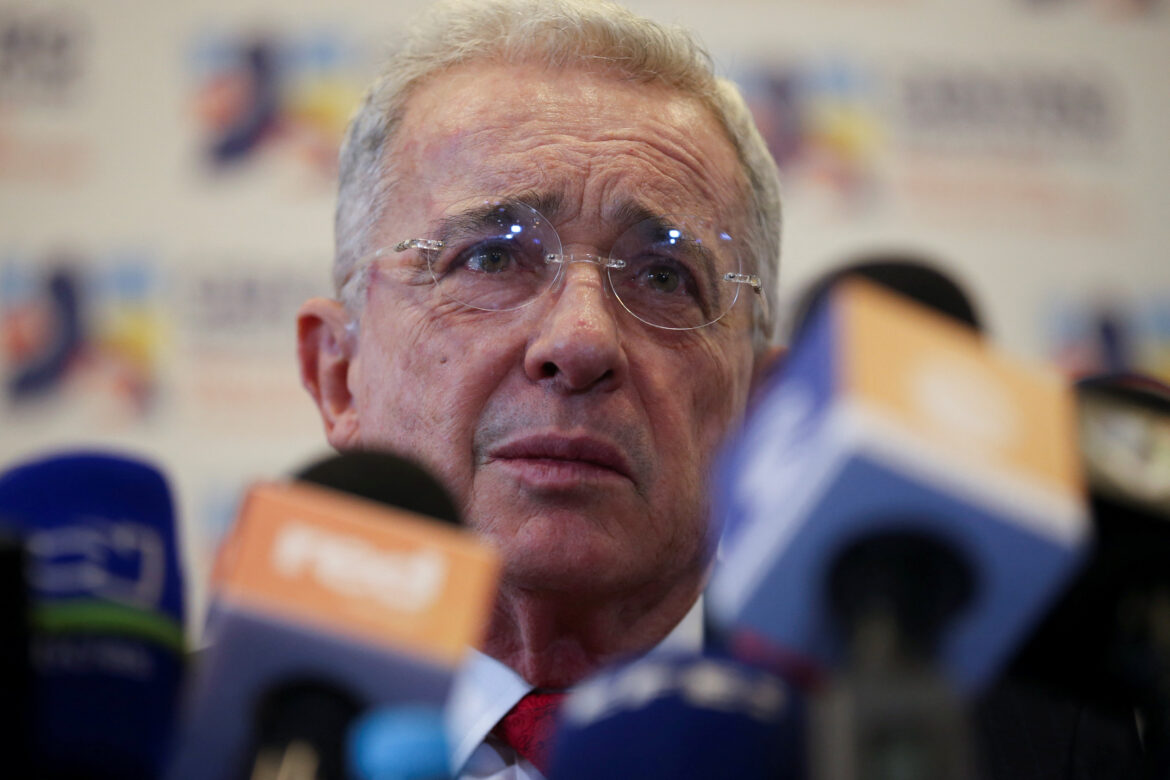
Former far-right Colombian President Álvaro Uribe has been found guilty of bribing and intimidating witnesses as part of investigations into his links to drug traffickers and paramilitary organizations.
Judge Sandra Heredia convicted Uribe on the charges of bribery of a witness, as well as on a second charge of “procedural fraud,” regarding the submission of false accusations and doctored evidence before the court.
At the end of the 11-hour courtroom session, Heredia listened to sentencing requests from the prosecution and defense. Prosecutors are requesting 12 years of jail time. Defense attorneys argued for leniency and expressed their plans to appeal.
Heredia ordered a recess until Friday, August 1, at 2 p.m. local time, when the sentencing will presumably occur.
The ruling has already caused international reactions. United States Secretary of State Marco Rubio published a statement on X defending Uribe, saying that his “only crime has been to tirelessly fight and defend his homeland.” He also lambasted the Colombian courts.
“The weaponization of Colombia’s judicial branch by radical judges has now set a worrisome precedent.”
The proceedings against Uribe
In a dramatic, months-long trial, prosecutors presented evidence of witness tampering by Uribe and his lawyers since February 2012, when the former president opened criminal charges against Senator Ivan Cepeda.
During the 2012 investigation, Uribe told the Supreme Court that Cepeda had attempted to bribe former members of the paramilitary group AUC to falsely claim that Uribe and his brother, Santiago, were involved in the creation of the Bloque Metro paramilitary group in 1996.
The court absolved Cepeda of all charges but during its investigations found evidence of Uribe bribing and threatening witnesses, as well as prosecutors who were involved in ongoing cases against paramilitary leaders.
Through a series of legal and procedural delays, including resigning his Senate position, Uribe’s legal team has managed changes in courtrooms, judges, and investigating bodies.
The current trial, however, concluded in late July.
Uribe is an outsized figure in the country’s politics. At the end of his first term as president, he had a more than 80% approval rating. After changing the Constitution to successfully run for a second term, however, the approval rating of the controversial president began to fall.
Uribe has long been accused of ties to right-wing death squads as well as drug traffickers in the country. In the last public poll on Uribe’s approval rating, made before he resigned from the Senate as a legal tactic and grave scandals involving human rights violations during his presidency surfaced, that approval rating had fallen to 10%.
Uribe, however, still commands a group of small but loyal right-wing hardliners in the country, especially in Antioquia, the region of his origin and where he was governor before becoming president.
The wide-ranging testimony presented during the trial, however, has also likely inspired new investigations into Uribe’s actions during his presidency.
In a series of long statements analyzing the evidence point by point, the judge said she would not be ruling or commenting on accusations of criminality that lie outside the narrow scope of the current trial. She rejected the claims of Uribe’s lawyers that wiretaps of the former president’s conversations with former lawyers and other politicians were obtained illegally, however.
The wiretaps were a central piece of the prosecutor’s evidence that Uribe had openly conspired to silence potential witnesses through either threats or bribery.
At one point, Uribe borrowed another senator’s phone to disguise his communications. Unluckily for him, however, that senator’s phone was tapped as they were also the subject of an official investigation by the Constitutional Court at the time.
Defense attorneys had argued that those conversations should be disregarded by the court, but the court ruled they were obtained legally as part of an active warrant.
The court also rejected defense claims that witnesses who testified against Uribe (and tied him to paramilitary group Bloque Metro, a division of the AUC) were not credible.