
 David Correa
 The lawyers representing the family of a La Fronterita sugar mill worker who was disappeared during the dictatorship warned that a trial in Tucumán set to investigate sugar mill management for their responsibility in the crime is in jeopardy due to the advanced age of the defendants and called for the proceedings to be expedited.
This would be the first time businesspeople accused of crimes against humanity committed between 1975 and 1983 would go to trial in the province.
“There is a risk of biological impunity due to the passage of time,” said Rodrigo Scrocci, a member of the Lawyers of Northwest Argentina for Human Rights and Social Studies (ANDHES, for its Spanish initials). The NGO represents the family of Fidel Jacobo Ortiz, a farmworker who was secretary general of the La Fronterita sugar mill union and has been missing since 1976.
“We are concerned about biological impunity, but not only in the classic sense, that is, that the defendants die without having been tried or convicted, but also because of the consequences this has on the victims,” Scrocchi told the Herald.
The two defendants, Jorge Alberto Figueroa Minetti and Eduardo Butori, are over 84, while the victims are all over 70. Both were La Fronterita board members at the time, and Figueroa Minetti was also the company’s manager.
Scrocchi cited the case of Carlos Pedro Blaquier, owner of the Ledesma sugar mill in Jujuy. The company was also accused of crimes against humanity during the last dictatorship. After Blaquier was charged in 2012, his defense team filed multiple appeals to delay the case. The businessman was never tried and died in 2023.
The La Fronterita case
In April, the Federal Penal Cassation Chamber confirmed the charges against the executives issued by a lower court in 2021 and rejected the defense’s request that they be thrown out. The decision cleared the way for the Oral Federal Tribunal (TOF, for its Spanish initials) to move forward with the trial, almost a decade after the investigation and the proceedings began.
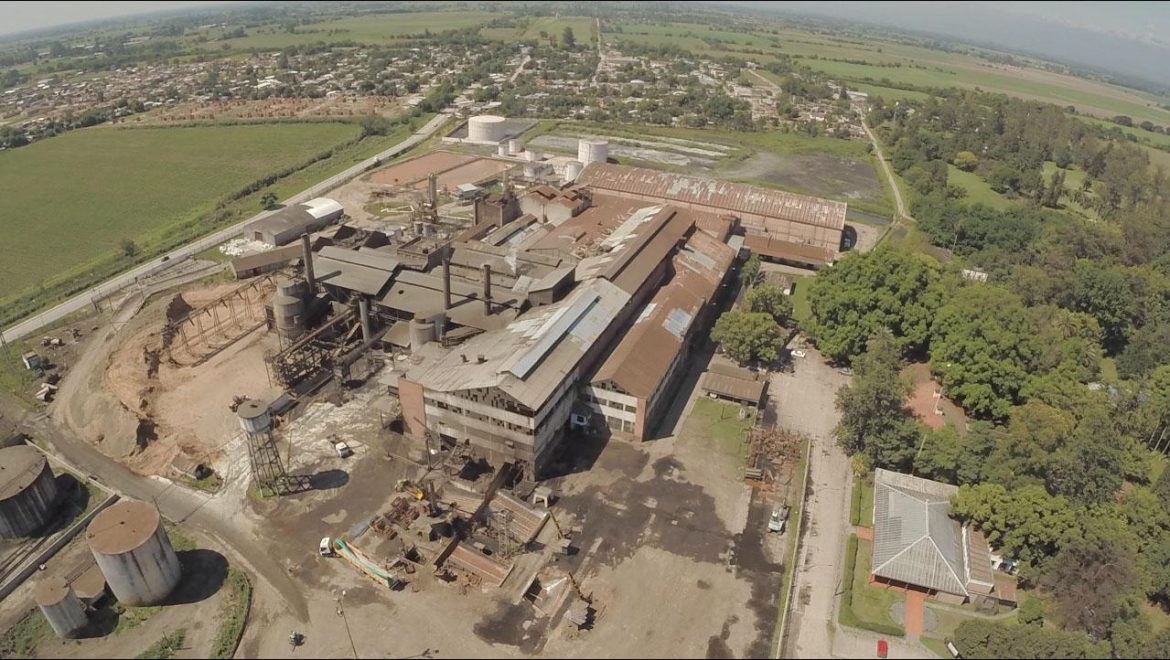
The investigation into the businessmen stems from the fact that the military set up a base in the La Fronterita sugar mill in February 1975 following the launch of a counterinsurgency campaign in Tucumán known as Operation Independence. The plant, located in Famaillá, a small city 41 kilometers south of the provincial capital, was one of many sugar mills used by the military, as southern Tucumán was heavily targeted by their terror tactics. The base would go on to operate for much of the civil-military dictatorship that ended in 1983.
Figueroa Minetti and Butori are accused of facilitating and participating in crimes against humanity committed against sugar mill workers and residents living in nearby areas. According to documentation the Herald has seen, the defendants are charged with trespassing, unlawful deprivation of freedom with coercion and harassment, torture, aggravated sexual assault, and murder.
The victims were kidnapped from homes owned by the José Minetti & Cía. company that owned La Fronterita and taken to a clandestine detention center the military had set up inside the sugar mill itself. The facility, located just a few meters from the administrator’s home and the mill, housed people persecuted for their political, union, or social activism.
In its 2021 ruling, the Tucumán Federal Chamber said that the defendants “provided facilities for the clandestine detention center to operate, vehicles for the kidnappings, and gave classified information to the military so that they could carry out the clandestine repression, especially of union personnel.” They added that the military’s crimes “could not have been committed” without the assistance of the company’s managers.
At least 82 workers at the sugar mill and its surrounding areas were kidnapped between late 1975 and 1978. Of them, 67 were released, two were murdered, and 13 remain disappeared.
The legal path forward
In June, ANDHES requested that the Tucumán TOF move forward without further delay and call for a preliminary hearing, a required step in order to move forward to trial. The NGO is basing their request on directives the Federal Penal Cassation Chamber gave lower courts in 2022 in regard to the pressing nature of proceedings trying crimes of state terrorism.
These instructions, known in the Argentine judiciary as an acordada, mandate that trials be done quickly and without delays. Among other issues, the directive states that hearings for these trials should be prioritized and that delays in sentencing should be avoided.
According to judicial sources, 2025 is set to be the first year in the last 15, with the exception of the pandemic, in which no trials over dictatorship crimes are scheduled to take place in Tucumán.
Cover image: Aerial image of the La Fronterita sugar mill (courtesy of Instituto de Promoción del Azúcar y Alcohol de Tucumán – IPAAT)
