

 Sebastián D. Penelli
 Argentina’s Large Investment Incentive Regime (RIGI, by its Spanish initials) committee approved a new lithium mining project in Catamarca. The project, spearheaded by Australian firm Galan Lithium, will entail a US$217 million investment.
The firm’s goal is to produce up to 20,850 tonnes of lithium carbonate equivalent (LCE) annually by 2027. Exports for the project, the sixth approved by the RIGI, are estimated to be north of US$180 million starting in 2029.
Economy Minister Luis Caputo confirmed on social media that the project, located at the Salar del Hombre Muerto region, was given the green light. In the same statement, he announced that the government had rejected a bid by Chinese company Ganfeng to join the RIGI and expand Project Mariana, a lithium enterprise in Salar de Llullaillaco, Salta.
This firm is a global lithium giant that has already invested US$2.5 billion in Argentina and planned to reach nearly US$5 billion in the coming years.
A RIGI bid for Galan Lithium in Catamarca
On October 30, Galan Lithium became the first mining company to apply to RIGI to move into industrial lithium production, following a testing period. Upon presentation, CEO Juan Pablo Vargas de la Vega emphasized that the RIGI incentives would “strengthen Galan’s ability to raise capital and maximize the development” of the initiative, known as HMW.
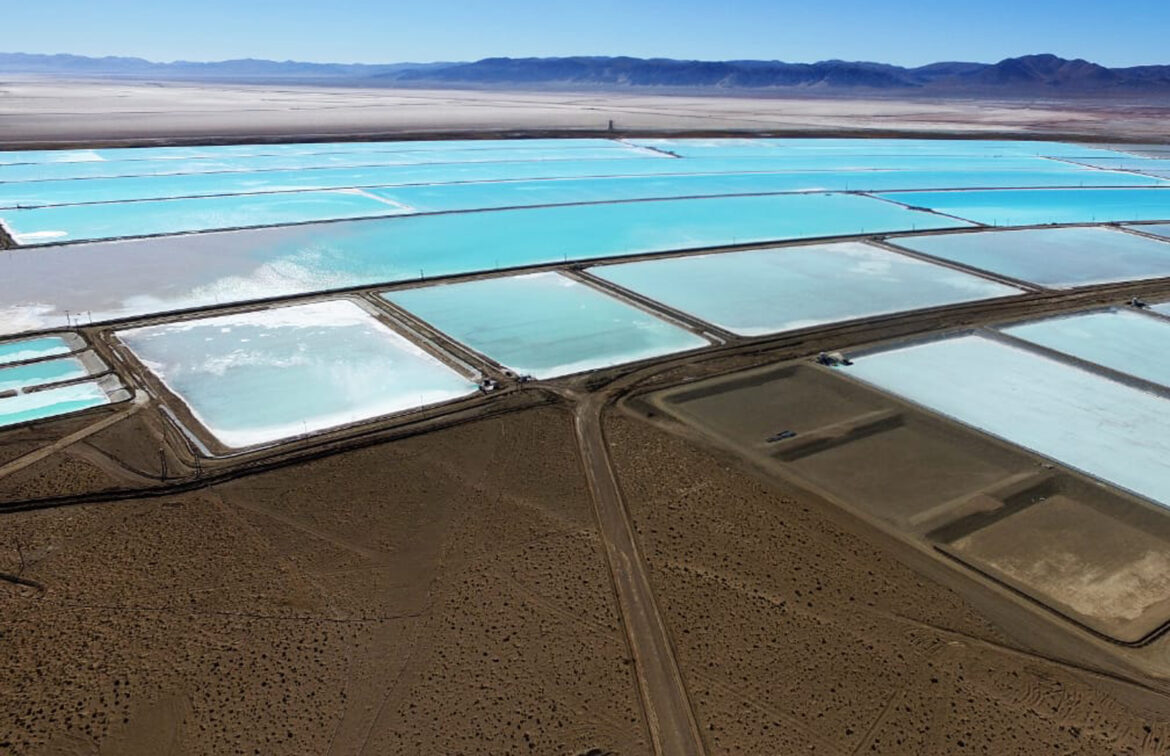
Within the first phase of the project, Galan had managed to accumulate approximately 6,000 tonnes of LCE in its evaporation wells. Their initial plan was to produce 4,000 tonnes of LCE per year, expanding to 5,400 tons per year when market conditions become more favorable due to low prices. This development was initially planned for mid-2025 but has now been postponed indefinitely.
The Australian firm also owns another lithium project called Candelas, also located in the Puna Salta region, which also has no production start date.
Why did the RIGI reject Ganfeng Mariana’s project?
According to Caputo, Ganfeng’s RIGI bid was rejected because the project, which started in 2022, submitted its entry application almost at the same time it was being inaugurated, in early 2025.
In his post on X, the minister added that this meant that the project did not meet the entry demands, including the “minimum investment requirement for the next two years.”
Last May, a senior government source told Herald sister publication Ámbito that two Asian-funded lithium RIGI bids would not be launched “now, or ever.” In one case, the reason was that the project was an attempt to use the regimes’ tax benefits to mask a past investment and commissioning under tax benefits. In the second case, the source acknowledged there was no political will to launch it.
The rejection was in line with recent statements by US ambassador nominee, Cuban-born physician Peter Lamelas, who said he would work in Buenos Aires to “keep authoritarian countries like Cuba, Venezuela, Nicaragua, China and Iran out of the continent.”
What are Ganfeng’s projects
Last February, Ganfeng Lithium inaugurated the Mariana Project’s lithium chloride production plant, with a capacity of 20,000 tonnes per year. The plant is located in the General Güemes Industrial Park, approximately 50 kilometers from the provincial capital of Salta.
The lithium production facilities required a US$980 million investment (US$790 million in the plant itself and US$190 million for a solar park).
The firm submitted a RIGI bid to expand the plant’s capacity. They argued that the initiative, which demanded 33 months of work in construction and commissioning, was a strategic project in the region. The reasons were not enough for the government to reconsider, and the proposal was shelved.
In the Salta Puna region, the Chinese company also owns the Pozuelos-Pastos Grandes project, which is scheduled to begin construction at the end of the year, and the Incahuasi-Arizaro project, which is still in the advanced exploration phase. They also operate the Cauchari-Olaroz project in Jujuy, which began production in 2023.