

 Martina Jaureguy
 Human rights movements and the judiciary are demanding key entities involved in memory policies be protected from potential jeopardy caused by government-issued decrees.
On Wednesday, Grandmothers of Plaza de Mayo requested a presidential decree stripping the National Genetic Database (BNDG by its Spanish initials) of its autonomy be struck down. The institution has been key in the search for children of dictatorship victims.
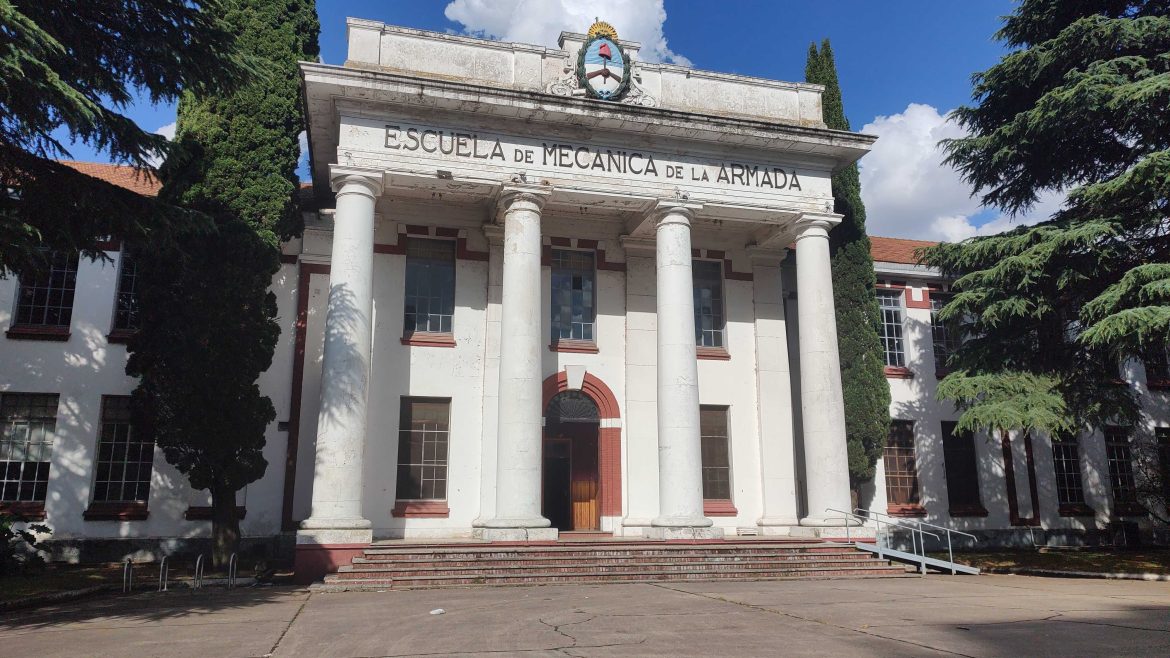
Federal Judge Ariel Lijo has also ordered the ex-ESMA museum be preserved after the Milei administration fired its director and modified its operational status. The 1976-1983 dictatorship operated one of its largest clandestine detention centers inside the ESMA compound.
The National Genetic Database
The BNDG has assisted in identifying 139 children that were taken from their parents during the last military dictatorship and raised under a false identity. Since 2009, it had operated as an autonomous organization within the purview of the Chief of Staff.
On May 23, however, President Javier Milei issued a decree that changed its status and moved it to the Innovation, Science and Technology Secretariat. According to the Abuelas, this move means that the BNDG “no longer controls or administers its own resources and takes its status back to how it operated prior to 2009.”
The human rights group went on to say that this would “obstruct” their search as it would involve a “bureaucratization” of the process. They added that the decree compromises the state’s commitment to carry out reparation and memory policies and that it is a “de facto takeover” by the national government.
The organization requested that the decree be declared unconstitutional and that the judiciary intervene so that the government cannot make any changes in the building. The goal is to preserve all biological and genetic material, as well as the equipment. They also requested a copy of the genetic and biological material be made and preserved by the judiciary.
“Today, the BNDG does not have enough budget to operate, given it is operating on the 2024 budget and has been acephalous for two weeks,” the Abuelas warned. They added that top positions are vacant and “all judicial processes and genetic analysis are on standby.”
The ex ESMA museum
On Tuesday, Judge Lijo, who is currently in charge of the mega-case investigating the crimes committed at the ex ESMA detention center, ordered the museum operating in the compound be preserved.
The ruling came in response to a request made by human rights lawyers and organizations such as the Center for Legal and Social Studies (CELS) after the Justice Ministry recently downgraded the museum’s status. The entity went from depending directly on the Human Rights Secretariat — which was also recently demoted to an undersecretariat — to now responding to an institution called the International Center for the Promotion of Human Rights (CIPDH). Former museum’s director Mayki Gorosito was also fired from her position.
You may also be interested in: ESMA Museum turns 10 the day after layoffs hit 30% of rights secretariat staff
Lijo has now ordered the CIPDH to “carry out all necessary and indispensable measures” to comply with a long-standing judicial order to “not innovate” on the building (meaning that no permanent modifications can be made to its structure) because the entire building is judicial evidence used in ongoing trials that investigate the crimes against humanity committed in it. The building has also been declared a UNESCO world heritage site, Lijo added.
“This includes the strict conservation, maintenance, and preservation of the entire building,” as well as guaranteeing the correct functioning of the museum due to its importance for complying with norms about spreading information and awareness of state terrorism, Lijo said in his ruling.
Lijo had already ordered Human Rights Undersecretary Alberto Baños to guarantee that dictatorship memory sites, including the ex ESMA, have the required staff and resources to operate properly after 400 employees of the then secretariat, close to 50% of its staff, were fired in December. Around 30% of the remaining staff was laid off after it was downgraded to an undersecretariat.