

 Facundo Iglesia
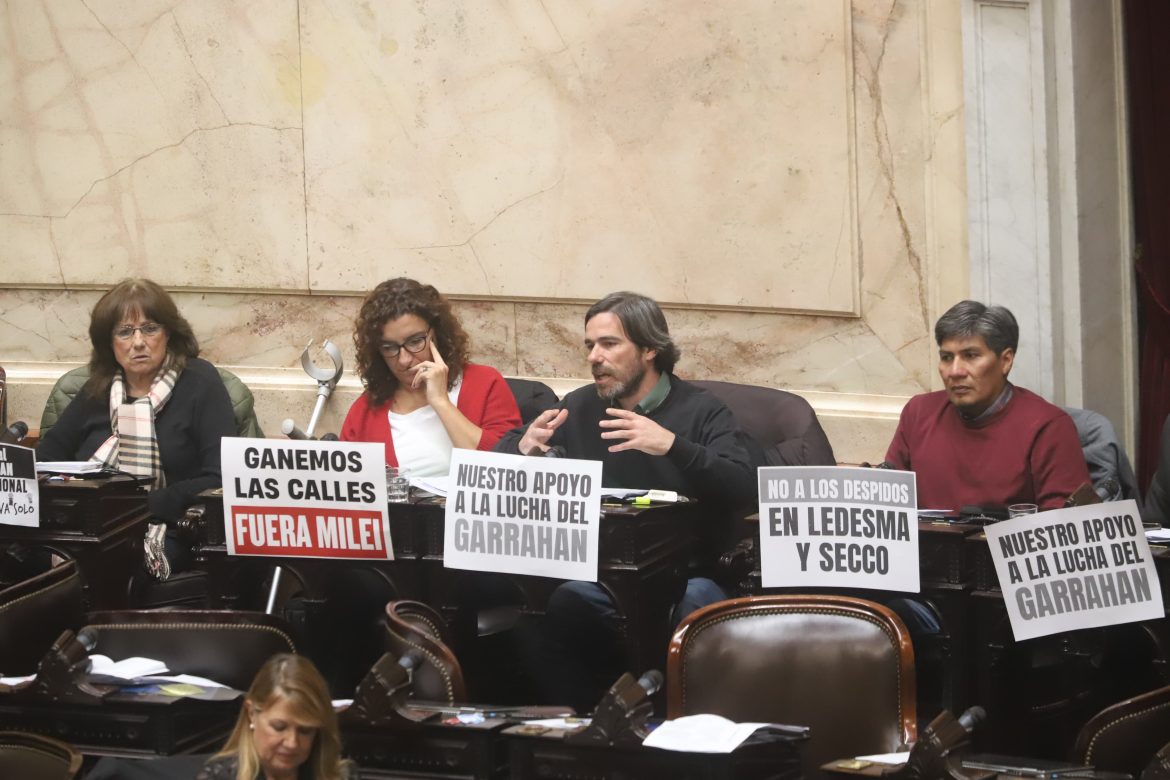
Argentina’s Lower House approved a 7.2% pension raise and the return of a pension moratorium following a contentious 10-hour debate discussing pension respite, the disability emergency, and the crisis at the Garrahan Hospital.
The final tally was 142 votes in favor, 67 against, and 19 abstentions for the pension raise, while the moratorium — a program that has allowed people without enough years of social contributions to retire until President Javier Milei refused to renew it in March — passed with 111 votes in favor, 100 against, and 15 abstentions.
In addition, deputies approved an initiative aimed at raising benefits for people with disabilities until 2027. The bills will now move to the Senate.
Regardless of the outcome in Congress, the president has already confirmed that he will strike down the bills. “Let’s hope that senators don’t back this populist demagogy, but in any case our commitment is to veto anything that attacks ZERO DEFICIT,” Milei wrote on X after the pension raise passed.
The Lower House could eventually overturn a presidential veto, but it would need a two-thirds majority to do so. Considering the votes the pension bill received on Wednesday, it has chances of surviving. The moratorium, on the other hand, passed with a very slim majority and is certain to be rejected. Last year, the deputies upheld Milei’s veto of a pension increase after 87 deputies backed the president’s decision, 153 voted to reject the veto, and eight abstained.
During the afternoon, the president reposted an artificial intelligence-created image that compared representatives of the Lower House to rats, with the caption questioning the increase in senators’ salaries on Wednesday. The text also asserted that “today, more than ever, Congress must be closed.”
The session
The session was requested by the leader of the Unión por la Patria (UP) bloc, Germán Martínez, and met a quorum despite attempts by the government and some of its allies to block it. La Libertad Avanza (LLA), the PRO, most of the Unión Cívica Radical (UCR), and others did not attend this session, but members did appear for the debate.
This debate came after the failed attempt on May 21, when the session could not be held due to a lack of quorum caused by the absence of five deputies. On that occasion, only 124 legislators were present when the required 129 were present.
The special session coincided with a massive mobilization in front of Congress, as the usual Wednesday retiree march was joined by doctors from the Garrahan, people with disabilities, migrants, and feminist groups on the anniversary of Ni Una Menos.
During the debate, Left and Workers Front representative Nicolás del Caño said, “The senior citizen sector was one of the main victims of this government’s chainsaw. You hear the president say that pensions kept pace with inflation, but he forgets that most pensions, which are the minimum pensions, have a frozen bonus of AR$70,000. It’s a brutal distortion. The bonus should have been more than AR$160,000 if this government’s inflation formula had been applied.”
“We spend close to 9% of GDP, similar to countries like Denmark or Finland,” said PRO’s Daiana Fernández Molero. “We spend poorly because it’s estimated we could spend 30% less, and on top of that, with higher pensions. But the system is perforated.”
“A minimum retirement pension, with the bonus, is AR $360,000. Stop fooling us,” Peronism’s Tomás Ledesma told the house. “80 percent of a retirement pension in Argentina is represented by three medications that are widely consumed by retirees and pensioners. They [the government] eliminated coverage for free medications.”
LLA deputy Santiago Santurio criticized the previous presidential administration and accused those proposing the bills for retirees and disabled people of wanting to “go back to the previous model.”
“I am surprised that they say this is a cruel government when the Kirchnerism empaths increased poverty during their administration”, he said, adding that retirees’ income worsened during Alberto Fernández’s presidency. “You took all the money and, on top of that, you played Robin Hood by giving money you did not generate.”
Massive protests outside Congress
A diverse crowd filled the streets surrounding Congress. Women and members of the LGBTIQ+ community held green handkerchiefs that symbolized the fight to legalize abortion and signs that read Ni Una Menos, a phrase calling to end femicides popularized ten years ago following a massive protest. A man dressed as Satan held a doll stylized as the president while a group of protesters shouted “hideous rats” at the police, who were behind a fence.
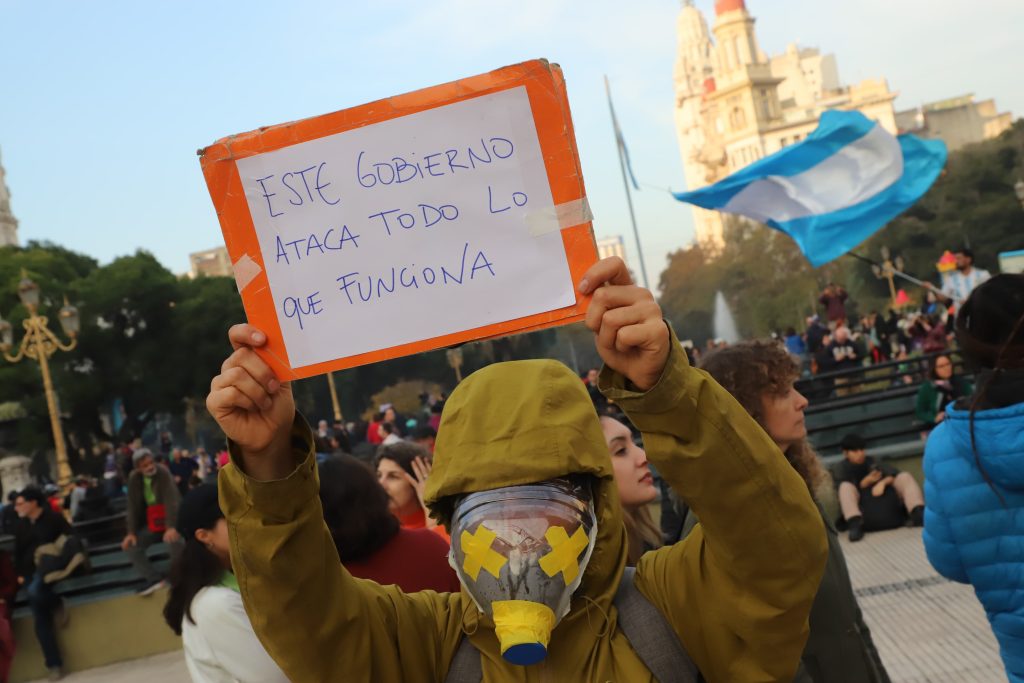
Retirees, scientists, doctors, people with disabilities, and their families completed the picture. Pictures of children treated at the Garrahan were pasted on the fence surrounding the Congress Square. Next to them, families of electricity-dependent patients were demanding that the lower chamber pass the disability act.
Marcela Gómez, a member of the Argentine Association of Electricity-Dependent Patients, told the Herald that the government is “cutting back on medication, food, and a lot of disposable supplies that are very expensive.”
“Most of our children are hospitalized at home, we are in a mini intensive therapy. We have adapted to that as a family, and the truth is that if we have to pay for all these things, we cannot afford it with any salary,” she said.
Gómez is the mother of Lautaro, an electricity-dependent child, and said that the government “clearly does not see [our children] as people,” when referring to the measures Milei has taken since the start of his administration in 2023. “They are forcing us to have them in hospitals, or send them straight to their deaths,” she said.
A group of teenage girls sitting in the square holding Ni Una Menos signs also spoke to the Herald. Among them, Alma, a 17-year-old student who was seven when the first Ni Una Menos protest took place, contested the extended notion that the Argentine youth supports the far-right. “We are angry because our rights are being cut down, protests are being totally thwarted,” she told the Herald. “My mother always took me to protests since I was little, she always gave a talk, painted my whole face… she introduced me to this world, which is our world.”
Additional reporting by Christopher Martin and Martina Jaureguy