
 Christopher Martin
 A University of Buenos Aires (UBA) program offering free fish to the public in order to prevent the spread of dengue mosquitoes has seen a massive increase in demand three years after its launch.
According to UBA figures, the program delivered 5,560 fish in 139 orders in 2024, benefiting more than 83,000 people. This was a 150% increase compared to the previous year.
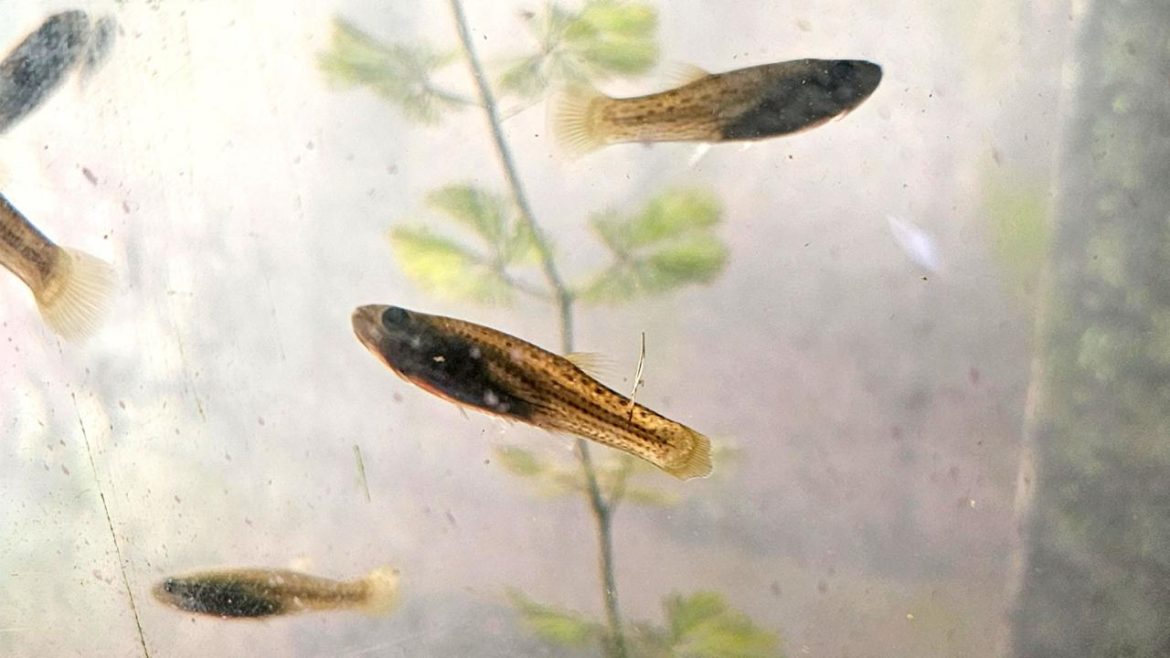
The project was originally developed by the UBA Faculty of Agronomy (FAUBA) in 2022. It used the native ten spotted live-bearer fish known as “water mothers,” which can completely eliminate the eggs and larvae of Aedes aegypti mosquitoes found in water reservoirs.
After the summer season in Argentina, swimming pools, ponds and other large bodies of water are often unmaintained. This becomes the perfect breeding ground for the Aedes aegypti, a mosquito that transmits diseases like dengue, zika, chikungunya, and yellow fever.
Part of the project entails providing a service to the community that includes advice and the pick-up of the fish, which is completely free of charge to those who request them. Dengue mosquitoes, often referred to as Yellow Fever mosquitoes or Aedes aegypti, originated in Africa but are a common invasive species that have spread rapidly across Argentina and the Americas in recent years.
“We began delivering fish to the community in 2022,” said Alejandro López, professor of Aquaculture at FAUBA and coordinator of the Biological Mosquito Control Project. “We’ve already delivered more than 15,000 fish to various interested parties, including schools, institutions, municipalities, private individuals, even businesses and clubs — all kinds of stakeholders who request them.”
To request native fish, you can send an email to [email protected] or contact them through their Instagram account. You will have to fill out a form in order to provide the project managers with written and visual information of the site to evaluate its eligibility.
How “water mothers” help keep dengue at bay
To try to control mosquito reproduction, the UBA School of Agronomy began using the fish to feed on Aedes aegypti larvae. This is seen as a more natural solution, as it avoids the use of insecticides, which are not always 100% effective. The fact that the ‘water mothers’ are native is also important, as they contribute to the preservation of the ecosystem.
“It’s a technique that’s already been developed,” Lopez told The Herald. “It is a known technique based on using natural predators in the environment, introducing them into constructed ecosystems to control a specific target population. What we did was design the technology and customize it to adapt it to this country and this area.”
When asked about whether the scheme would have enough fish to meet the increasing demand, Lopez remarked: “If demand continues to increase, we’ll have to try to increase our production capacity. But for now we’re coping!”
