

 Ariel Basile
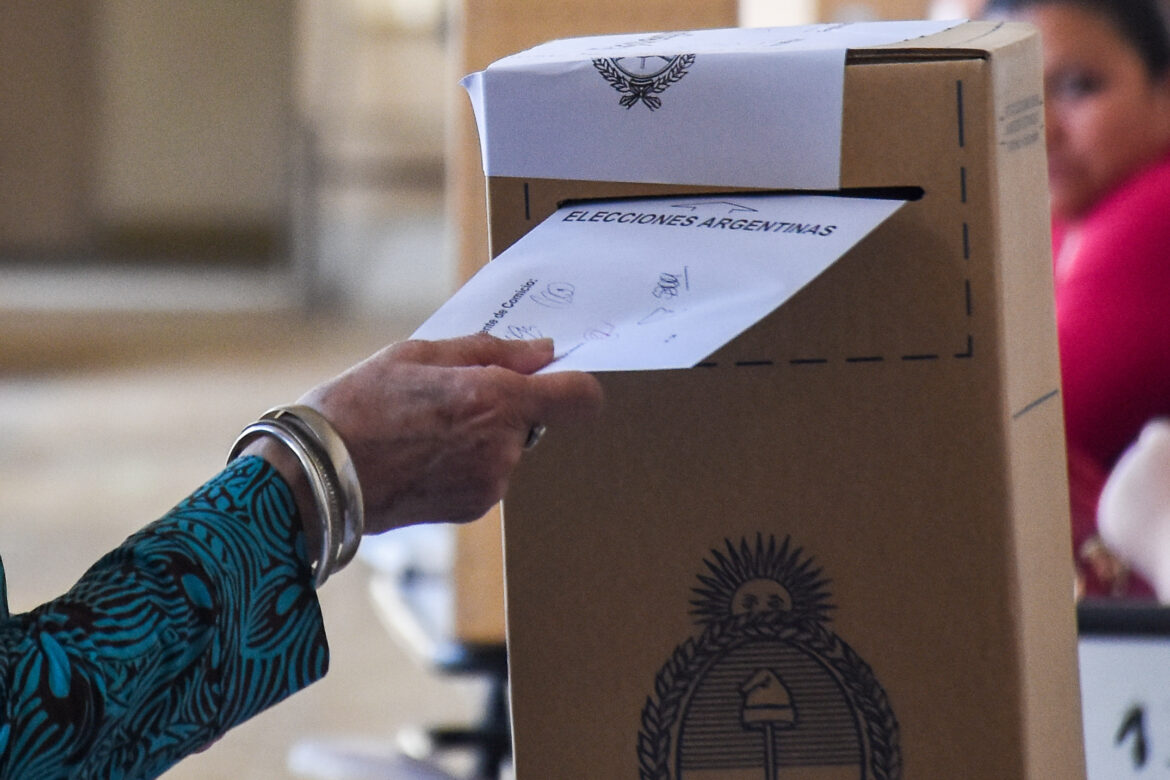
 This Sunday, four provinces, Salta, Jujuy, San Luis, and Chaco go to the polls to vote in the local legislative elections.
In three of this Sunday’s battles, in Salta, Jujuy, and San Luis, a local logic prevails, with the governors’ coalitions focused on the small town, with ideological and partisan cross-cutting. Gustavo Sáenz from Salta and Claudio Poggi from San Luis will seek to maintain local hegemony with provincialist fronts, which will surely fade by October. Both districts believe the governors will be irrelevant to the national elections, as their coalitions contain leaders from all parties.
Meanwhile, Jujuy native Carlos Sadir rejoined the PRO party and is hoping for the fragmentation of the opposition to sustain a Radical Civic Union (UCR) administration that, under Gerardo Morales, is beginning to show signs of wear and tear.
Therefore, of the four contests on Sunday, Chaco is the place that offers the most potential as a rehearsal for October. First, because Governor Leandro Zdero, also from UCR, promoted a partnership with La Libertad Avanza (LLA); a feat none of his fellow party members have attempted so far, but which they may emulate if the alchemy works. On the one hand, the Libertarians aren’t worried about the provincial elections.
On the other hand, they lack strong candidates in the region. The non-Peronist governors, meanwhile, know they share the electorate with Milei, and that a purple ballot in the voting booth only splits their vote. Even Governor Maximiliano Pullaro experienced this in Santa Fe, where, although he won, he did so by a smaller percentage than in 2023: those votes (which aren’t that many either) went to LLA. The Libertarians, accustomed to forcing events to their advantage, will be able to boast a victory on Sunday night, although they won’t claim to have been second-tier players. The Chaco scenario will have a second round in October, when the renewal of national senators will be contested.
Another peculiarity will occur in that province: just as in Buenos Aires City, which will vote a week later, there is a fragmentation with 17 lists, with natural partners who split to test their strength — perhaps only to reunite later, at a price — in Chaco the opposite occurred. A polarized contest between the UCR-LLA alliance (which also includes the PRO) and Peronism, which achieved unity led by former president Jorge Capitanich.
The Peronist Partido Justicialista (PJ) party’s administration has been taken over in Salta and Jujuy. In the first district, a large part of the leaders are part of Sáenz’s provincial coalition, which has been criticized by Cristina Kirchner for collaborating with Milei in Congress. In the second district, two lists emerged that do not respond to the intervention: the most important, that of national senator Carolina Moisés, who created the Somos Más front. In San Luis, the PJ is also divided, but with the hegemony of Alberto Rodríguez Saá’s front, which will try to regain prominence. His brother Adolfo joined Poggi again, as in 2023. The feud between the brothers who dominated San Luis politics since the return of democracy has not been resolved.
The new player emerging this year, LLA, will not officially participate in San Luis, although some leaders claim to represent Milei in the district. However, the truth is that they lack the approval of the Casa Rosada. Meanwhile, in Jujuy as well as in Salta, the purple list will appear in the voting booth. There is a coincidence: alternative Libertarian options slates appear to split their votes: two in Jujuy and one in Salta, with legal disputes regarding the use of colors, names, and lions.
Originally published on Ámbito