

 Martina Jaureguy
 Human rights organization H.I.J.O.S. denounced that the Federal Penitentiary Service has asked the judiciary for authorization to transfer 19 men convicted of crimes against humanity from Ezeiza prison to a jail in Campo de Mayo, which they describe as a “VIP prison” because of its “privileged conditions.”
One of the convicts is Alfredo Astiz, known as “the Angel of Death,” one of the most feared torturers of Argentina’s last military dictatorship. Astiz, along with several of the repressors in question, was visited in jail by a group of deputies from ruling party La Libertad Avanza (LLA) last July. It emerged that the lawmakers and other actors were in talks to file bills to release dictatorship criminals into house arrest or even free them.
H.I.J.O.S. said that the proposed transfer constituted the next stage in an “impunity plan” following last year’s visit.
Prosecutor Félix Crous, who has worked on several crimes against humanity cases, told AM 750 radio station on Tuesday that convicts held in the Campo de Mayo prison and the Ezeiza 31st prison wing “are in far better conditions than the average inmate.”
However, Crous clarified, the move “would improve detention conditions that are already good,” and that “the starting point is already one of privilege.” He said the Ezeiza wing where they are being held was adapted to hold elderly inmates, as well as female inmates with children, via a 2014 government resolution.
Yet, Campo de Mayo has “accommodations that the Ezeiza unit doesn’t have,” such as green spaces and an orchard.
Argentina’s Security Ministry declined to comment on the issue.
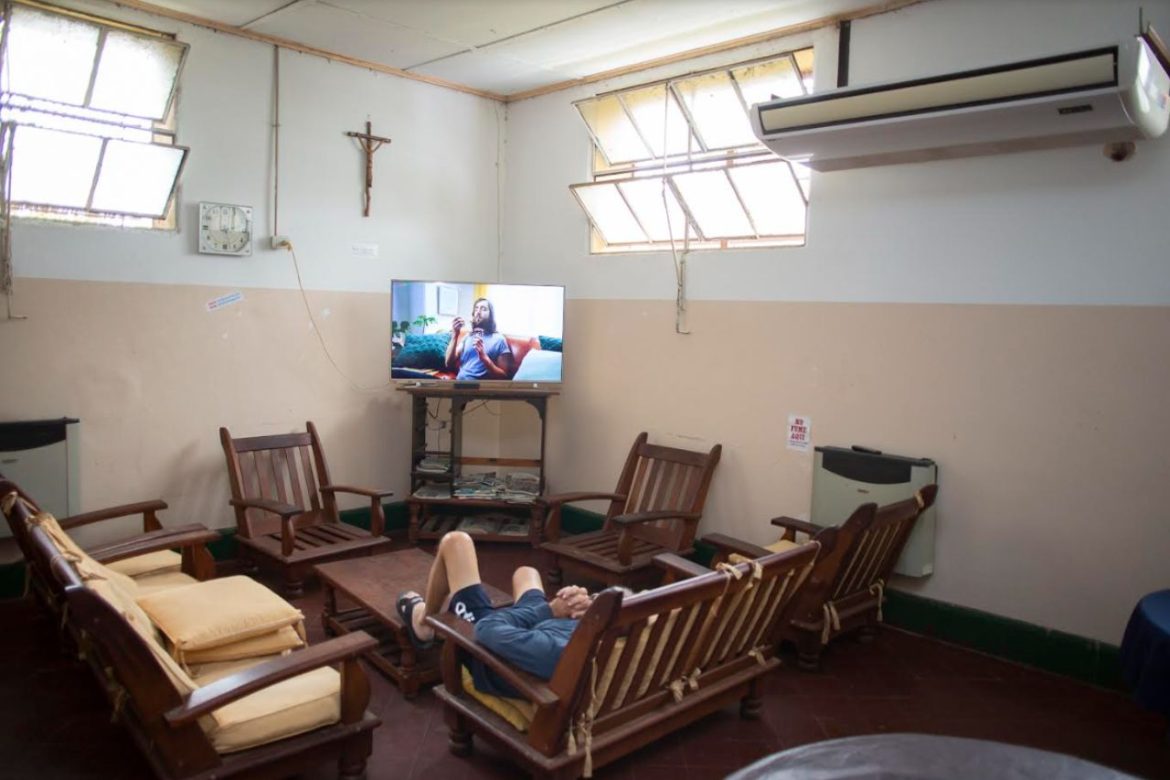
According to a 2022 Human Rights Secretariat report, the Campo de Mayo prison and the Ezeiza wing where the repressors are being held are both apt for older inmates with health issues. They have access to medical, psychological and dental care and an exclusive ambulance. The report showed a common area with sofas and a TV. It was sent to courts and prosecutors to be considered “when deciding on requests for house arrest or parole for the convicts.”
According to a statement from the Buenos Aires city branch of H.I.J.O.S., the Penitentiary Service requested authorization from two courts to transfer four convicts who committed abuses at the “Club Atlético”, “El Banco” and “El Olimpo” clandestine detention centers, as well as 15 others who operated in the ex-ESMA, including Astiz.
Gabriel Aquino, director general of the Penitentiary Service Correctional Regimen, made the request on the grounds that the service needs to make room for women inmates, H.I.J.O.S.’ statement said.
H.I.J.O.S. is formed of people whose parents were victims of the dictatorship.
“We categorically reject the possibility that repressors be given privileges,” the organization said. “We never aimed for revenge, but for justice. The only place for those who have committed crimes against humanity is common jail.”
They acknowledged the issue of prison overcrowding, but said that the Ezeiza jail wing where the repressors are currently held is only half full.
The organization affirmed that the judiciary “didn’t question the transfers, asked for the opinion of the repressors’ defense and requested infrastructure reports of the 34th unit of Campo de Mayo.”
Campo de Mayo military compound, in Buenos Aires province, is mainly used for military training. Four clandestine detention centers operated there during the 1976-1983 dictatorship. The 34th unit of Campo de Mayo was a military jail before being turned into a federal jail in 2008.
One of the Campo de Mayo torture centers operated in the unit, and testimonies say pregnant women were held there to give birth. It is currently used solely to hold dictatorship criminals. Military junta leader Jorge Rafael Videla spent four years there before dying in Marcos Paz prison in 2013.