
 Buenos Aires Herald
South American trade bloc Mercosur will allow each of its five member countries to temporarily add 50 products that will be exempt from the common external tariff. That means that each nation will be able to enlarge the list of imports outside the bloc it can obtain without paying a common tax.
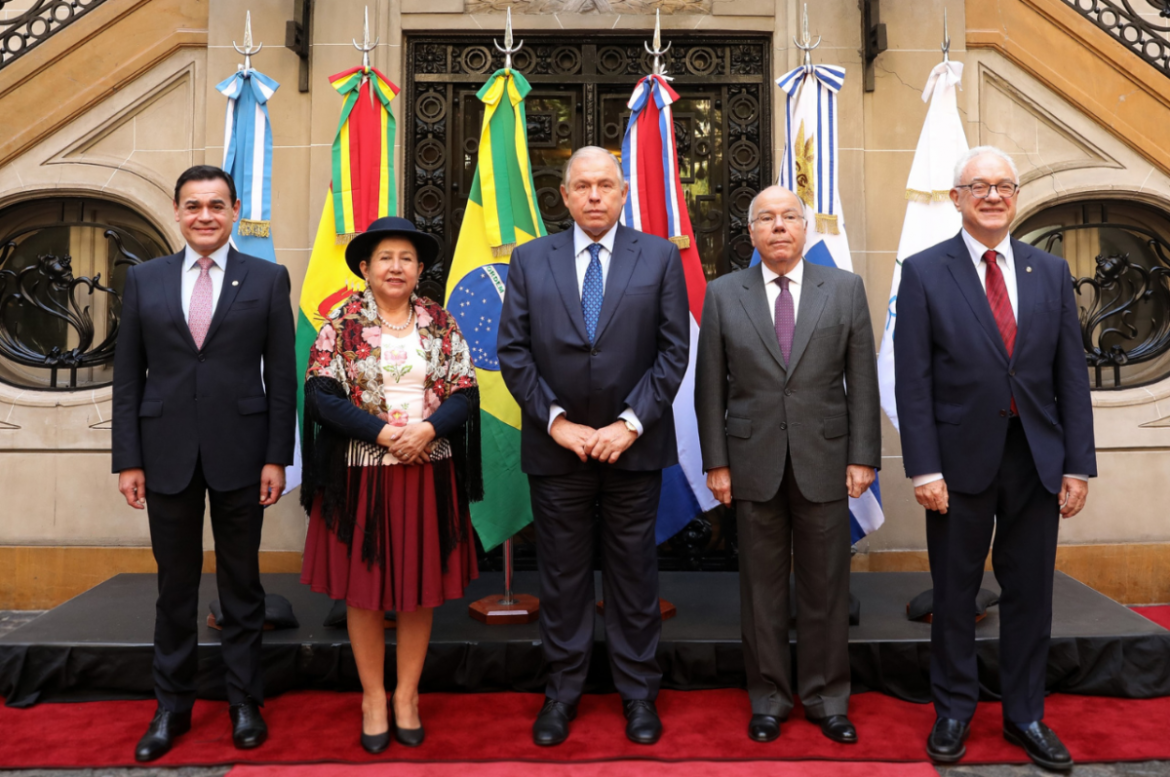
The decision was made by the ministers of foreign affairs of Argentina, Brazil, Uruguay, Paraguay, and Bolivia in a meeting on Friday in Buenos Aires.
The Mercosur has had a common external tariff for products from outside the trading bloc since 1995. The rates, ranging from 0% to 35%, are one of the bloc’s main joint policies. This is not the first time the Mercosur has decided on exceptions to the regime. Argentina and Brazil currently have exceptions for 100 different goods, valid until 2028, while Paraguay and Uruguay have 649 and 225. Friday’s decision will allow each country to now be able to add 50 exceptions to their list.
Mercosur in the global trade war
The South American bloc had not voiced its position regarding U.S. President Donald Trump’s decision to slap tariffs on imports coming from all of Washington’s trading partners. Although Friday’s statement did not make a specific mention of Trump’s tariffs, it signaled that the decision to expand the list of products exempt from the common tax was made in order to face the “challenges posed by the current international situation.”
The bloc’s countries, however, have each commented on the effects of the tariffs. Early in April, Argentine President Javier Milei said his government had already changed multiple country regulations to comply with Trump’s policy. He said his administration was “committed to resolving the [trade] asymmetry with the United States in a short period.” Milei went on to add that he had instructed the foreign ministry and the secretary of commerce to change whatever other norms were necessary.
Uruguayan president Yamandú Orsi said his government would negotiate with Trump, although he said that Mercosur was not the most harmed by the U.S. policies since its countries only got a 10% tariff. Similarly, Paraguayan president Santiago Peña said the measure caught his country “in a good position” and that it will have a lesser effect than other countries hit by higher tariffs. Bolivian President Luis Arce also said the damage to his country was “minor.”
Brazilian president Lula Da Silva was less accepting. On Friday, he enacted a “reciprocity law” allowing the government to react when countries or economic blocs implement measures that restrict Brazilian exports, either through surcharges or objections to the origin of the product.
For Argentina, the Mercosur decision comes shortly ahead of U.S. Treasury Secretary Scott Bessent’s visit to the country next Monday. Per the official statement, Bessent is set to meet with government officials and business leaders to affirm Washington’s “full support” for the country’s economic reforms.
