

 Martina Jaureguy
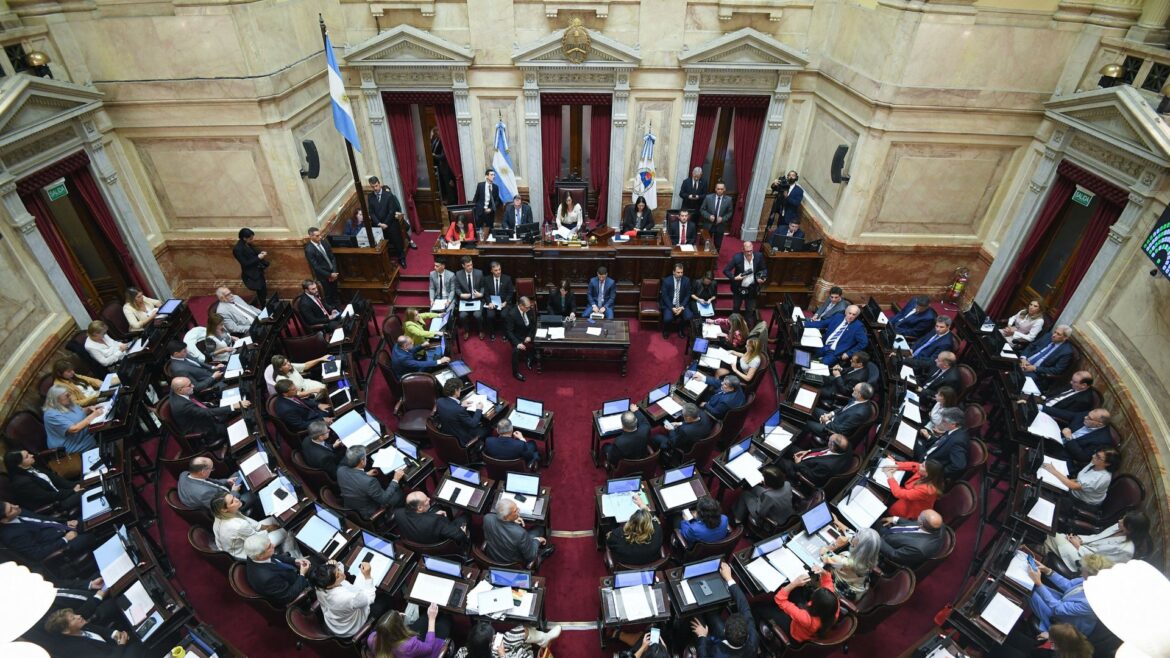
 The Senate will convene on Thursday to debate the situation of the two Supreme Court Justices President Javier Milei appointed by decree in late February. The session could end in a win for the government, a postponement of the issue, or an unprecedented legal situation.
Milei appointed Manuel García-Mansilla and Federal Judge Ariel Lijo on February 25 during a one-week recess in Congress. This was the only period in which the president could sidestep Senate approval, a move his critics have deemed unconstitutional.
The paths of the two nominees diverged after this point. In Lijo’s case, the Supreme Court ruled that he had to resign from his current post as federal judge to take on his new role, which hasn’t happened yet.
“If Lijo’s candidacy is approved, the Supreme Court could swear him in. If it’s rejected, he would continue as a federal judge,” explained constitutional legal expert and professor at the University of Buenos Aires Pedro Caminos.
The situation is a bit more complicated for García-Mansilla, who was sworn in as a temporary justice two days after Milei’s decree. Caminos told the Herald that, just like Lijo, he would become a permanent member of the Supreme Court if the Senate approves. Things could get tricky, however, if senators reject his candidacy. Given that he is technically a justice, removing him could open the doors to a legal situation for which there is scant precedent.
How are justices appointed in Argentina?
The process starts with the government submitting a candidate to the Senate. Lawmakers then debate and vote; two thirds are needed for the candidacy to be approved. Milei sidestepped this procedure thanks to a loophole in the Constitution dating back to the mid-19th century that allows presidents to make temporary appointments, known as justices “in commission.”
“This was from when people moved around in carriages and the Senate only held sessions from May to September,” said public law specialist and constitutional law professor at the University of La Pampa Gustavo Arballo. “There were long periods of time in which Congress didn’t session at all, and they couldn’t call for extraordinary meetings just to approve a bid.”
This norm allowed the president to temporarily name judges, Supreme Court justices, military members, and diplomats if necessary. The appointments would only last until November 30, the day the legislative year ends.
Nowadays, senators can hop on a plane to hold sessions whenever is necessary. Furthermore, the 1994 constitutional reform changed the requirements for appointing judges and justices.
“The reform established that the president is required to guarantee a two-thirds majority in the Senate to appoint a Justice,” Caminos said, arguing that these modifications are what render Milei’s move invalid.
“I believe that the appointments in the commission section of the Constitution lost their validity after the reform.”
What could happen with García-Mansilla?
There are three potential outcomes in García-Mansilla’s case. The Senate could reject his candidacy, approve it, or postpone the session indefinitely. This would mean that he would remain a Justice until the end of the year.
“Some experts say that if the Senate rejects [the candidacy], he should continue in the position until November 30. Others say that he should automatically be removed from his position,” Caminos said. “I am among those who believe that a rejection from the Senate should lead to García-Mansilla’s resignation,” he added.
Caminos went on to say that the case is unique insofar as there are no real precedents for this. The only instances in which a Justice resigned after the Senate had rejected his candidacy were in the early 20th century and in the 1960s, but the latter took place when the Senate couldn’t vote due to the Congress being shut down following a military coup.
Legal experts are concerned that Argentina could be thrust into a situation of legal uncertainty if García-Mansilla’s candidacy is rejected and he doesn’t resign.
Paula Litvachky, executive director of the Center for Legal and Social Studies (CELS, by its Spanish initials), said that the Supreme Court itself is in “a very complicated situation.” Not only because García-Mansilla’s appointment is being questioned but also because the rejection of his candidacy could open the door to a potential flurry of lawsuits demanding that all the decisions he participated in within the Supreme Court be annulled.
Arballo, who says appointing justices in commission is unconstitutional, added that if nothing is done against Milei’s move, it could lead to the normalization of this practice.
“If we accept this, we would be bypassing Congress and blocking the Senate from participating in the appointment of judges and justices.”