

 Buenos Aires Herald
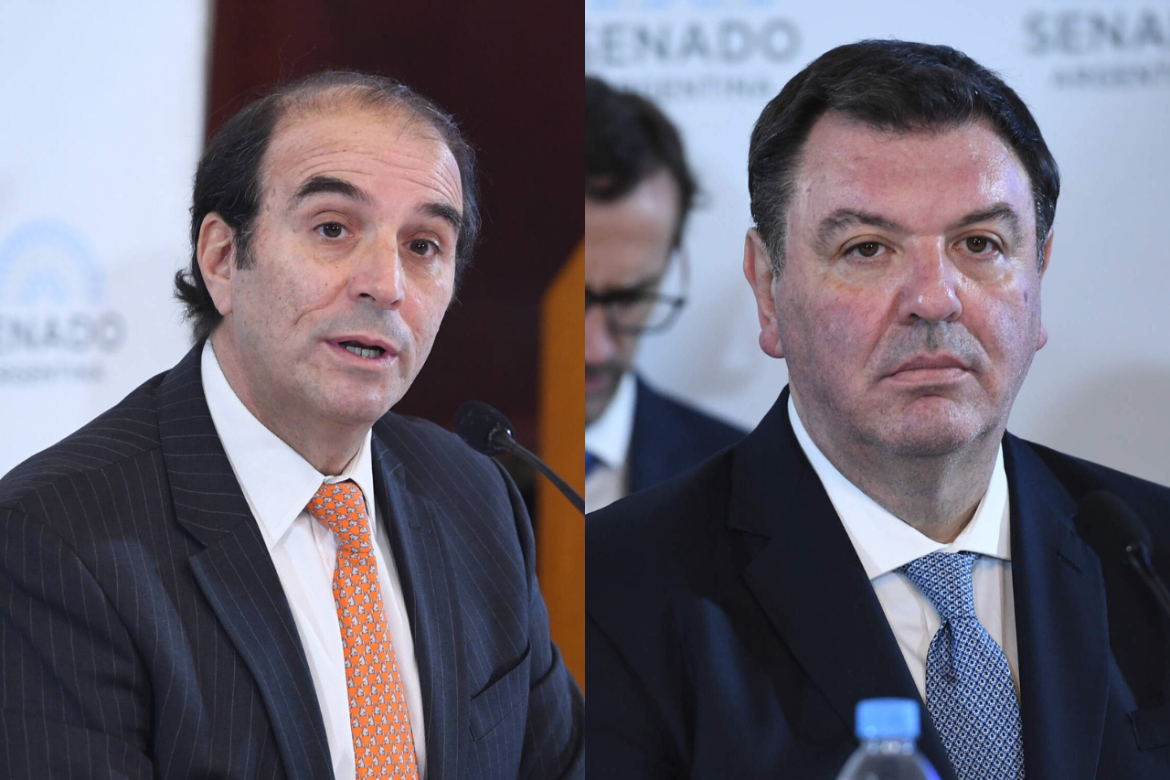
Argentine President Javier Milei appointed Ariel Lijo and Manuel García-Mansilla to cover the two vacant roles in the Supreme Court through an executive order on Tuesday. The move sparked immediate backlash: both candidates are considered contentious and the Senate is currently in summer recess.
The government announced the decision in a communiqué on social media, where it criticized the Senate, saying the house had not “processed the documents submitted by the National Executive Branch during the ordinary sessions” last year. The Milei administration argued that the Constitution grants it the power to cover vacant jobs that require the Senate’s approval during its recess.
A commission will hear Lijo and García-Mansilla’s swearing-in before Congress reopens on March 1 and their terms expire at the end of “the next legislative term.” The move is similar to when then-President Mauricio Macri designated Horacio Rosatti and Carlos Rosenkrantz in the Supreme Court in 2015, also via an executive order.
The goal, according to the Milei administration, is to “normalize the operation of the highest judicial court of our country, which cannot carry out its role normally with only three ministers.”
“The National Government does not tolerate and will not tolerate that the interests of politics be imposed over those of the Argentine people, under any circumstances,” they added.
Both Lijo and García-Mansilla are controversial picks. Critics of Lijo, who has been a federal judge for 20 years, pointed to his sluggish conviction rate. In 2014, Lijo indicted then-Vice President Amado Boudou in a corruption probe. He was also the judge in the high-profile Correo Argentino corruption case against former President Mauricio Macri, which is ongoing.
García-Mansilla has a Master of Laws degree from Georgetown University Law Center, is a partner in the Liendo & Associates law firm, and serves as executive director of Argentina’s Hydrocarbon Exploration and Production Chamber. He gained visibility when, during the 2019 congressional debate for the legalization of abortion, he opposed it during the commission debates.
Members of the opposition criticized the measure, saying the President is “straining the Constitution.” “Milei seeks to guarantee his and his sister’s impunity with Lijo in the Court,” wrote Coalición Cívica National Deputy Juan Manuel López, and urged the Senate to reject his appointment.
Per the National Constitution, the president’s nominees for Supreme Court justices need two-thirds of the Senate to be appointed.