
 Buenos Aires Herald
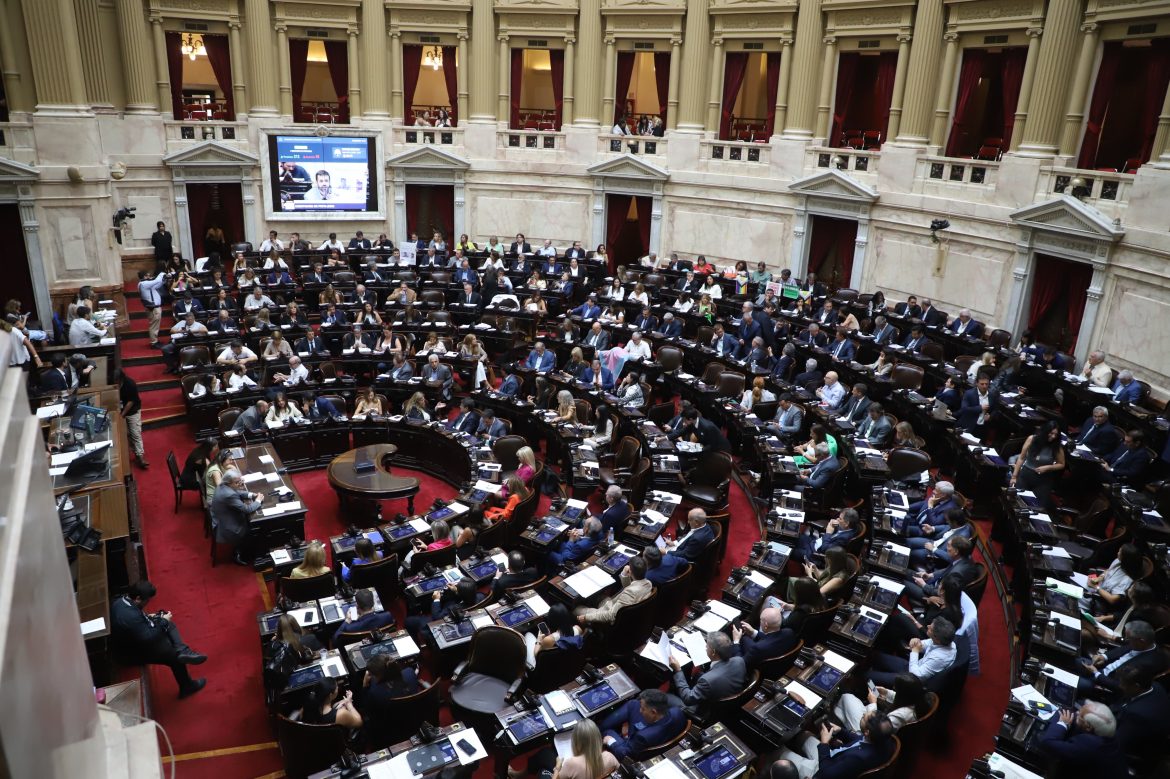
In addition to suspending the Argentina primaries for 2025, the Lower House session on Thursday also debated two bills aimed at reforming the Argentine penal code.
A proposal seeking harsher penalties for repeat offenders as well as people who have been indicted for multiple crimes but have not received any conviction was passed with 138 votes in favor, 94 against, and one abstention. A second bill regulating trials in absentia was also approved with 147 votes, with 68 votes against and 9 abstentions. Both bills will now move to the Senate.
The two proposals are part of the government’s tough-on-crime strategy, which is spearheaded by Security Minister Patricia Bullrich. While the recidivism bill was squarely rejected by the opposition Peronist bloc Unión por la Patria (UxP), the trial in absentia proposal garnered votes from some of its deputies, as the lack of internal consensus led to the impossibility of a common stance.
In its first article, the recidivism bill states that it is aimed at offenders who have received at least two prison sentences and have a first conviction that has exhausted all appeals. It also states that, in addition to flight risk and other potential issues, a judge will now be able to take into account a defendant’s previous indictments — regardless of whether they were convicted or not — when deciding whether they should be kept in prison while awaiting trial or not.
Deputy Martín Soria (UxP) was one of the most critical voices of this proposal. He said it did not surpass the “minimum test” of constitutional fidelity and accused the Executive Branch of “trying to incarcerate citizens that are completely innocent.”
“Its main goal is to replace a person’s presumption of innocence with a judge’s presumption whether someone will commit a crime in the future,” Soria said, calling it “penal futurology, a new and unprecedented category.”
The bill to regulate trials in absentia seeks to change a key aspect of the Argentine penal code. Current legislation mandates that a defendant must be called in for questioning and stand before a judge in order to exercise his right to a defense before they can be charged and tried. No legal proceeding can move forward without complying with this.
The government presented its trial in absentia proposal in July 2024, a few days before the 30th anniversary of the AMIA attack. The date was not coincidental, as the aforementioned Argentine penal legislation is considered one of the reasons why there have been no convictions in the case. A slew of Iranian citizens accused of planning the bombing have been called to testify multiple times, but proceedings have been stalled because they have never appeared before an Argentine court.
The bill also states that trials in absentia are only available for those accused of serious crimes, such as genocide, crimes against humanity, war crimes, forced disappearances, torture, and terrorism, among others.
Cover photo credit: Mariano Fuchila
