
 Buenos Aires Herald
Argentina is pulling out of the World Health Organization (WHO).
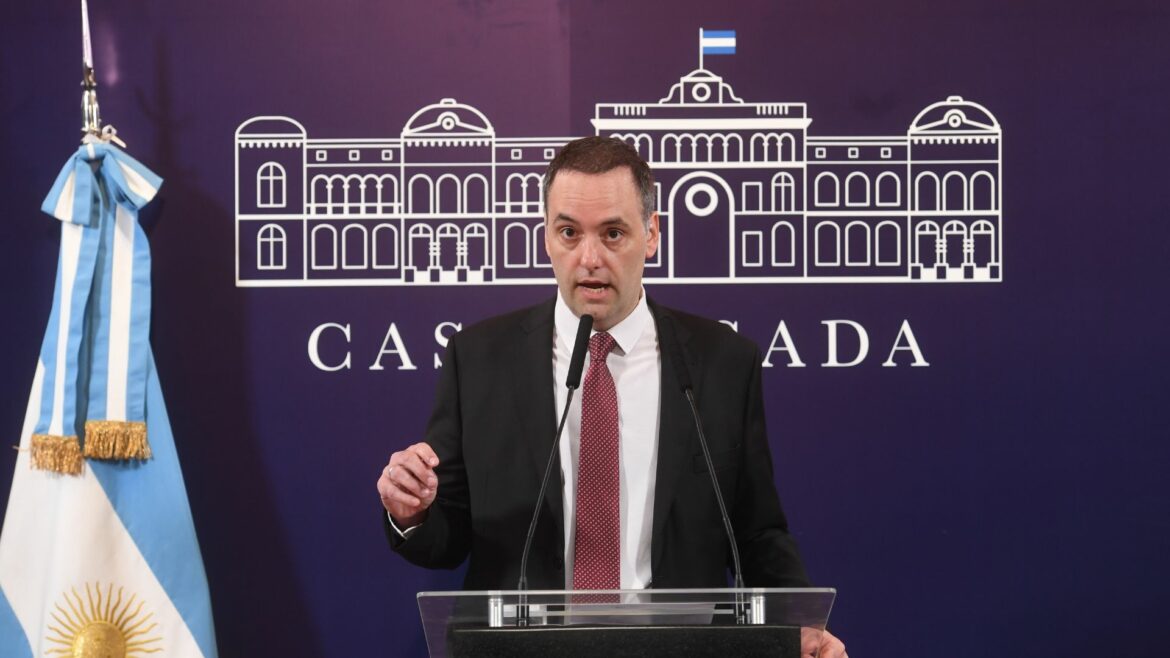
President Javier Milei has ordered Foreign Minister Gerardo Werthein to withdraw the country from the organization, due to “deep differences” over how the WHO managed the COVID-19 pandemic, Presidential spokesman Manuel Adorni announced in a press conference on Wednesday morning.
The Milei administration’s announcement was made in lockstep with the United States’ withdrawal from the global public health agency, underscoring Argentina’s alignment with President Donald Trump.
Adorni said that the WHO’s pandemic management, along with decisions made by former President Alberto Fernández, “led [Argentina] to the longest lockdown in human history” and for the country to be subject to “certain countries’ political influence.”
“Argentines won’t allow for an international organization to intervene in our sovereignty, much less in our health,” Adorni said.
The government has claimed that exiting the WHO will not affect healthcare in Argentina. However, critics were quick to argue that it would affect important components of the country’s public health system, including vaccine purchases and outbreak monitoring.
The World Health Organization is a United Nations agency that coordinates global public health. Founded in 1948, its work includes directing health emergency responses and promoting universal access to healthcare. It has 194 member countries.
Adorni said that Argentina does not receive funding from the WHO for healthcare management, and that the move would therefore not imply cuts. “It will not affect the quality of healthcare services,” he said.
“On the contrary, it provides the country with more flexibility to implement policies that are adapted to the context of interests that Argentina requires, and more availability of resources,” Adorni continued. “It reinforces our path as a country with healthcare sovereignty.”
Argentine Health Minister Mario Lugones said: “Argentina does not receive financing from the WHO, and while some technical cooperation projects may receive financing, this is realized through the PAHO [Pan-American Health Organization]. It is important to emphasize that leaving the WHO does not mean leaving the PAHO, which predates it and depends on the Organization of American States.”
The PAHO is the Organization of American States’ health arm, but also the WHO’s regional office for the Americas. The implications and feasibility of Argentina leaving one, but not the other, are not immediately clear.
In addition to the WHO withdrawal, Argentina is also “analyzing leaving the Paris Agreement” on climate change, Adorni added.
After the announcement, Milei described the WHO’s COVID-19 responses as “the largest social control experiment in history.” The lockdowns, he wrote on X, meant “committing, in complicity with all the countries that followed their directives, one of the most bizarre crimes against humanity in history.”
You may also be interested in: Argentina to exit international institutions in line with Trump’s lead
Leandro Cahn, director of the HIV prevention nonprofit Fundación Huésped, posted on X that leaving the WHO would affect Argentina’s capacity to monitor outbreaks and participate in technology transfer. “We would not be able to buy vaccines and HIV treatments through their rotating fund, which makes costs significantly cheaper,” he wrote.
A statement by the presidential communications team published on X minutes after Adorni’s press conference said that the WHO promoted “never-ending lockdowns” during the COVID-19 pandemic “without any scientific evidence.”
“Today, scientific evidence indicates that the WHO’s rulebook does not work because it’s the result of political influence,” the statement said, adding that the organization “limits countries’ sovereignty.”
Buenos Aires Province Health Minister Nicolás Kreplak, of the Peronist opposition, said the decision would leave Argentina to face health challenges on its own. He wrote on X that it means Argentina will no longer have “international collaboration for training, information, scientific studies and epidemiological impact analysis for future epidemics and pandemics.”
Kreplak added that the country would lose financial support for prevention and immunization campaigns for infectious diseases such as tuberculosis, HIV and dengue, affecting its response capacity. Like Cahn, he expressed concern that the potential loss of funding from the WHO, through its Americas arm, the Pan American Health Organization, would affect Argentina. This is used for purchasing medicine, vaccines, resources and devices. “the question remains about whether this will be affected, losing all possibility to make this purchases at a cheaper cost.”
This decision comes a fortnight after Trump announced the United States’ withdrawal from the agency, as well as the Paris Agreement, on his first day in office. Trump first attempted to withdraw the U.S. from the WHO in 2020, likewise blaming the organization’s pandemic management, but ex-President Joe Biden revoked the decision when his term began, before it took effect.
“The WHO continues to demand unfairly onerous payments from the United States, far out of proportion with other countries’ assessed payments,” said a White House statement released January 20.
On Tuesday, Trump also ordered the withdrawal of the U.S. from the UN Human Rights Council (UNHRC) and prohibited any future funding for the UN Relief and Works Agency for Palestine Refugees in the Near East (UNRWA), saying these are “anti-American organizations.”
