
 Diego Sánchez, Anna Halász, and Priscila Navarrete
 By Diego Sánchez, Anna Halász and Priscila Navarrete
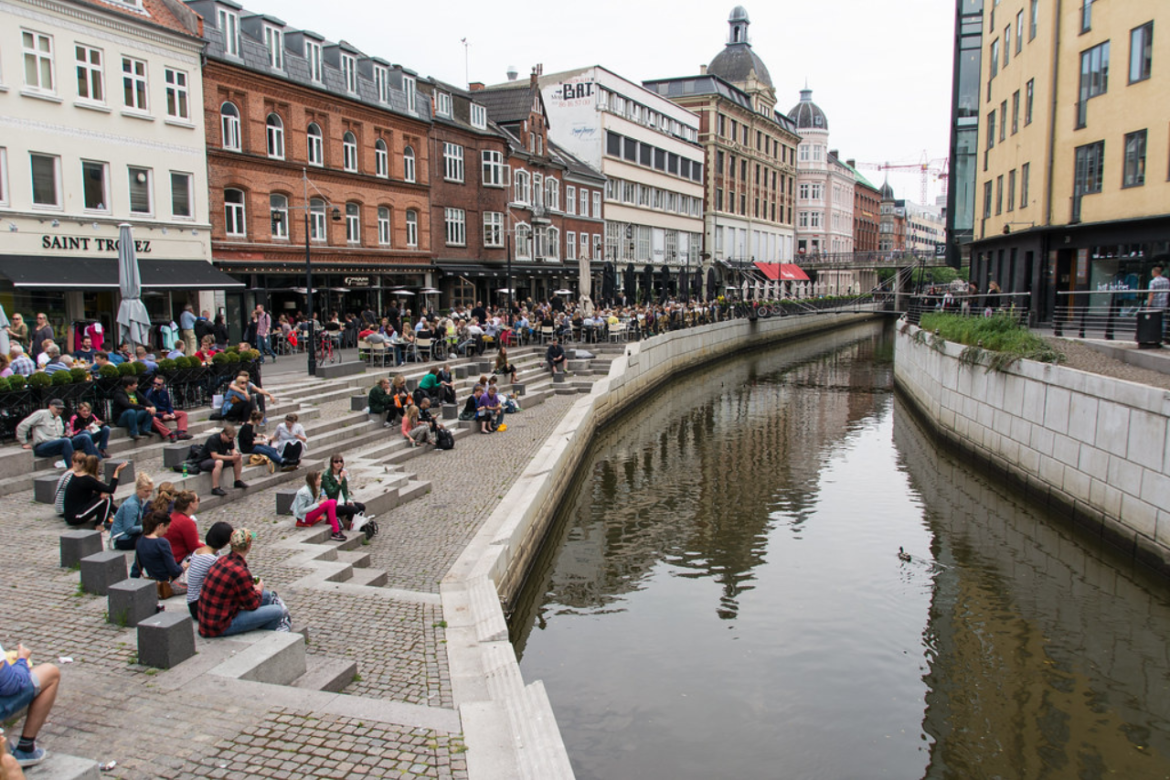
Sasha Jardón takes out a vacuum flask and pours himself a mate, thousands of miles away from his home country. In half an hour, the 26-year-old Argentine chef and accountant will start his shift at a food stand in a busy venue in Aarhus, the happiest city in the world in 2024, according to London-based Institute for Quality of Life.
The second-largest city in Denmark, Aarhus tops their “happiest cities” ranking, due to their education and inclusive policies, economy, mobility, environmental protection, access to green areas, and innovation. It’s a combination of factors that leads to greater happiness, according to the British think tank. This, along with Denmark’s high standard of living, has attracted many foreigners, including Argentines.
Jardón was born in Rosario, a major port city that is both the birthplace of football star Lionel Messi and a stronghold of violent drug trafficking gangs. A certified accountant turned chef, he used to work for a U.S. company that sells agricultural machinery back in Argentina before moving to Aarhus in 2023.
“I was planning to work in something related to economy or finance, which is my field, but right now, I’m a chef. I think it’s going from worse to better”, he explained.

Despite being one of the largest economies in Latin America, Argentina has faced growth problems for the last five decades, including many years of rising inflation and depreciation of the peso (while this trend has changed over the past year, annual inflation remains at 118%). The economy and crime rate are some of the issues Jardón mentions among his reasons to move.
Looking for stability abroad
According to official data, more than one million Argentines left the country between September 2020 and October 2021. Fifty thousand of them said they were leaving “to settle somewhere else,” according to fact-checking site Chequeado. Official data on international emigration of Argentines is out of date and the latest available records are from 2020.
Jardón is not alone in his Danish journey. In the last 10 years, Denmark has registered an increase in the number of Argentines immigrating to the country. Today, they are the largest group of Spanish-speaking Latin Americans there. Perks include a working holiday visa scheme and the fact that most Danes speak fluent English.
Most Argentines don’t hesitate to use one word when comparing Denmark with their home country: “stability.”
“I think the most important thing is economic stability and everything that means, which gives me peace, and therefore gives peace to my children”, says Carolina von Essen, a 41-year-old senior Data Scientist and mother of two Danish kids.
Working Holiday visa, an appealing option
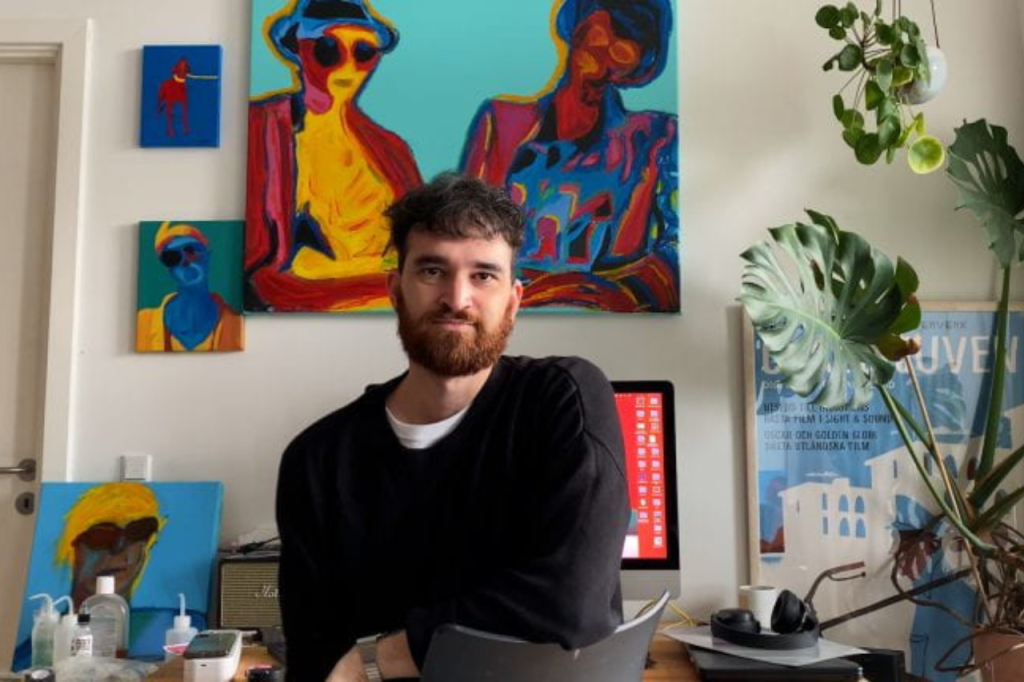
Alan Chac, a 34-year-old artist, arrived in Aarhus in 2018 through a Working Holiday visa. The scheme allows people from Argentina, Australia, Canada, Chile, Japan, New Zealand and South Korea to work one year in Denmark.
“My idea was to start here and then maybe go to Sweden and later Germany, then back to Argentina. But things happened”, Chac says laughing. It was only a few weeks after his arrival that he met the Danish woman he later married.
Chac started working in warehouses and food venues, but soon realised he could continue to pursue his passion for art. He had studied photography in Argentina, but switched the camera for acrylics and canvas, and showcased his work in art galleries in Copenhagen and Aarhus. He chose to stay in Aarhus because of its similarities with La Plata, where he lived in Argentina.
According to Denmark’s latest official statistics, 6,405 Argentines by citizenship or birth, including their descendants, were registered to be living in the country in July. Among them, 3,709 lived in Copenhagen, and 659 in Aarhus. In the last 10 years, the presence of Argentines has become more noticeable. In 2012, only 48 Argentines entered Denmark; before the pandemic in 2019, a huge peak was reported with 2,068. Lastly, in 2023, only 540 emigrated.
The Working Holiday scheme was signed between Denmark and Argentina in 2011, enabling nationals of both countries under 30 years old to work legally. However, the agreement was suspended during the COVID-19 crisis and had to be amended in 2022. Denmark imposed a cap of 150 applications per year after authorities found out that some Argentines who were working as food couriers discovered a way to avoid paying tax correctly. The cap was also applied to Chileans.
Consequently, the arrival of Argentines declined substantially in 2022, but it still remains high compared to other Spanish-speaking Latin American countries. In comparison, 374 Mexicans entered the country in 2023, along with 273 Chileans.
A chance for professional progress
Emigrating to Denmark as a citizen of non-European Union states is not easy if you don’t have a job offer. But many Argentines have Italian and Spanish citizenship, as a consequence of the massive European immigration to the country at the end of the 19th century. Countries like Spain and Italy regularly issue EU passports for immigrants’ descendants.
Some choose Denmark, like Alan Rodríguez, a 35-year-old musician and former public sector worker. He and his wife decided to move to Aarhus in 2019 after falling in love with the city during a visit two years earlier.
“We felt like it was a small city, but at the same time, it had everything we wanted within reach,” says Rodríguez.
His wife got a scholarship to study a Master’s degree at Aarhus University, and in order to follow her, he decided to apply for Italian citizenship in Italy, where the process was faster. Issues with the Italian authorities and the pandemic extended his stay from six months to almost two years. He wasn’t able to reunite with his wife in Aarhus until 2021.

Academia is another way Argentines end up in Aarhus: it’s home to the second-largest university in Denmark, which ranks among the top 25 universities in the European Union.
Aarhus University offered 36-year-old researcher Sofía Mercader an opportunity to progress. Since 2021, she has been a Postdoctoral Fellow at the Department of Philosophy and History of Ideas. She misses Argentina, but takes into account the present situation. “The news that you get from there about the economic situation shows that it’s getting worse and worse,” she said. “And you cannot get the living standards that you have here. So yes, that really affects my decision to stay in Europe.”
Although Mercader’s reasons to move were influenced mainly by her professional development, giving birth to her daughter has made her consider staying in Denmark long-term. Currently married to a Mexican citizen, she knows the situation regarding childcare leaves much to be desired in both countries. “There are a lot of things that support parents [in Denmark], like maternity or paternity leave, which are much better compared with Mexico and Argentina, especially for fathers,” she adds.

Carolina von Essen has had a similar experience. In 2010, after finishing her MA in Astrophysics in the National University of La Plata, she realised that her professional field was not developed enough in Argentina. “My master thesis consisted in building up the first robotic telescope to observe exoplanets, which orbit stars other than our Sun. It was too new in Argentina at that time. So, if I really wanted to continue in that field, I had to leave,” she explains.
With German, Spanish and Italian roots, Europe seemed like the natural destination. Three years later, she earned her PhD in Natural Sciences at Hamburg University in Germany. She arrived in Aarhus in 2014 as a post-doctoral researcher at the Stellar Astrophysics Centre (SAC) at Aarhus University. And she hasn’t left since. She married a Danish man with whom she has two children, although they later divorced.
Currently, von Essen’s main job is as a senior data scientist at a Danish company related to water pumping. She feels integrated into Danish society, but found it hard at the beginning, when she didn’t speak Danish. Today, she has no plans to return to Argentina, although she does miss the culture of her home country.
“I love my kids and I don’t think I’d be able to offer them a better life than the one they have here,” she explains.
