

 Buenos Aires Herald
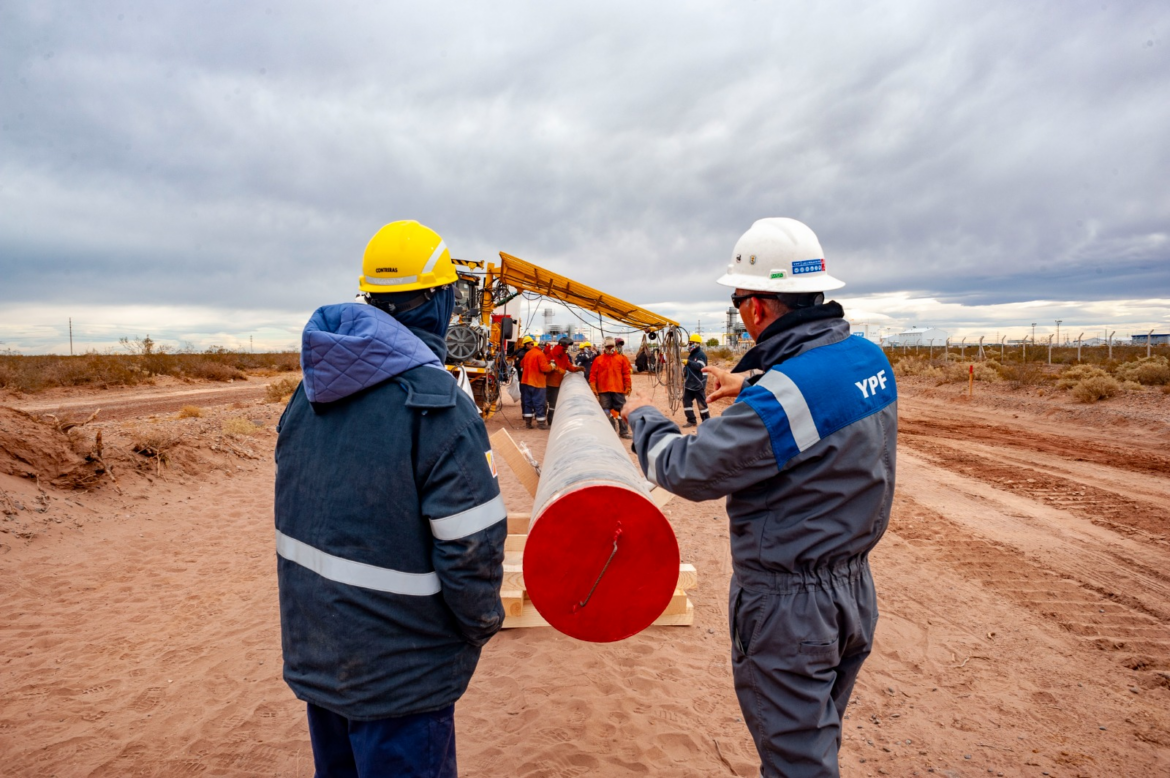
On Monday, leaders of Argentina’s main oil and gas companies gave the go-ahead to the construction of the US$3-billion “Vaca Muerta Sur” oil pipeline. They hope it will be the first project of the government’s new large investment regime (RIGI). State-owned energy company YPF is spearheading the project, grouping other players into the Vaca Muerta Oleoducto Sur (VMOS) joint stock company to propel it forward.
“We wish to report that at the VMOS board meeting held on December 13, the construction of the Vaca Muerta crude oil export pipeline was unanimously approved,” reads the note informing the decision to the National Securities Commission (CNV), signed by Margarita Chun, head of market relations at YPF.
According to the Herald’s sister publication Ambito, the oil pipeline would export over 550,000 barrels of crude oil a day from 2027 —potentially the largest private investment in Argentine history.
The project is the second tranche of a gas pipeline from the heart of Vaca Muerta, a geological formation hosting major deposits of shale oil and gas, to the Punta Colorada port, 565 kilometers away. YPF claimed construction would begin “immediately,” with the objective of completing construction during the fourth quarter of 2026 and starting the commercial operation on July 31, 2027. The new tranche will be 437 kilometers long and include a loading and unloading terminal with interconnected monobuoys and a tank and storage beach.
You may also be interested in: Milei administration modifies RIGI via decree
How much oil could each company export?
According to YPF’s communiqué, the four main shareholders committed to producing 275,000 barrels per day. The company assigned 230,000 additional barrels of firm service per day to Chevron, Pluspetrol, and Shell Argentina.
Ambito’s Energy Report revealed that the design capacity of Vaca Muerta Sur will allow the transportation of up to 550,000 barrels per day during its commercial operation, which may be increased up to 700,000 barrels per day if necessary.
The agreement was signed by Gerald Free, Chevron’s LATAM Planning and Finance Manager, Adrián Vila (Pluspetrol), Germán Burmeister (Shell Argentina), Horacio Marín (YPF), Miguel Galuccio (Vista), Marcelo Mindlin (Pampa Energía) and Daniel Ciaffone, Vice President of Integrated Supply & Trading of PAE.
The fine print also clarified that YPF would have a committed transportation capacity of 120,000 barrels per day and a minority shareholding in VMOS, symmetrical to its participation in the project’s firm transportation contracts. This was a point of discussion among participants, who did not want the majority state-owned private company to control the pipeline and dispose of the export volumes at will.
A RIGI project
“[Vaca Muerta Sur is] the largest hydrocarbon export infrastructure in Argentina and will require an investment of approximately US$3 billion, which will be financed by shareholder contributions and local and/or foreign financing to be granted to VMOS throughout 2025,” said the YPF communiqué. It also highlighted that they are hoping to construct the pipeline within the RIGI scheme: they submitted a proposal on November 15 and are waiting for the required 45 business days for an answer.
The RIGI, a significant part of the Ley Bases that not all provinces have adhered to, consists of a flurry of tax breaks, currency exchange perks, and other sweeteners. It was designed to attract foreign investments as the country’s severe currency controls usually scare investors.
YPF also noted that completing this transportation work is strategic for the development of Vaca Muerta and, together with other initiatives, will open the door to exports, with the country’s goal of US$15 billion in annual revenue in the upcoming years.
You may also be interested in: Malaysian Ambassador: ‘The RIGI is a work in progress’
Originally published on Ambito.com