
 Buenos Aires Herald
The Argentine government took over the country’s mint via a decree published in the Official Gazette. The Milei administration had already announced its intentions to restructure it and has now appointed a manager to head the process.
Argentina’s mint is a state-owned company called Casa de la Moneda which falls under the Economy Ministry’s purview. It officially stopped printing money on Monday and sent its employees dedicated to the task on paid vacation. The company will only continue producing car plates, passports and other documents.
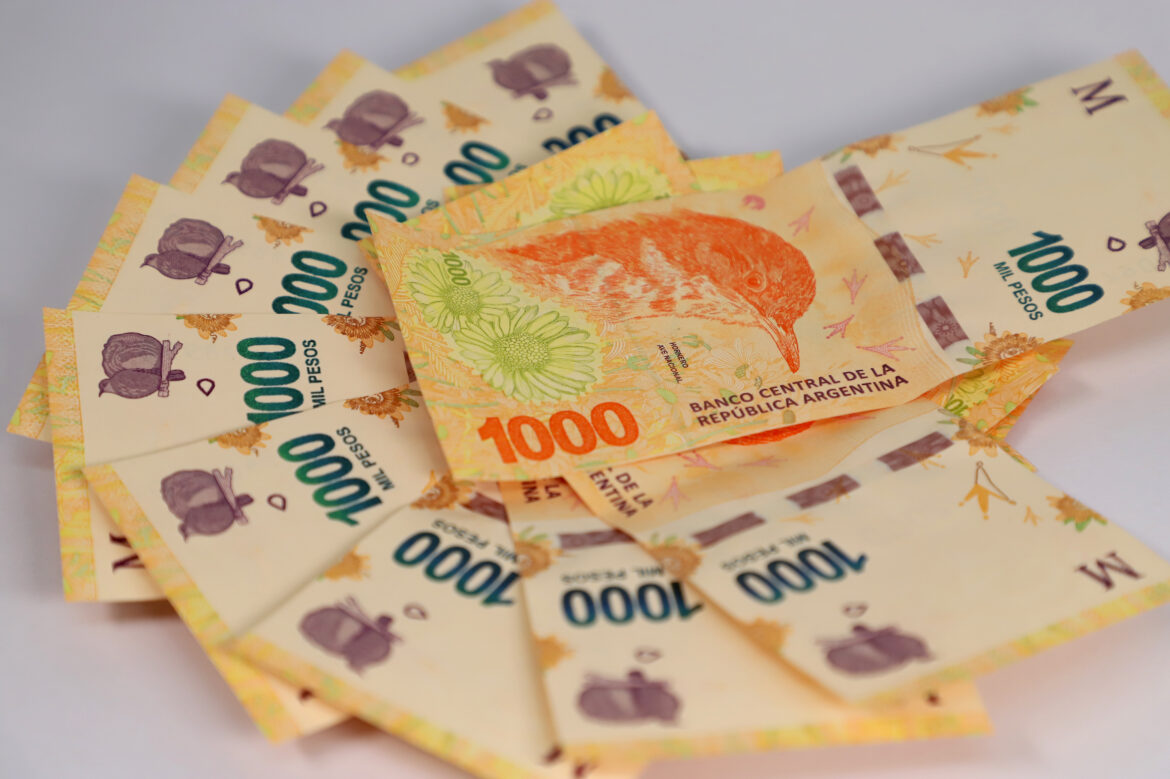
New manager Pedro Daniel Cavagnaro will conduct an evaluation of the company’s financial situation during the 180-day period he will be in charge, starting Friday. The government has accused the mint of being inefficient after it was unable to comply with contracts to print AR$1,000 and AR$2,000 bills on time. The Central Bank terminated these contracts on Monday.
The decree states that it aims to “optimize” the activities currently carried out by Casa de Moneda in a process that will “transform and update its social objective.”
“Printing low denomination banknotes does not make any sense in terms of costs-benefits,” Presidential spokesman Manuel Adorni said on Tuesday. He was referring to AR$1,000 and AR$2,000 bills, which roughly translate to US$1 and US$2 depending on the exchange rate.
The government launched AR$10,000 banknotes in May, while AR$20,000 ones are expected to be launched shortly. The Central Bank held two private auctions this year where it excluded Casa de Moneda for printing these new banknotes. They were awarded to a Maltese private company, Crane Currency Malta Limited, and the Chinese state-owned mint, the China Banknote Printing and Minting Corporation.
In total, the current government will spend US$50.3 million for printing AR$10,000 and AR$20,000 banknotes for the second half of 2024 and AR$20,000 bills for the first half of 2025.
According to Adorni, “e-wallets and electronic payments are becoming more common, therefore it doesn’t make much sense to continue with these levels of inefficiency in money printing.” He added that the AR$2,000 bills are “nonsense inherited from the previous administration” and that the government wants to make the company “more efficient.”
Adorni had caused a media uproar earlier this month with a since-deleted post on X: “It has been decided that the mint will be closed. The end.” One day later, the government announced its plans to “restructure” the company and close one of its two printing presses. He said that the episode happened because the decision “merited a slightly more extensive explanation, nothing else.”
