

 Agustín Mango
“Every skeleton we find, every skull with a bullet hole in it, adds a little more knowledge of how this system of repression and mass murder operated.”
Dr. Clyde Snow’s statement can be read as a guiding credo of the world-renowned Argentine Forensic Anthropology Team (EAAF for its Spanish acronym), a pioneering scientific organization that has worked in the search, recovery, analysis, and restitution of human remains all over the world.
Snow, a top forensic anthropologist who helped identify the victims of the Argentine military dictatorship and was instrumental in the creation of EAAF, is now the main narrator of El Equipo, a thorough and moving documentary about the organization, now streaming for free on PBS until the end of October.
Relying on great original archive footage, sharp editing, and first hand testimonies, El Equipo, directed by Bernardo Ruiz, depicts the creation and evolution of the EAAF. Since its inception in 1984, they have conducted research on behalf of victims’ interests across the globe. From genocide victims in Darfur to the 43 missing students in Ayotzinapa, Mexico, as well as high-profile cases like the bodies of Chilean president Salvador Allende and guerrilla icon Ernesto Che Guevara.

Back in 1984, democracy had been reinstated in the country after the 1976–1983 military dictatorship. Snow came to the country together with a delegation of American scientists at the request of the newly formed National Commission on the Disappearance of Persons (CONADEP), which was investigating the disappearances of thousands of people during the years of state-sponsored terrorism.
Snow was asked to set up a team to help identify thousands of human remains that had been found in court-mandated exhumations of mass graves throughout the country. The Texas-born anthropologist, who had just helped identify the skeleton of Nazi criminal Josef Mengele in Brazil, became frustrated when he couldn’t find anyone trained enough and willing to take on the dangerous task in a still frail democracy. The only solution, hence, was to train local anthropology students.
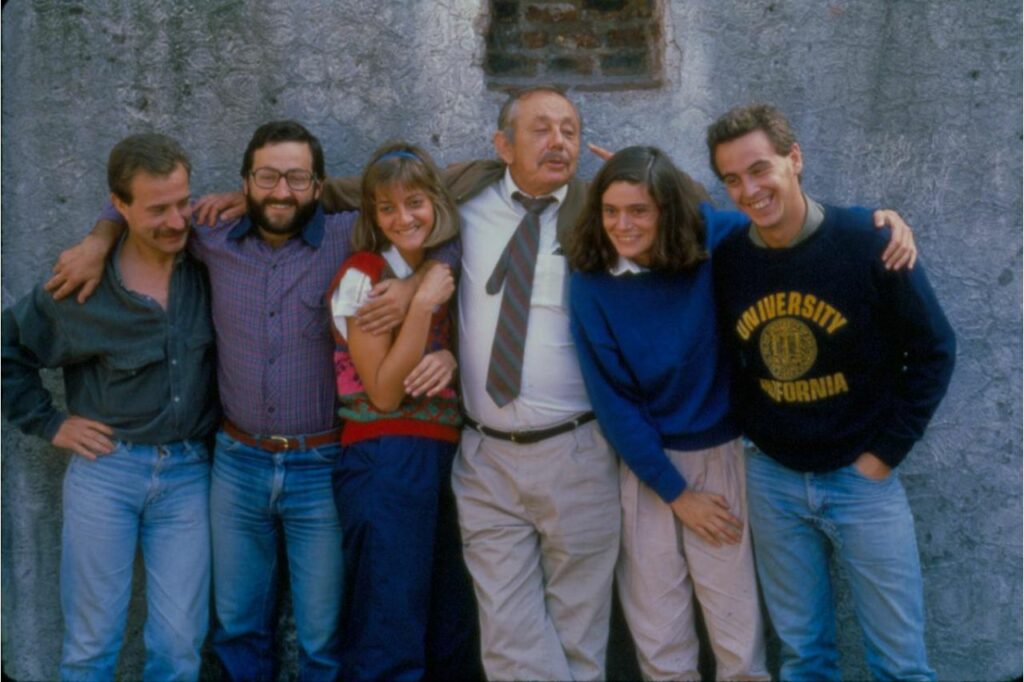
“That’s how I came to know a really remarkable group of young people,” says Snow.
The Team
“None of us were jumping with joy to do this, because if we started to work on this and a new military coup occurred, we would end up on the list of people who could disappear,” said Mercedes ‘Mimi’ Doretti, one of the original founders.
“But at the same time, we couldn’t say no,” she adds.
The English-speaking documentary, which has been nominated for Outstanding Crime and Justice Documentary at the EMMY News and Documentary Awards, shows the outstanding difficulty of those early days.
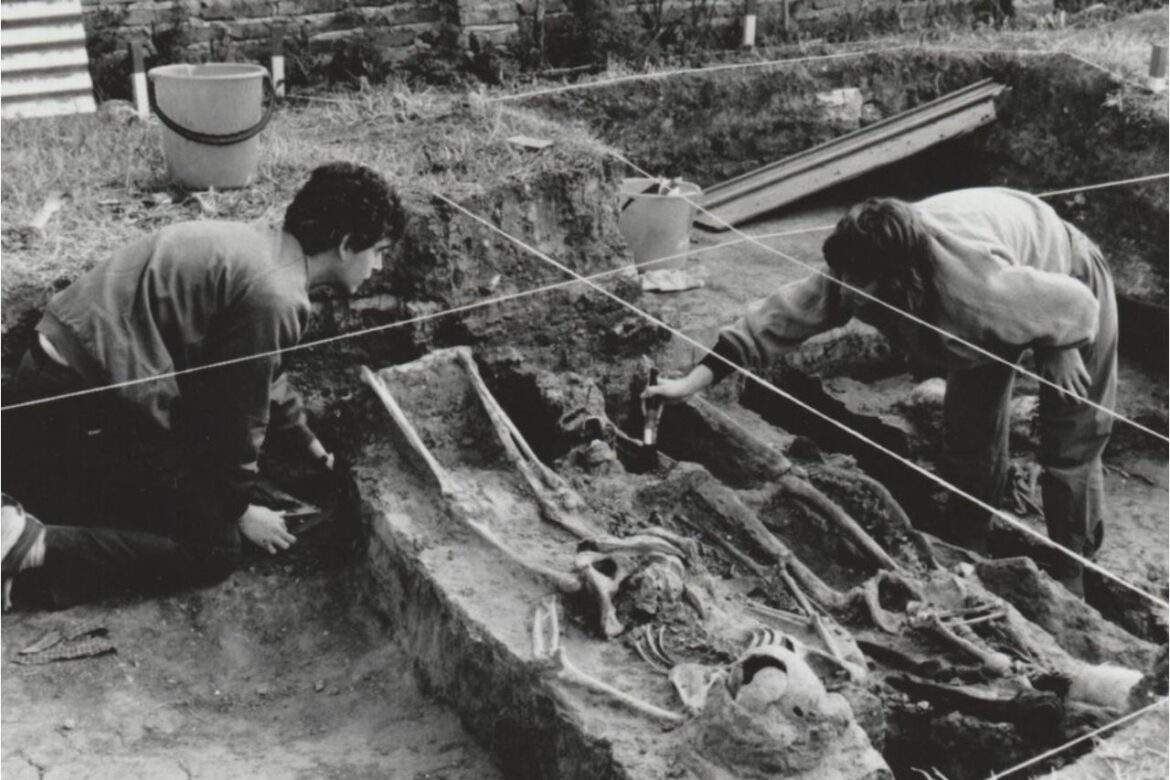
Doretti, her college friend Patricia Bernardi, Luis Fondebrider, and med-student Morris Tidball Binz started exhuming bodies in a Buenos Aires cemetery alongside Snow. The first skeleton they found belonged to a young woman with a bullet hole in her skull. Accustomed to digging up llamas and sea lions, Patricia started crying. She quickly collected herself and asked for the tea spoon they were using to clear out the dirt — she wanted to make coffee.
“That’s when I knew I had a team,” Snow recalls.
The team’s work nurtured Snow’s expert testimony at the Trial of the Juntas. Victim identification carried out by EAAF became a key piece of evidence in establishing the fate of disappeared people as well as the dictatorship’s systematic plan to abduct newborns from kidnapped pregnant women.
Snow, who died in 2014, returned to Argentina several times after the trial to reassemble the team. The daughter of a renowned journalist, Mimi decided to start documenting their work on video. Her on-site footage provided the backbone for El Equipo, a film that transcends the issue of forensic anthropology into a thorough depiction of the passing of time and a family-like group of people who evolved from young, inexperienced students into distinguished veteran scientists who helped uncover some of the world’s worst crimes of the last 40 years.
The EAAF currently has more than 60 members, covering different scientific areas such as anthropology, archaeology, medicine, biology, genetics, physics, and architecture. The headquarters are located in Buenos Aires (Argentina), with an office in New York, a representation in Mexico City, and a forensic genetics laboratory in Córdoba. One of their ongoing efforts is advising the Red Cross in the identification of war victims in Ukraine.

El Equipo’s well-paced storytelling describes how the EAAF expanded its horizons, traveling to El Salvador, Bolivia, and Mexico, doggedly working behind the scenes to establish the facts for the families of genocide, civil war, and mass murder victims. Without ever hitting the wrong note, the documentary remarkably doesn’t shy from displaying some of the EAAF’s most gruesome, heartbreaking discoveries, such as the tiny bones they found in the pelvic area of a corpse in the El Mozote massacre, which proved the victim was a pregnant woman.
“These are not simply bones; these are people,” Mimi says at one point, describing their early work in Argentina. Back in 1984, Snow recalls, the young team had difficulty dealing with findings such as a child’s bones. An experienced scientist and mentor, he would insist they should never let their emotions influence their findings. If they had to cry, he said, they should do so afterwards, at night.
“I think there were a lot of tears shed in Buenos Aires at night during that period.”
El Equipo is available until the end of October on PBS’ Independent Lens. You can watch it here.