

 Martina Jaureguy
 President Javier Milei dissolved the National Institute against Discrimination, Xenophobia, and Racism (INADI, by its Spanish acronym) via a presidential decree on Tuesday. This is the first time the president has used the exceptional powers granted to him by the Ley Bases to eliminate a public institution.
The government had already tried to dismantle the INADI in February but was unable to do so given that a decision like this needed to go through Congress. The approval of the state-reform package Ley Bases at the end of June gave Milei the power to skip that step and do it himself.
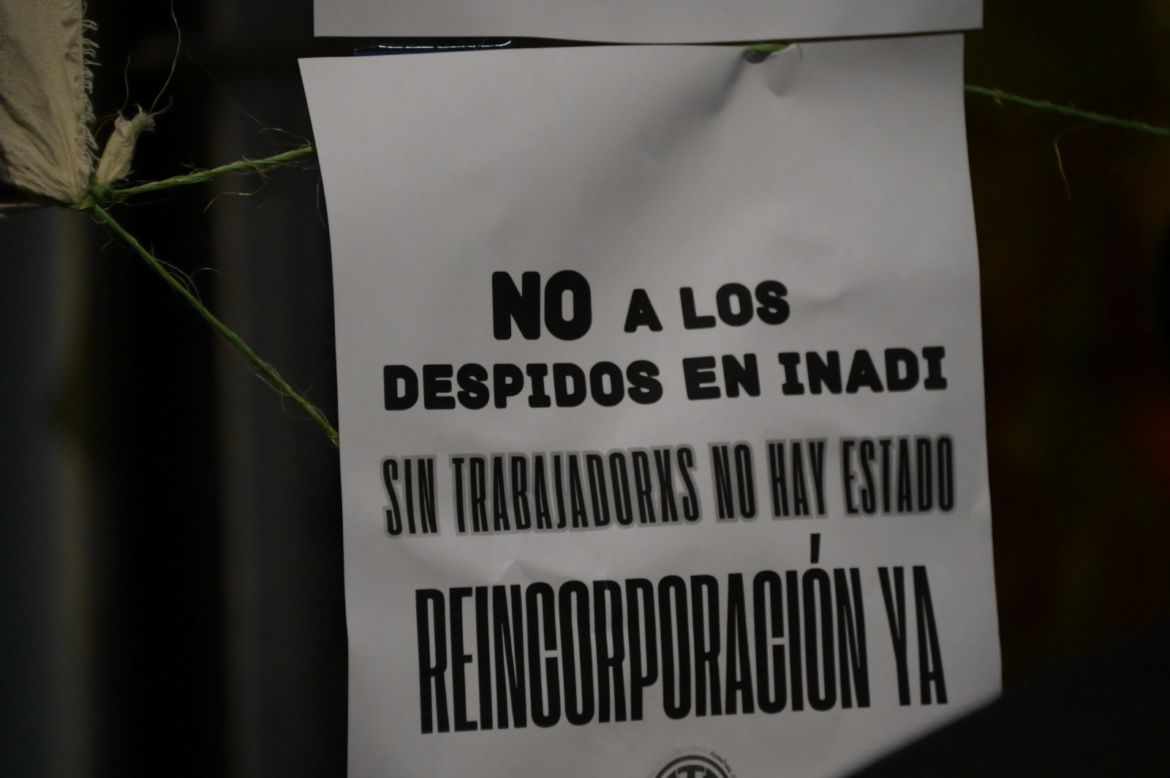
The institute was barely operational at this point. Most of its workers had either been dismissed or had no tasks to perform. Many of those who had been laid off were people of color, disabled, and members of the LGBTQIA+ community. Several provincial INADI offices had also been closed, meaning people from those regions had no direct access to the institute’s services anymore.
The decree states that all of INADI’s resources will be transferred to the Justice Ministry, where the institute was currently operating, and staff will be relocated to other government areas. Workers who remain unassigned after six months will be laid off. Employees who had temporary or informal contracts will be terminated immediately.
Celina Eibuszyc, who has been working at INADI for 14 years with a temporary contract that was renewed periodically, told the Herald that she is not entitled to be relocated or even receive severance pay. She added that she has “no legal resource” to save her job — although she could be protected by the employment quota for disabled and trans people, she initially entered the institution with a regular contract.
Eibuszyk will now seek to take her case to court. “I am lucky to have a family that can financially support me, but otherwise my situation would be dramatic: I am turning 53 this year and it’s very hard to get a new job at my age” she said, and warned: “This is not happening only in INADI but in all state structures.”
The Justice Ministry will now be in charge of carrying out INADI’s tasks.
You may also be interested in: Gender policy in the Milei era: five months of dismantlement and misogynistic attacks
“All that was left was its administrative death: tomorrow, the INADI will cease to exist forever. The end,” wrote Presidential spokesman Manuel Adorni on an X post Monday night.
State Deregulation and Transformation Minister Federico Sturzenegger celebrated the decree, saying “the bases of the decree are worth reading so that we can understand the scope of the spending, mayhem and hypocrisy [Kirchnerists] submerged the Argentine state into.”
The decree justified the decision on the grounds that the fight against discrimination is part of the Constitution and thus does not need a government institution, adding that this enterprise should have “no political banners or specific ideologies.”
It also pointed to several aspects in which the INADI was allegedly inefficient and irregular, which showed that the “organizational design is not apt to reach the constitutional objectives in this matter.”
INADI authorities appointed by the Milei administration found “serious irregularities in personnel contracts, property rental, and resource use,” as well as an oversized work structure, “unjustified delays” in providing solutions to citizens that requested the institute’s services, and inefficiency in “obtaining concrete results in the matter at hand.”
In February, Milei justified his decision to dismantle INADI by arguing that it was “the Kirchnerist thought police,” accusing the institute of being “a cave for ñoquis and the corrupt that went against those who think differently.” In Argentina, ñoqui is a derogatory term referring to state employees who collect a government paycheck without actually working.
Cover image: Protests againts INADI firings. Credit: ATE Nacional, Marita Costa