

 Fernando Romero Nuñez
 When Argentina takes the field on Thursday for its 2024 Copa América quarterfinals match against Ecuador, Angel Di María’s illustrious road with the Albiceleste will inch one step closer to the end.
“With big sorrow in my heart and a knot in my throat, I say farewell to the most beautiful part of my career,” he wrote on his Instagram in 2023, announcing that this Copa América will be his last with the national team.
One more game. Perhaps two. No more than three. That is all the time we have left to enjoy one of the most brilliant players and prolific scorers the Albiceleste has ever seen. No matter the final outcome for the team, for Argentine fans, the 2024 Copa América is undoubtedly set to go down as one of the most bittersweet moments of recent history.
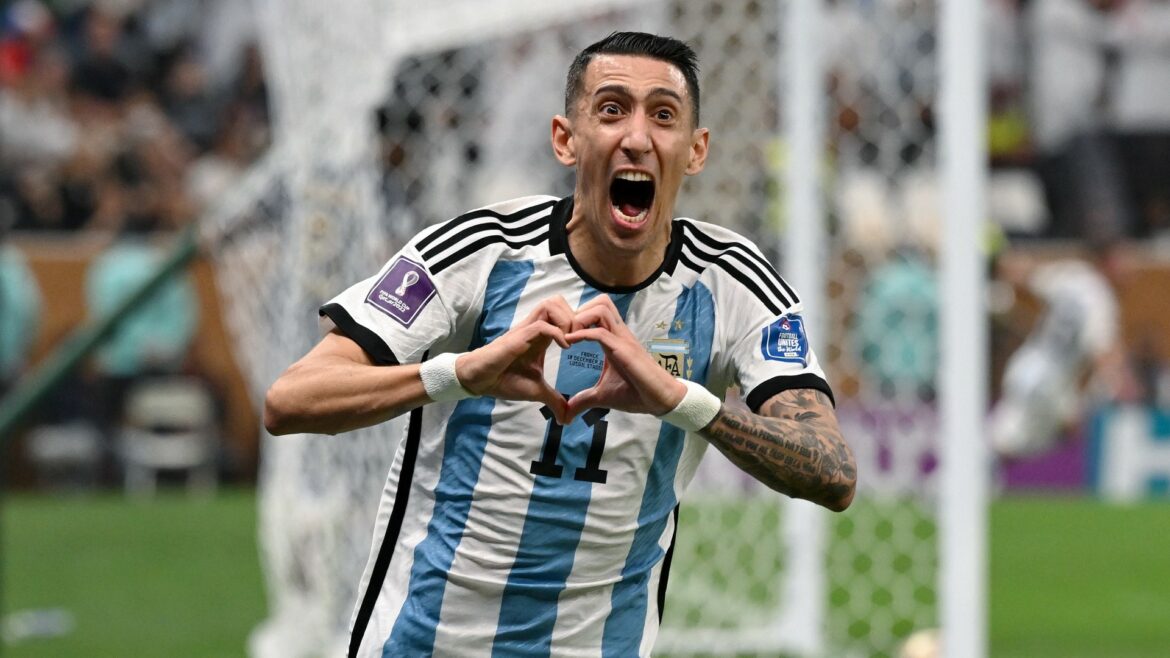
Affectionately known as El Fideo, Di María has notched goals in all shapes and sizes. He put his name on the scoreboard against France in the 2022 World Cup Final and the Finalissima against Italy a few months prior to the Qatar match. In 2021, he scored one of the most important goals in Argentine football history, a soft tap over the head of Brazilian goalkeeper Ederson in the Copa América final of that year to end a 28-year championship drought for the national team.
Di María’s scoring prowess, however, has been obvious ever since he was a kid. According to his first coach, Rubén Tomé, there was a point when they even had to ask him to stop scoring.
“Youth matches at the Rosario Football Association were played as two 15-minute halves, but if you scored too many early on, they’d stop the match,” Tomé told the Herald. “So we had to ask him to take it easy: ‘Ángel, we practiced all week; let’s not have the game end after 15 minutes, please.’ His teammates and him were that good.”
The wonder kid from Rosario
Di María took his first steps in football at Club El Torito in his native Rosario, aged just four, where Tomé met him. He recalls how a young Di María, who he still affectionately refers to as El Flaco, had already been playing unofficially at the club with kids two years older, as there was no team for his age group.
“When I was tasked with putting together the ‘88-gen team, the only one we had was him,” Tomé explained. “By the time I got a couple other players for the side and they brought him for practice, I was amazed; he was incredible on the ball,” he said, adding that he would often pick Di María up on his bicycle en route to football practice as his parents were busy working.
Di María wound end up playing two years for El Torito, winning the Rosario Football League youth title above city giants like Rosario Central and Newell’s. The Central scouts knew the family were fans of the team and approached his father with the possibility of a move to the club. The price, according to Tomé, was nothing more than footballs for the neighborhood club to continue practicing.
“Despite all the changes we’ve made to the club, the door from which he said goodbye from the last time remains in place.”
Di María’s stint with Rosario Central, however, wouldn’t be all roses. His talent with the ball at his feet and lightning-quick speed were never in question, but his slender physique upon puberty denied him many opportunities. By the time he was 16, his future in football looked slim. In 2018, Di María admitted in an open letter for first-person sports stories outlet The Players Tribune that around that time, his father gave him an ultimatum.
“At 16, I still wasn’t on the senior team at Central, and my father was getting worried,” Di María wrote. “We sat at the kitchen table one night, and he said, ‘You have three options: You can come work with me. You can finish school. Or you can try one more year in football. But if it doesn’t work out, you have to come work with me.’ I didn’t say anything. It was a complicated situation. We needed money. It was my mother who spoke up and said, ‘One more year in football.’”
By the end of that year, El Fideo made his professional debut with Rosario Central, coached by club icon Ángel Zof. “I saw him play on the youth teams,” wrote Zof in his autobiography. “He was skinny, quick, and bold. I immediately thought he’d be a good player because he might lose the ball, but he was always going forward. He was daring, and that was the important part.”
Zof asked Di María’s youth coach to have him practice with the first team to ease him into it and told his players beforehand to give him plenty of the ball. “The moment he stepped onto the pitch, the players he dreamed of playing with were giving him the ball, over and over again,” Zof recalled.
“He quickly felt confident and started doing what he was capable of.”
Aged just 17, Di María made his first team debut on December 14, 2005. Less than two years later, he made the move to Portuguese giants Benfica for six million euros.
In 2008, he was instrumental in Argentina winning the football gold medal at the Beijing Olympics, scoring the only goal in the final as the Albiceleste beat Nigeria 1-0.
Throughout his career, Di María went on to play for footballing giants such as Real Madrid — he won the UEFA Champions League with the merengue in 2014 — Manchester United, Paris Saint Germain, and Juventus. He also became a key member of the Argentine national team, playing over 143 games with the team and scoring over 30 goals, including the one in the 2022 World Cup final.
For all his success, Tomé points out that Di María still plays football with the same joy he did as a kid. “He had that same magic left foot and that ability to enjoy every pass and teach his teammates his tricks,” he stated. “He used to celebrate goals like crazy, whether he scored or his teammates did. That kid is still inside of him.”
As Di María hopes to make the 2024 Copa América his last hurrah with the national team, it will be every Argentina fan standing at the door when he says goodbye for the last time, much like it was for Tomé in Rosario.