

 Martina Jaureguy
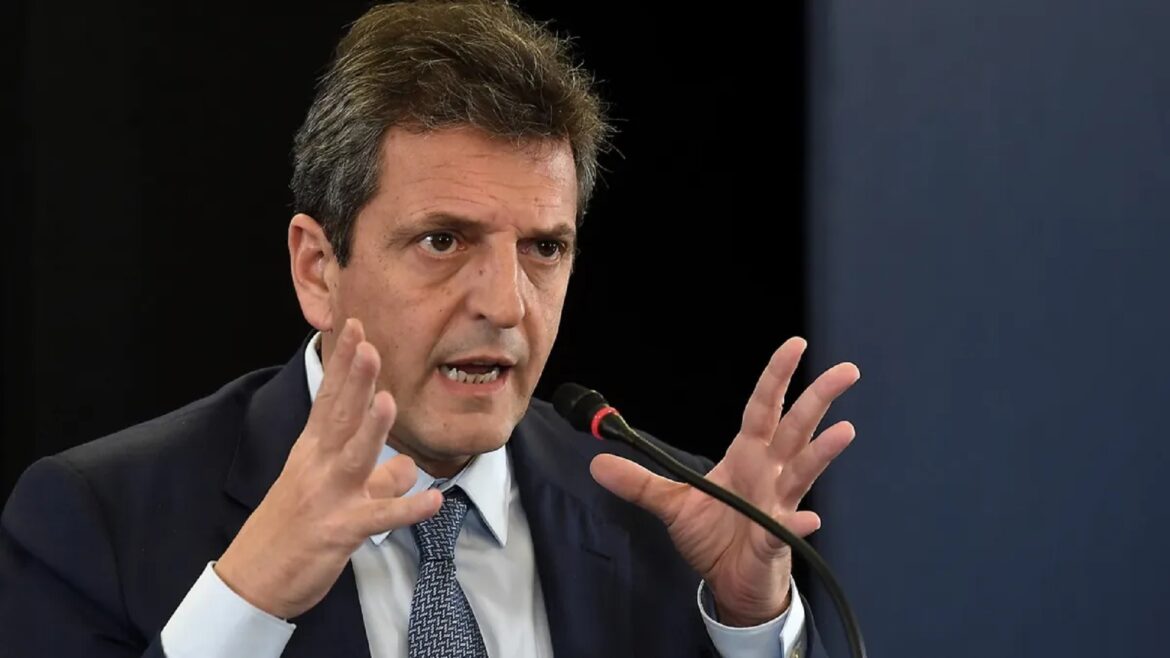
 Argentina will receive a “big disbursement package” from the International Monetary Fund (IMF) in August that will “largely cover” this year’s debt payments with the credit organization, Economy Minister Sergio Massa announced on Sunday night.
Massa, who is also ruling coalition Unión por la Patria’s presidential candidate, said there would be a large disbursement in August and a further disbursement in November, but said that he wanted to let the IMF announce the amount. However, he stated during the interview with TV channel C5N that “it’s a number that largely covers the expectations and obligations we have for this year.”
On Sunday, the IMF announced it had agreed on primary objectives for a new Staff-Level Agreement — a preliminary technical understanding subject to the IMF board’s approval — with Argentina, which the government expects will be signed on Wednesday or Thursday.
“What we agreed on is called a Term Sheet. It’s the base document for a Staff-Level Agreement, which is going to be signed this week,” Massa said.
The term sheet, an agreement on technical objectives signed with the IMF staff, establishes targets such as “maintaining fiscal order, trying to consolidate reserves and improving export volumes in a year in which drought destroyed Argentine exports,” he added.
You may also be interested in: Government imposes new import tax, launches new agricultural dollar
The next step is reaching a Staff-Level Agreement, a document that “expresses how the program review will go, its current situation, and what the next steps for the upcoming months are,” Massa explained.
In 2022, following the renegotiation of the record US$44 billion debt former President Mauricio Macri acquired in 2018, the country signed an economic program with the Fund that Argentina must comply with in order to receive disbursements every three months to pay back the previous debt. The country was set to receive three such disbursements in June, September and December. Argentina and the financial institution have now agreed on the disbursement schedule for the second half of 2023.
Massa also said the Staff-Level Agreement will define a working program for the next five months, so after the director’s meeting in August, “the IMF issue will be out of the political campaign” for the rest of the year, Massa said. Argentina will hold its primary elections on August 13, and the general elections on October 22.
Although he was expected to travel to the United States over the past week to discuss the next steps in the program, Massa said he doesn’t see his presence in Washington as necessary for now, because his team “handled it pretty well.” Face-to-face negotiations between IMF members and the Argentine delegation have been taking place since Tuesday.
Massa added that this new agreement won’t have an impact on supermarket prices.
You may also be interested in: Argentina’s trade balance: analysts expect deficit for 2023 but surplus in 2024
Economic definitions
Although he declined to speak in his capacity as presidential candidate, Massa discussed what he wants to do for the rest of his term as minister, comments which could indicate the political objectives a potential Massa government would pursue.
“The best thing we can do is have our own exports program, our own reserve consolidation program, become stronger, pay [the IMF], and take them out of the Argentine economic scenario,” Massa said during the 50-minute interview.
“Argentina needs to develop a sovereign economic policy design, to have a long-term program of industry, employment and inclusion. When you’re discussing conditions with your creditor all the time, that becomes hard.”
“The best moment of economic growth in Argentina is often associated with Néstor Kirchner’s government. During that time, the economy had fiscal stability, trade surplus, a competitive exchange rate, and inclusive development policies. When it comes to running a government, those must be our pillars,” Massa said.