
 Amy Booth
 Armed groups took over military facilities in the tropical region of Cochabamba department on Friday, as the hostilities between Morales’s backers and President Luis Arce reached breaking point.
Arce and local media blamed the attacks on groups of Morales supporters. A video circulated on Friday showed several people in combat fatigues and two women in civilian clothing, surrounded by individuals holding sharpened sticks. One of the men, who appears to be a hostage, says to the camera: “The Cacique Juan Maraza regiment has been taken by the eight centrals of the TIPNIS. They’ve cut power, water, and they’ve taken us hostage.”
The Herald could not immediately verify the video or confirm the identities or political affiliations of the groups involved. The TIPNIS is a protected national area in the tropics of Cochabamba and Beni departments.
A statement from Bolivia’s military said that “irregular armed groups” had taken over military facilities, but did not say who they were.
On the same day, police used force to move protesters who were blocking the highway between the cities of Cochabamba and Oruro near the town of Parotani.
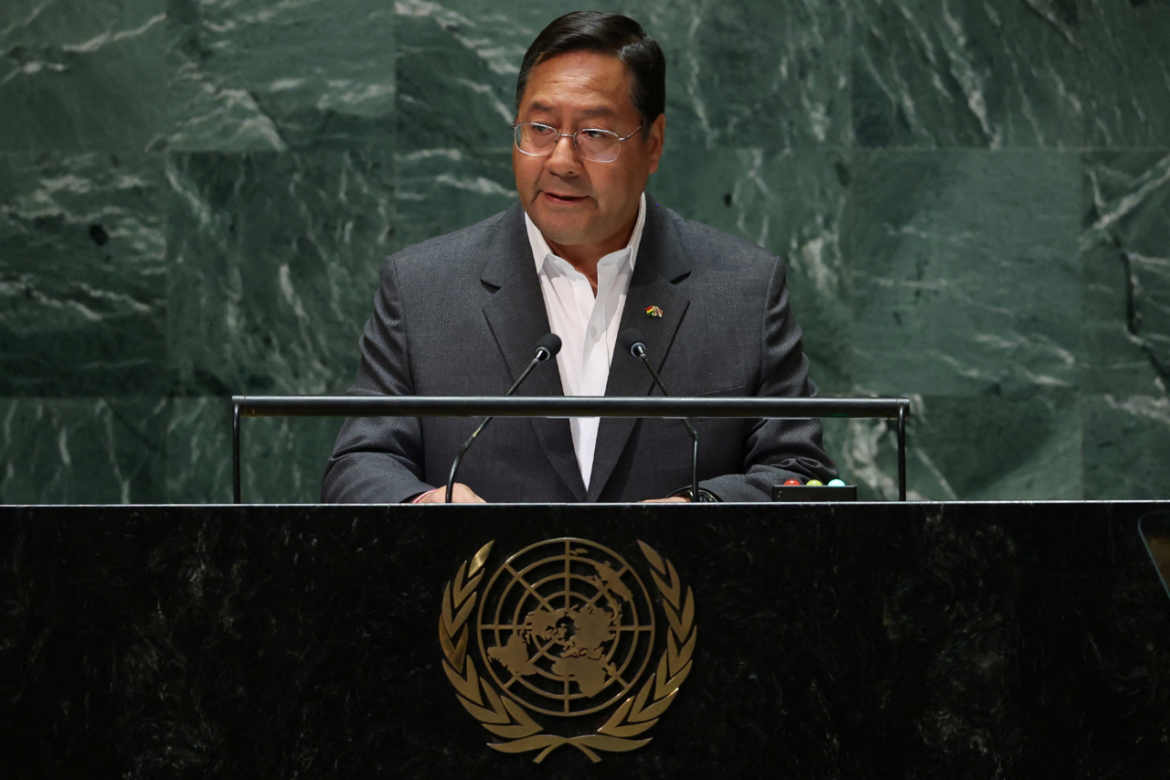
“We denounce to the Bolivian people and the international community that armed groups linked to Evo Morales have taken by force three military units in the Tropics of Cochabamba, holding members of the military and their families as hostages, and threatening their lives,” wrote Arce on social media just after 5 p.m. on Friday.
He said that the actions of the groups involved constituted treason, that it was “an absolutely condemnable criminal act that is a long way from any legitimate social demand of the Indigenous, first nations or campesino movement.”
Morales gave a press conference on Friday afternoon, calling on his supporters to pause the ongoing roadblocks and announcing that he was going on hunger strike. “We don’t want any more bloodshed,” he said. He asked the government to call off the security forces and sit down at the negotiating table.
Morales supporters have been blocking roads for 19 days in protest at statutory rape charges levelled against their leader, which they see as politically motivated, and a broader economic crisis in the country that has given rise to shortages of basic goods and an Argentina-style informal dollar.
Earlier in the day, Bolivia’s Ombudsman’s Office had issued a statement saying it was worried by the ongoing conflict, calling on the state to respect internationally-recognized standards on proportionality and use of force, and telling demonstrators that “belligerent attitudes do not contribute to solving conflict.”
Morales served as president of Bolivia for almost 14 years, between 2006 and late 2019, before he was ousted in a coup following controversial claims that he had stolen that year’s presidential election. After one year under the far-right interim government of Jeanine Áñez, his Movement Towards Socialism (MAS) party ran in the 2020 elections with Arce as its candidate, and he won in a landslide.
However, a bitter conflict has developed between the two. On Sunday, Morales reported that he had survived an assassination attempt after shots were fired at his vehicle as he traveled to his Sunday morning radio show on the outskirts of the Cochabamba tropical town of Shinahota. Arce’s government soon questioned whether the assassination bid had been real, or a set-up.
Morales is currently facing statutory rape allegations, which center around claims that he had a relationship with a 15-year-old girl whose family received political favors such as a diplomatic passport.
Back in June, military forces went to the presidential palace in La Paz and rammed down the door with mini–tanks. The ease with which the apparent coup attempt was defeated, as well as comments from the rogue general leading the operation, led to widespread accusations that it was staged to strengthen Arce’s public image.
Human rights defenders have also warned of a resurgence in far-right violence. Former Cochabamba Ombudsman Nelson Cox was attacked by a mob allegedly comprised of members of the RJC far-right group days before the alleged attack on Morales’s car.
