
 Agustín Mango
The most important word to learn when eating out in Buenos Aires is not asado or malbec, but bodegon.
A family-style restaurant that serves everything from pasta and milanesas to empanadas and fish, a bodegon’s menu is the closest you can get to an Argentine take on the notion of comfort-food. While the word bodegón is a derivative of the word bodega (Spanish for winery), the fare is much closer to that of a tavern or a diner, with heaping portions served on thin metal plates that keep an order of lasagna or entraña (skirt steak) piping hot.
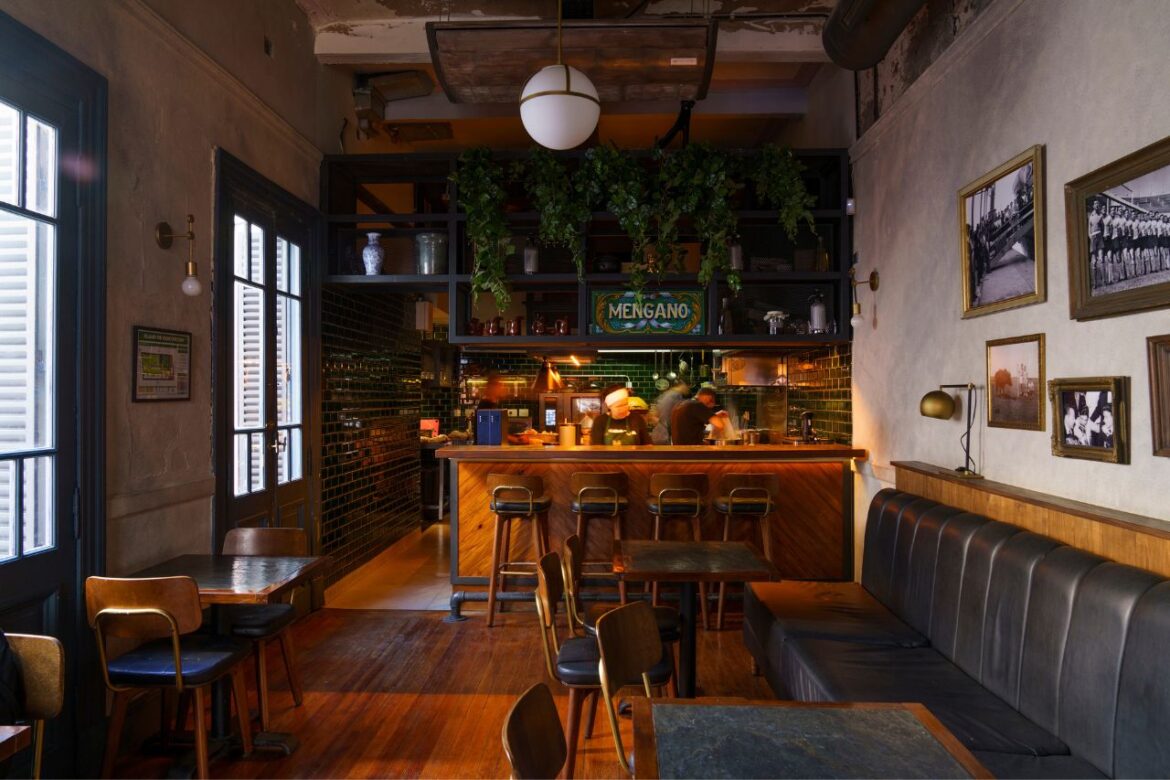
A self-described “neo-bogedon”, Mengano honors Argentine tradition and takes it further, offering a contemporary, upgraded reinterpretation of popular, everyday dishes like Gramajo scramble or matambre con rusa (a beef roll with a mayo-bathed potato, carrot, and peas salad). The restaurant was one of the few Argentine restaurants to obtain Michelin’s Bib Gourmand recognition — which praises high-quality food at a good value — and made it into the World’s 50 Best ranking of Latin American Restaurants list in position #82.
Facundo Kelemen — the brains behind Mengano — was a lawyer until he decided to make a U-turn and start an impromptu career in the food industry. While he never finished the Argentine Gastronomy Institute’s program — the basic training ground for most Argentine chefs — he nevertheless started to learn on the side with different chefs and stages at Michelin-starred restaurants in Buenos Aires (Tegui) and New York (Estela and Atera, among others).
Upon his return to Argentina, he was already clear that his goal was to cook Argentine food, and felt bodegones had been neglected by haute cuisine. He partnered with his friends Diego Borrero and André Parisier and opened Mengano in July 2018. The venue was another typical Argentine feature: an old refurbished casa chorizo (a long, rectangular-type building typical of early 20th century Buenos Aires homes), with an interior design that includes Kelemen’s old family pictures.
A traditional set for a modern experience
Mengano serves between 12 and 14 dishes, ,of which there are 5 or 6 that can be considered the menu’s backbone. But even in those cases, don’t expect to find the same thing on very outing.
“Just because they are permanent, that doesn’t mean they’re static,” says Kelemen in the restaurant’s official presentation.
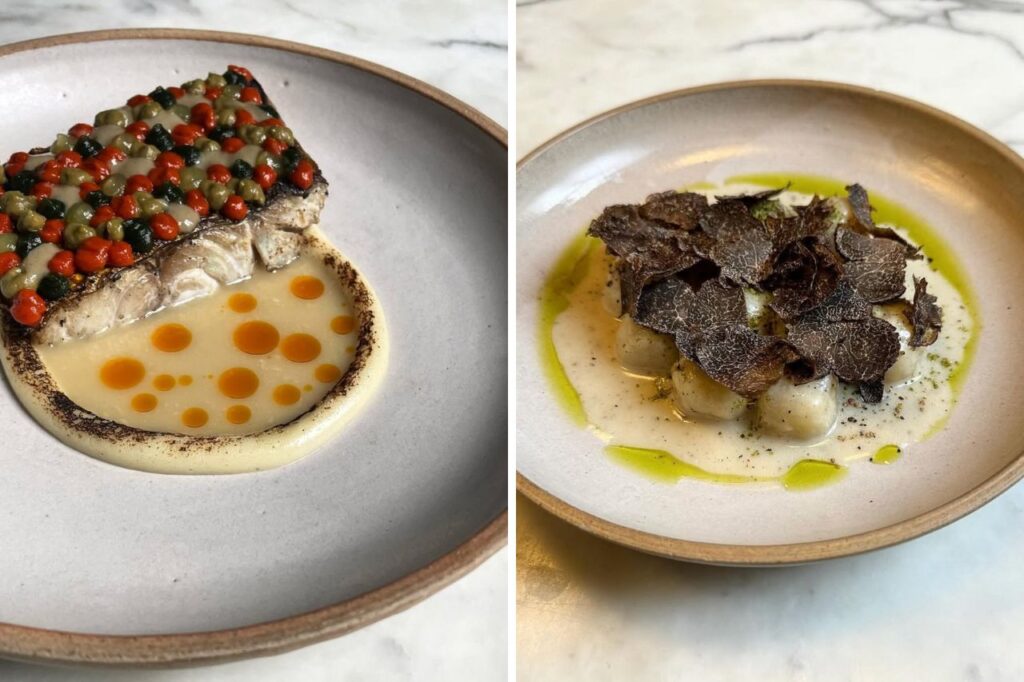
The restaurant’s dishes feature well structured and defined ingredients in new combinations, while staying within the familiar side. Such is the case of the fish, a catch of the day alla putanesca, served with an emulsion made out of the fish’s own bones. The “not-so-revuelto gramajo” (“not-really-scrambled Gramajo”) adds a twist to one of the most common bodegon dishes: in addition to new features like goat cheese and prosciutto, patrons received the eggs pre-cooked and have to finish scrambling them themselves.
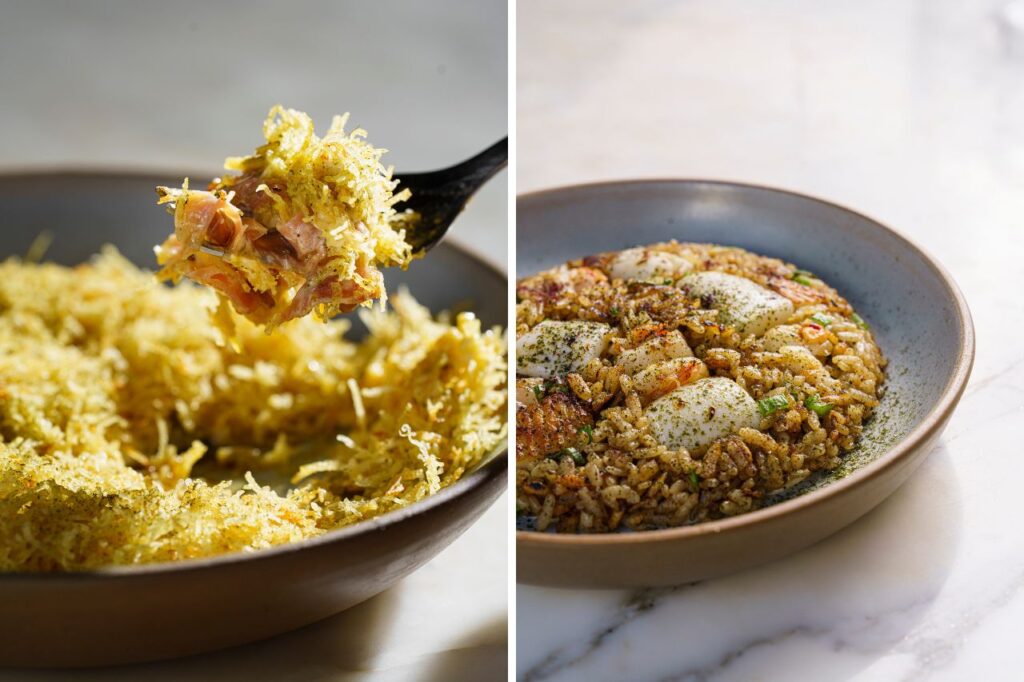
Another one of our favorites in the all-time street-food classic milanesa sandwich, albeit with a new take: the dish comes in the form of panko-breaded wagyu beef that emulates the Japanese katsu sando. Pasta is scarce but surprising: Mengano’s landmark souffle gnocchi cacio e pepe is a whole new experience in texture, made with cassava flour and with a sweet potato filling.
Another highlight? The crispy rice with seafood, a carnaroli rice cooked as a risotto that is later toasted to form a socarrat — the crunchy base of a Spanish paella — resulting in a mixture of Italy and Spain using local ingredients.
“For me, that’s the finest definition of a bodegón,” Kelemen stated.
Best was saved for last, and Mengano’s desserts are, surprisingly enough, one of the best features in the menu. Smart, determined, and perfectly structured, the desert menu includes the amazingly smooth pannacotta with strawberries and orange zabaglione ice cream. Our choice, however, is the amazing take on the rogel, a typically Argentine dulce de leche cake that Kelemen magically deconstructs into a surprisingly — and at first suspicious — presentation, closer to a 1980s contemporary art sculpture than a classic grandmother’s cake.
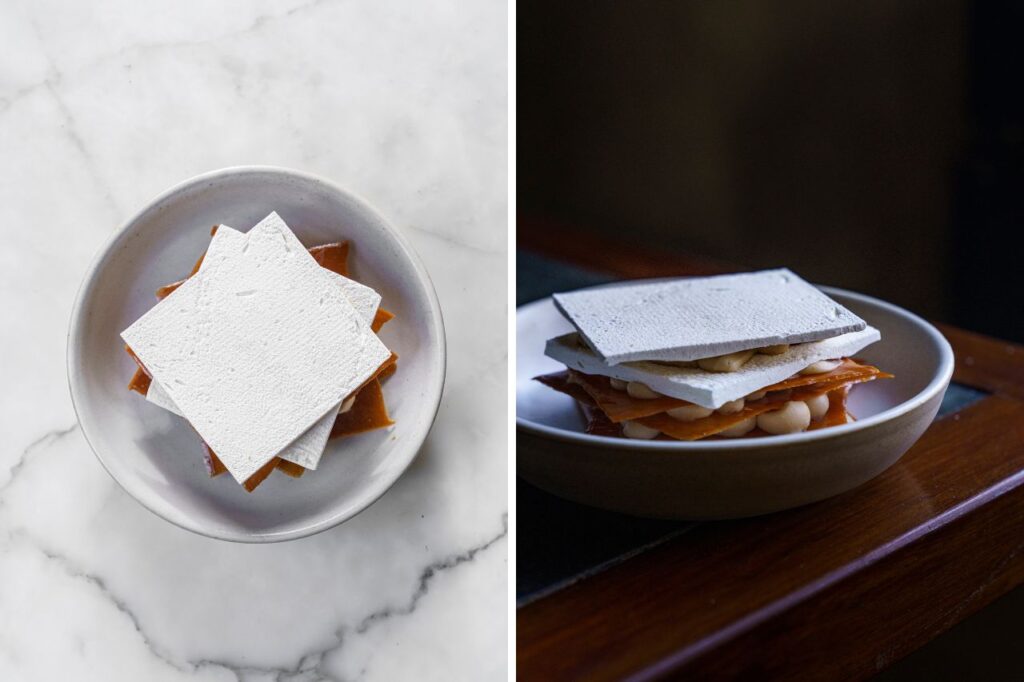
Mengano’s rogel is also a perfect summary of this solid and confident restaurant’s mission: a will to experiment with the classics while maintaining trust in their everlasting potency. What is usually an inescapably dry and cloying experience, Mengano turns it into a solid and discreet dessert that maintains all of its typical sweetness by balancing its textures in a completely unexpected way, delivering an absolutely modern experience out of the most traditional of choices.
Mengano
Cabrera 5172, Buenos Aires
Tuesday to Saturday, 8 pm.
Reservations and menu here.
