
 Fernando Romero Nuñez
 The 2025 Copa América Femenina — the biggest of South America’s international women’s football competitions — is here and kicks off this Saturday. All 10 CONMEBOL countries will take part in the tournament hosted in Ecuador, which runs from July 12 to August 2.
The tournament will be played in two phases. First, the ten teams are split into two, five-team groups. Group A is headed by hosts Ecuador, along with Argentina, Chile, Uruguay and Peru. In Group B, defending champion Brazil are joined by Colombia, Paraguay, Venezuela and Bolivia. Teams face each of their group rivals once, with the two best qualified moving on to the semi-final.
It’ll be the first time the tournament grants no World Cup spots, but teams aren’t in it just for the continental crown. Two slots for the 2028 Summer Olympics for the finalists and three at the Lima 2027 PanAmerican Games for the three best teams are at stake.
Where will the Copa América Femenina be played?
The tournament will be played in three stadiums in Quito, Ecuador.
The smallest will be the Estadio Banco Guayaquil, which will be known as Estadio IDV during the tournament for sponsorship reasons. Located at Parroquia Amaguaña in the outskirts of the city, it hosts 12,000 fans.
The Estadio Gonzalo Pozo Ripalda, in southern Quito, holds 18,799 spectators. Opened in 1994, it’s the oldest of the three.
Located in the north of the city, the Estadio Rodrigo Paz Delgado is the largest of the three, with over 41,000 capacity. The home ground of Ecuador football giant LDU Quito, it will hold all knockout stage games.
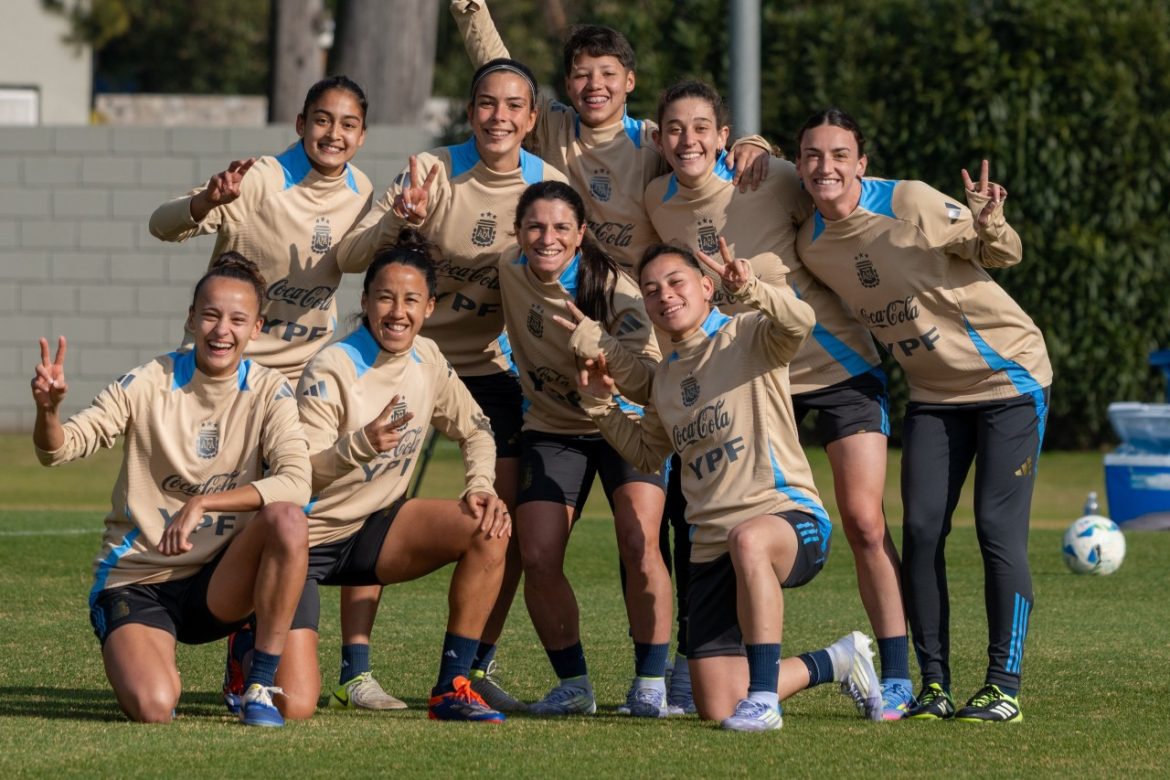
What are Argentina’s chances in the Copa América Femenina?
Argentina are actually one of only two teams to have ever been crowned champions, taking the 2006 tournament, which it played at home — all other nine titles have gone to Brazil.
The Albiceleste reach the tournament in the middle of a generational change, with many of the names that turned up at the last World Cup missing from the team sheet. It’ll be the first time since 2003 that Argentina enters an international tournament without legendary goalkeeper Vanina Correa, who retired in 2024. Estefanía Banini, another staple of recent Albiceleste teams, will also be missing.
Some names are back, however, such as Sophie Braun, the Portland-born-and-raised midfielder, who chose to represent Argentina ahead of the 2023 World Cup. She won’t be the only North American in the squad. FC Juárez goalkeeper Renata Masciarelli was born in Guadalajara, Mexico, to an Argentine father and decided to wear the Albiceleste despite never having lived in Argentina.
Florencia Bonsegundo is back in the squad after two years of absence. She scored eight goals in the three tournaments she’s played so far, while also shining in the two World Cups she represented Argentina at.
For Argentina, the goal of reaching the Olympic Games is one of the biggest allures.
“Obviously, going as far as possible is the goal,” said team captain Aldana Cometti ahead of the tournament. “The chances of making it to the Olympics is something that’s on our minds and it’d be a dream come true. We’ve been working hard and I think we’re preparing well.”
Argentina are set to debut on July 15, facing Uruguay at 6 p.m. Their next clash will be against Chile on the 18 at 9 p.m., and then against Peru on July 21 at 6 p.m, before wrapping up group stage commitments against Ecuador on July 24 at 9 p.m. The matches will be broadcast in Argentina by TV provider DSports. All times are Argentina time.
Who to watch in this Copa América Femenina?
When it comes to women’s football in South America, Brazil are comfortably ahead of the pack. The nine-time champions were narrowly ousted from the 2023 World Cup, but are still a force to be reckoned with in the continent.
The return of the legendary Marta, who announced a comeback after her retirement from international football following the 2024 Olympics. Chosen as the best player in the world on six occasions, she’s the Brazilian national team top scorer with 119 goals. At 39, she’ll go in search of her fourth Copa América Femenina title, after winning in 2003, 2010 and 2018.
Colombia are another of the leading candidates for gold. They were the only South American team to make it into the 2023 FIFA World Cup knockout stage, beating Jamaica 1-0 in the round of 16 before falling 2-1 to England in the quarterfinals. Runners-up in 2010, 2014 and 2022, the Cafeteras will be in search of their first title.
Leading them will be Linda Caicedo. The biggest South American star in women’s football currently, Caicedo plays her club football for Spanish giant Real Madrid, and was chosen as player of the tournament in the 2022 Copa América, aged just 18.
Other stars to follow closely are Chile’s Antonia Canales, who was crowned as one of the Spanish First Division best goalkeepers, and a worthy successor to the recently retired Christiane Endler. Paraguay’s Jéssica Martínez, formerly of Real Madrid, is her national team’s all-time goalscorer and will look to improve her tally of five goals in Copa América matches.
