
 Buenos Aires Herald
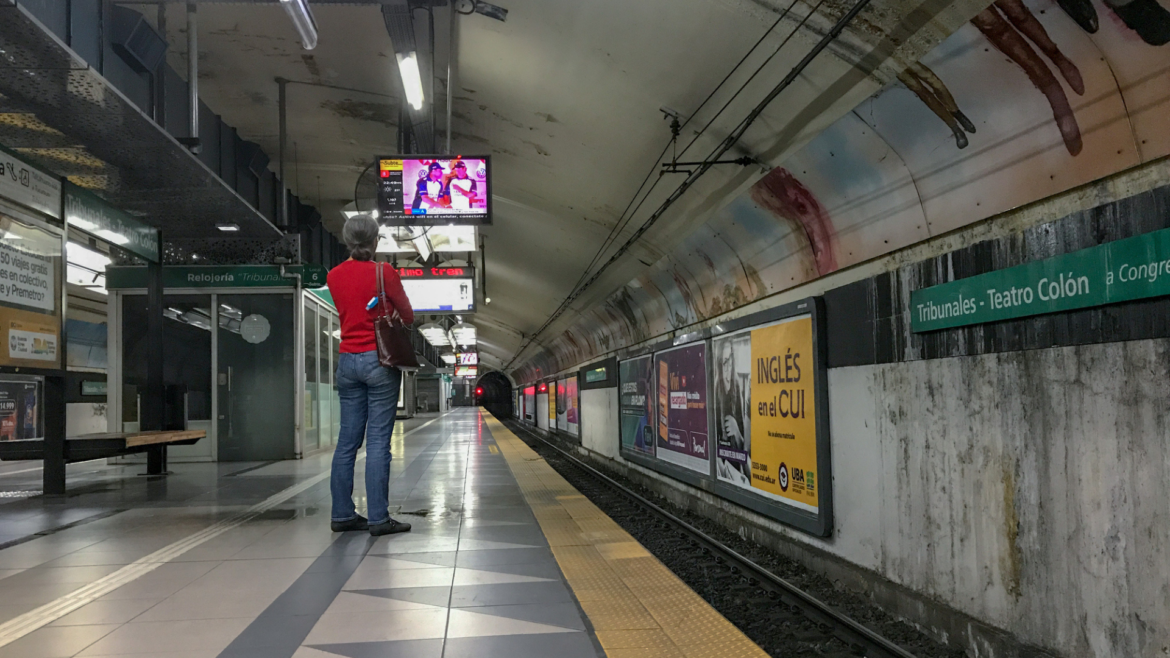
The Buenos Aires’ “D” subway line, which runs between the neighborhoods of Microcentro and Núñez, will close from January 8 to March 17 due to renovations to its signaling system. Service will be reduced as of Wednesday before shutting down next week.
According to the Subterráneos de Buenos Aires company, the measure is intended to implement “essential infrastructure work” that seeks to “improve service and frequency.”
“It is necessary to complete the renovation of the signaling system and the replacement of railroad switches,” they said in a press release, saying they chose January and February because “there is a 40% decrease in the number of everyday passengers.”
The Buenos Aires City government website refers to the renovations as a “modernization plan” that is entering its third and final phase. The plan is being financed with a US$ 104 million loan from the European Investment Bank signed in 2019.
Subterráneos de Buenos Aires said that the Automatic Train Protection (ATP) signaling system is being replaced by the more modern Communications-Based Train Control (CBTC) which is used for the C and H lines.
“It will improve operations and provide a more efficient service because it communicates between trains, allowing them to get as close as possible in a safe manner, reducing intervals as much as possible and determining their exact location,” said the press release.
The company also pointed out that 31 railroad switches also have to be replaced to make sure that all routes comply with safety standards and identify potential failures.
From Wednesday until January 7, the subway will run from 07:00 a.m. to 09:30 p.m. for preliminary works. While the line is out of service, renovations of the Facultad de Medicina station will also be finished, which can only be done when the station is closed.
The D line runs from Congreso de Tucumán (on the border of the neighborhoods of Belgrano and Núñez) to Catedral (in downtown Buenos Aires right in front of Plaza de Mayo) and connects with the Metrobus Norte bus track as well as the Mitre and San Martín train lines.
—with information from Télam
